Middle Ages · science
Gutenberg Bible
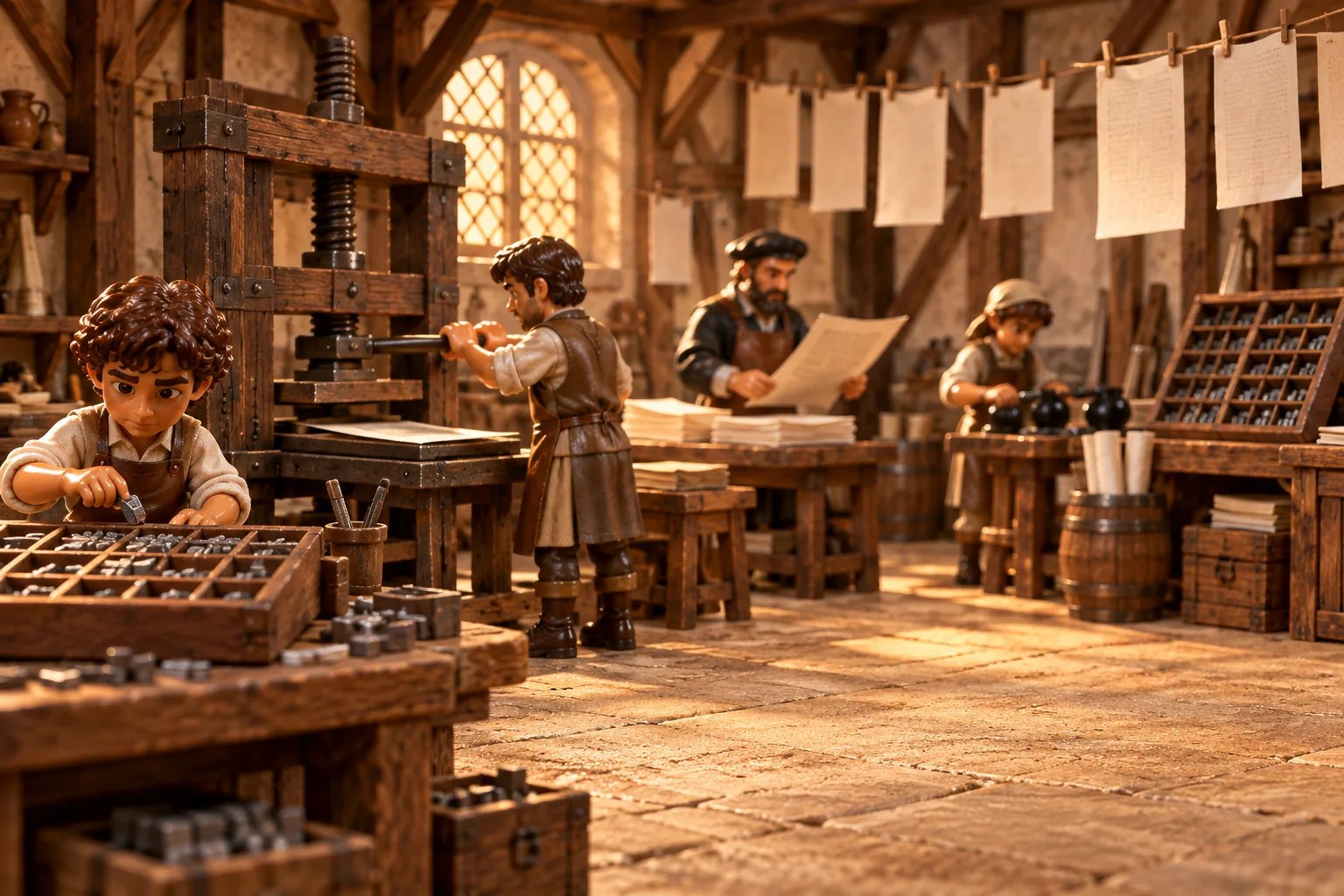
Before 1450 every Bible in Europe was copied by hand; within a few years, one workshop in Mainz turned out around 180 of them.
In the early 1450s, in Mainz, Johannes Gutenberg set out to print a full Latin Bible with mass-produced metal type, something no one in Europe had done before. Preparation probably began soon after 1450, and the first finished copies were ready in 1454 or 1455. In March 1455 Enea Silvio Piccolomini, the future Pope Pius II, wrote that he had seen pages displayed in Frankfurt to promote the edition.
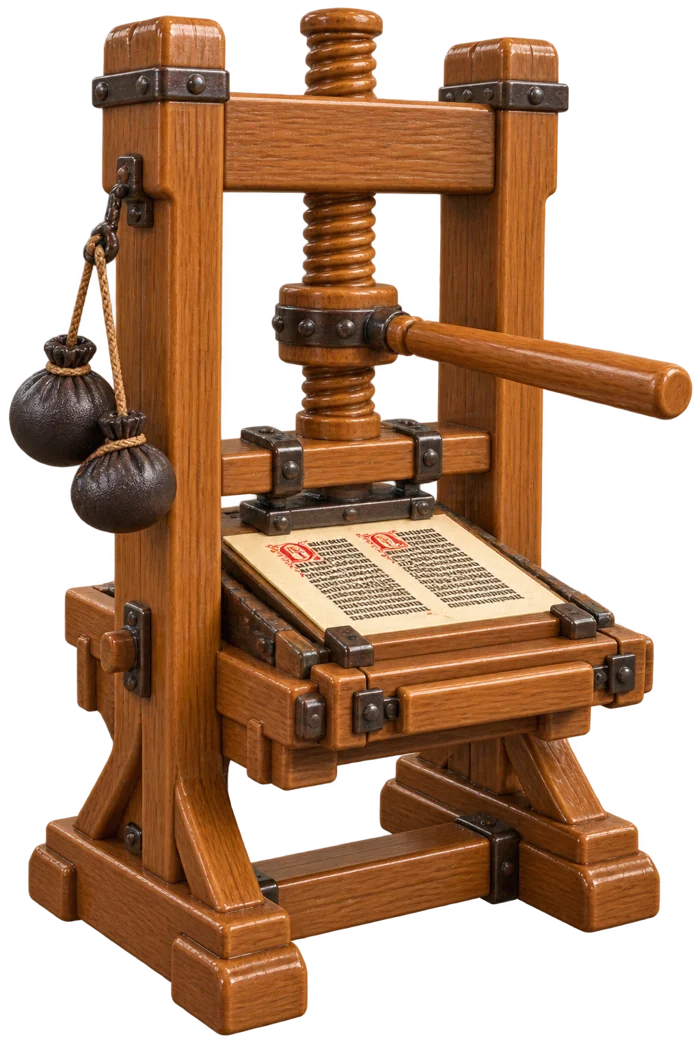
Gutenberg had to invent much of the process along the way. Scribes used water-based ink, which would not stick to metal, so he made an oil-based ink, mostly carbon with a high metal content. Each sheet of paper was dampened, pressed onto the inked type, and the type was re-inked for the next sheet. The first pages had 40 lines; to save paper he squeezed the spacing until each page held 42, which gave the book its nickname, the 42-line Bible. Somewhere between 160 and 185 copies were printed, about three-quarters on paper and the rest on vellum, with gaps left for headings and decoration to be painted in by hand.
The edition seems to have sold out at once, with buyers as far away as England. A copy cost about 30 florins, around three years' wages for a clerk: far cheaper than a hand-copied Bible, but still mostly for monasteries, universities and the rich. Today 49 copies survive at least in substantial part.
Read more on Wikipedia


