Middle Ages · state
Gurjara-Pratihara
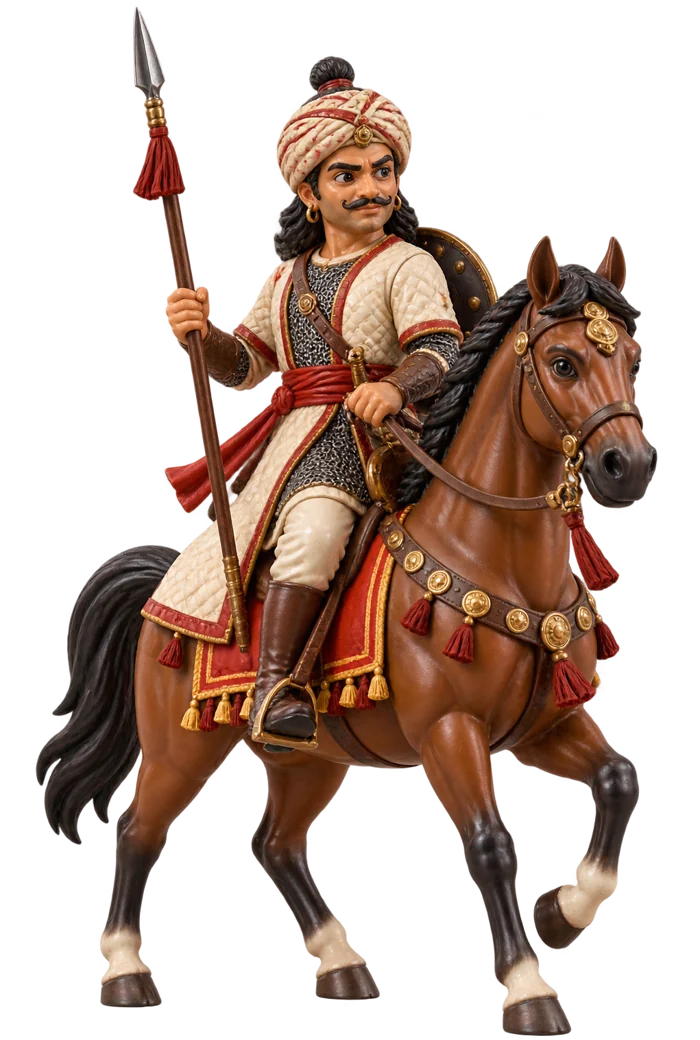
An Arab traveller wrote that no Indian prince had so fine a cavalry, and none was a greater foe of the Arabs.
The Pratiharas claimed descent from Lakshmana, who served his brother Rama as a door-keeper, a pratihara. They rose in Rajasthan in the 8th century, when Arab armies holding Sindh were pressing east. Nagabhata I led a confederacy that defeated them in 738 and took Malwa as far as Gwalior and the port of Bharuch. His successor Vatsaraja fought the Palas of Bengal for control of the north.
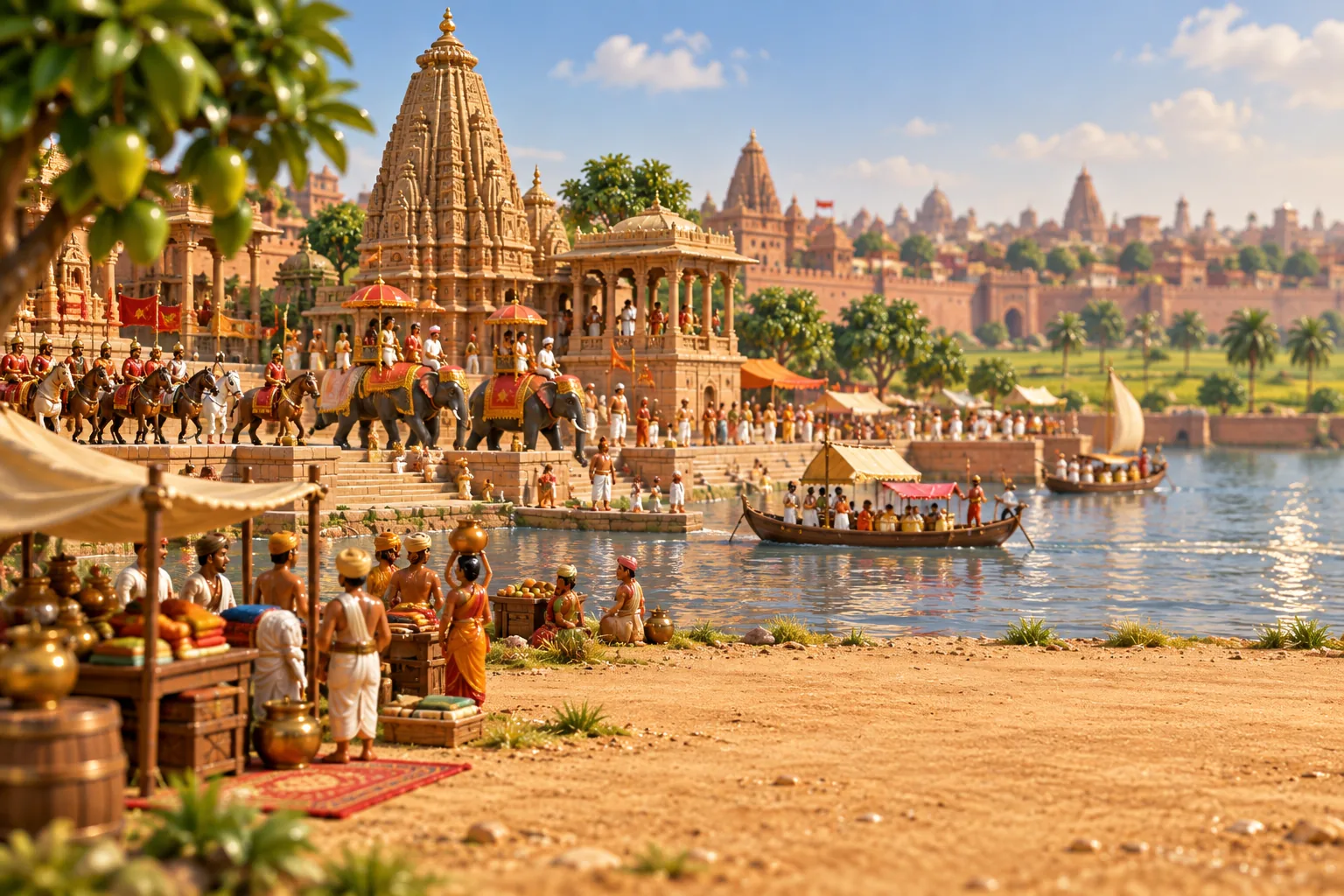
Kannauj on the Ganges was the prize of the Tripartite Struggle between the Pratiharas, the Palas and the Rashtrakutas of the Deccan. Nagabhata II took it, and from about 836 to 910 it was the centre of an empire covering much of northern India. Mihira Bhoja and his son Mahendrapala I ruled from Sindh to Bengal and from the Himalayas to beyond the Narmada, and drove the Arabs out of Kutch. A tenth-century Persian text says the king of Kannauj had 150,000 horsemen and 800 war elephants.
Dynastic quarrels weakened the empire, and in 916 the Rashtrakuta king Indra III captured Kannauj. Feudatories such as the Paramaras and Chandelas broke away, and the realm shrank to the Ganges Doab. King Rajyapala surrendered to Mahmud of Ghazni in 1018, and the last ruler of Kannauj died in 1036.
Read more on Wikipedia
Sources: en.wikipedia.org/wiki/Pratihara dynasty, en.wikipedia.org/wiki/Mihira Bhoja