Early modern · politics
Gunpowder Plot
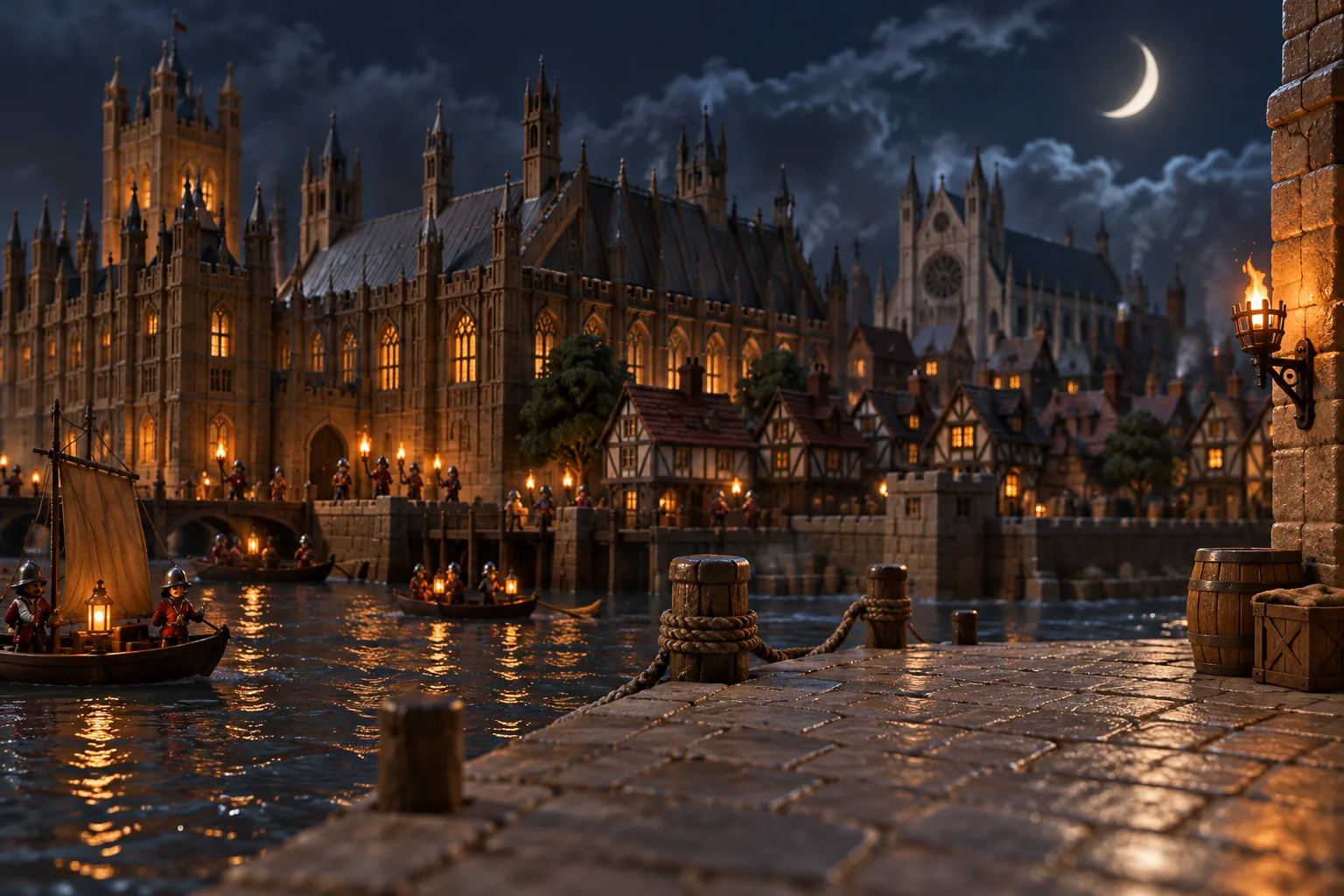
Before every State Opening of Parliament, the cellars are still searched, a ritual that began after the night of 4 November 1605.
When James VI of Scotland became James I of England in 1603, many English Catholics hoped for more religious tolerance. Those hopes faded, and a group of Catholic conspirators led by Robert Catesby decided to kill the king. Their plan was to blow up the House of Lords during the State Opening of Parliament on Tuesday 5 November 1605, then start a revolt in the Midlands and put James's nine-year-old daughter, Princess Elizabeth, on the throne. Guy Fawkes, who had fought for ten years in the Spanish Netherlands, was put in charge of the explosives.
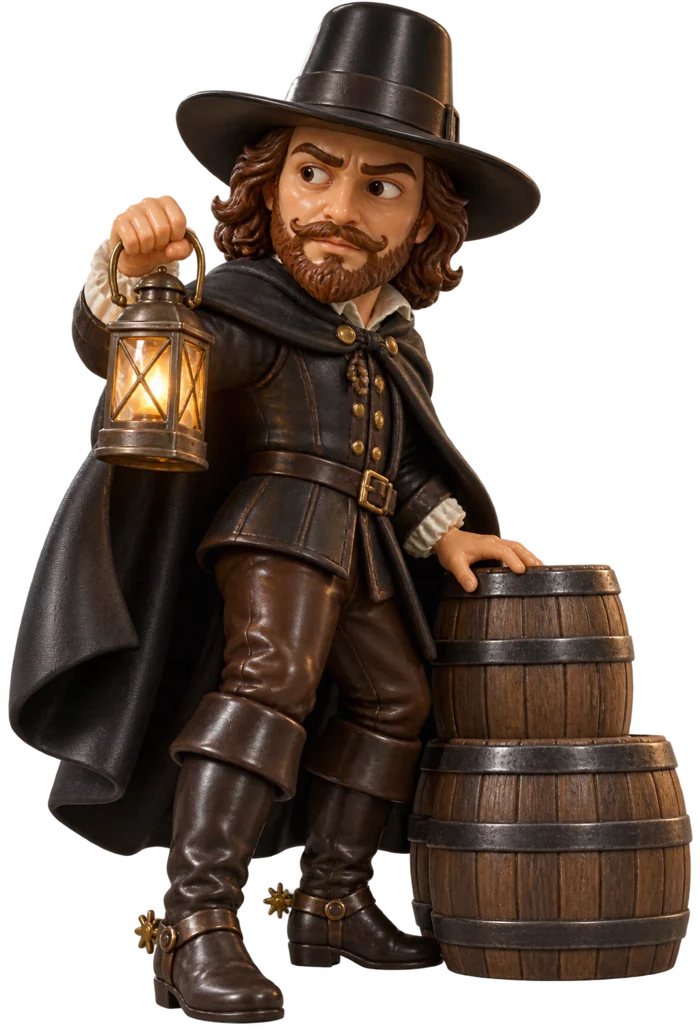
The plotters rented the undercroft directly beneath the House of Lords, and Fawkes, calling himself "John Johnson" and posing as a servant of the conspirator Thomas Percy, looked after it. But on 26 October an anonymous letter warned William Parker, Lord Monteagle, a Catholic peer, to stay away from Parliament, and he showed it to the authorities at once. On the evening of 4 November searchers found Fawkes guarding 36 barrels of gunpowder, enough to reduce the House of Lords to rubble, and arrested him.
Most of the conspirators fled London. Several made a last stand at Holbeche House against the Sheriff of Worcestershire's men, and Catesby was shot dead. At their trial on 27 January 1606, eight survivors, Fawkes among them, were sentenced to be hanged, drawn and quartered. The Jesuit Henry Garnet was also executed, though how much he really knew is doubted.
Read more on Wikipedia
Sources: en.wikipedia.org/wiki/Gunpowder Plot


