Middle Ages · politics
Guelphs and Ghibellines
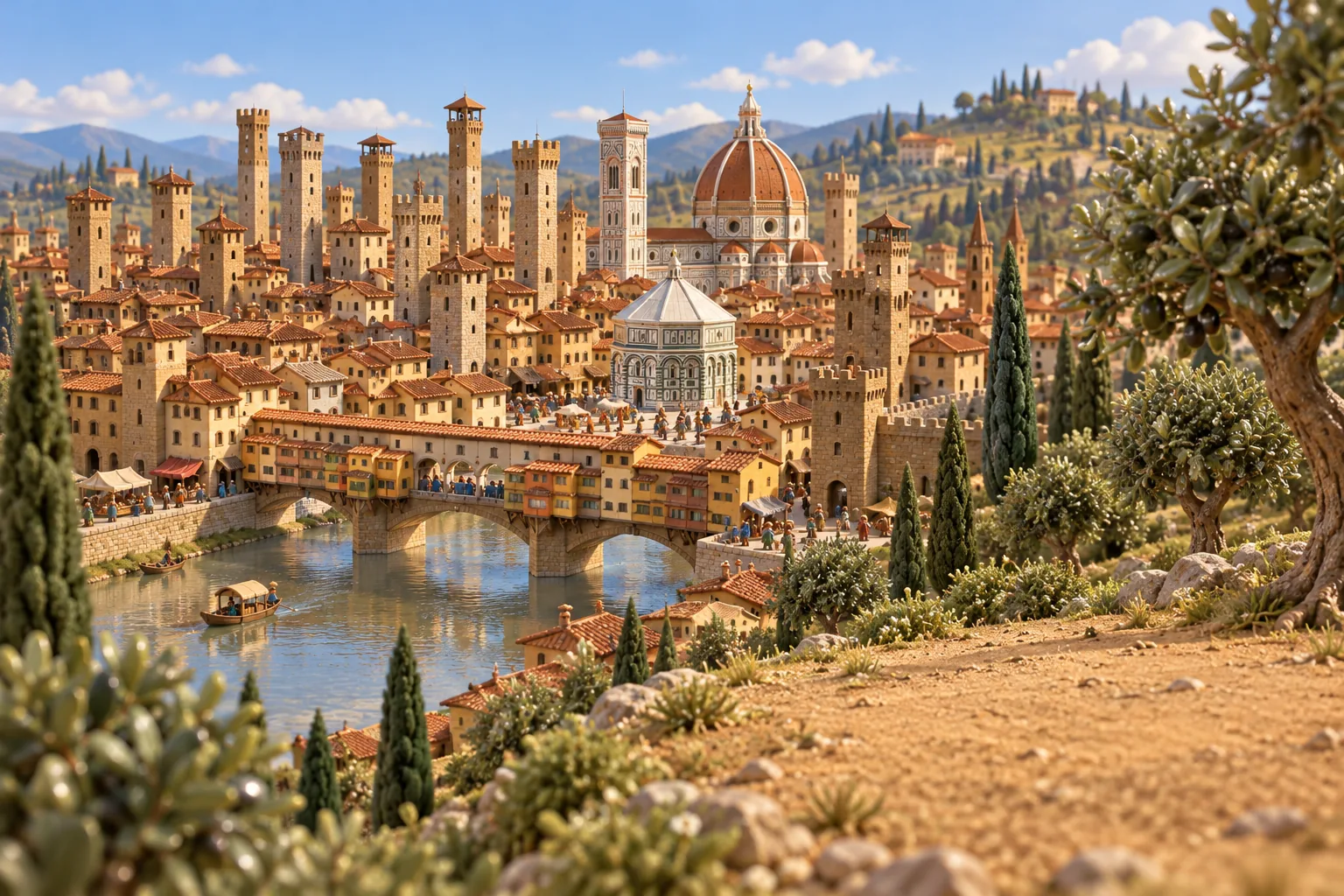
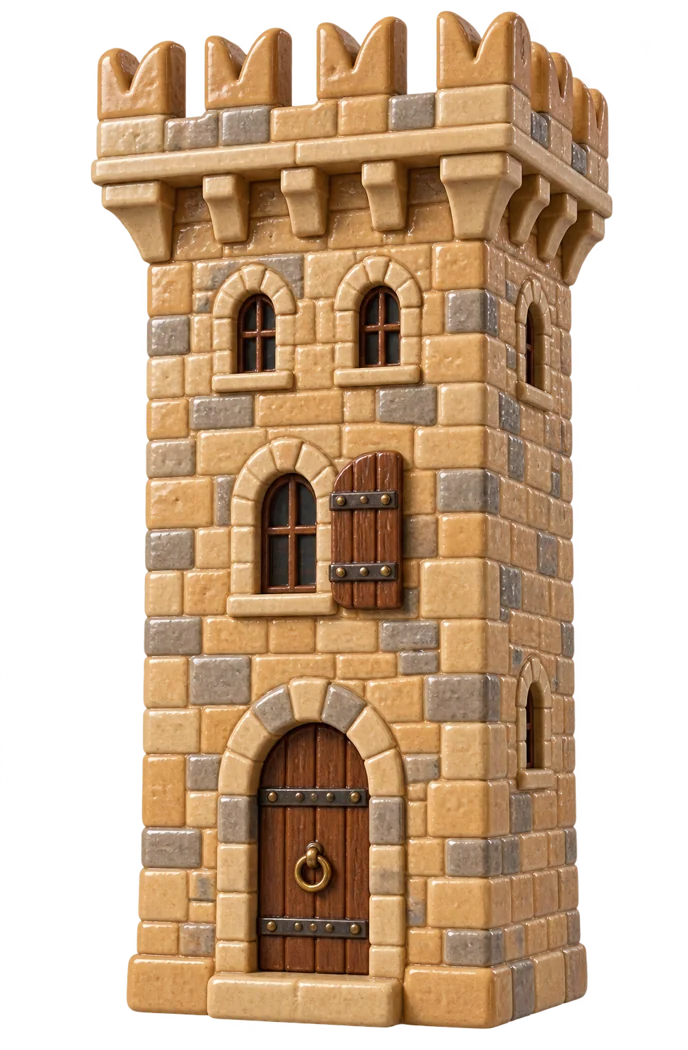
You could tell which side a medieval Italian family was on just by looking at the battlements of its tower.
The quarrel began in Germany. When Emperor Henry V died in 1125, the princes passed over his Hohenstaufen relatives and elected Lothair III, who put himself under the pope's protection. War broke out between the Hohenstaufens and the House of Welf. At the Siege of Weinsberg in 1140 the Welfs are said to have used their own name as a battle cry, while the Hohenstaufens shouted "Wibellingen", today the town of Waiblingen. In Italian the two became Guelfi and Ghibellini: the Guelphs backed the pope, the Ghibellines the emperor.
In Italy the labels took on a life of their own. Cities that wanted freedom from the empire leaned Guelph, and in 1176 the Guelph Lombard League beat Emperor Frederick Barbarossa at Legnano. Cities that feared the growing Papal States leaned Ghibelline, and a small town was often Ghibelline simply because its big neighbour was Guelph. Guelph Florence and Ghibelline Siena met at the Battle of Montaperti in 1260, while Ghibelline Pisa held out against Guelph Florence and Genoa. Inside each city, guilds and neighbourhoods took sides, and a single upheaval could flip a whole town.
After the Tuscan Guelphs beat the Ghibellines at Campaldino in 1289, the winners split into Black and White Guelphs. The poet Dante was a White, and when the Blacks took Florence in 1302 he was exiled. In 1334 Pope Benedict XII threatened anyone using either name with excommunication, and by the late 14th century the feud had faded, though some families kept the old loyalties into the 16th century.
Read more on Wikipedia