Industrial age · nature
1923 Great Kantō earthquake
The ground shook just before noon, when charcoal stoves all over Tokyo were lit for lunch, and a typhoon's winds turned the wooden city into a sea of fire.
At 11:58 on Saturday 1 September 1923 the Philippine Sea Plate slipped beneath the Kantō Plain along the Sagami Trough. The first rupture, of about magnitude 8.0, began near Odawara, some 100 km south-west of Tokyo. Three minutes later a magnitude 7.2 quake struck beneath Tokyo Bay, and two minutes after that a 7.3 shock hit Yamanashi. The floor of Sagami Bay dropped by more than 400 metres at the epicentre, and tsunamis swept low-lying coasts.
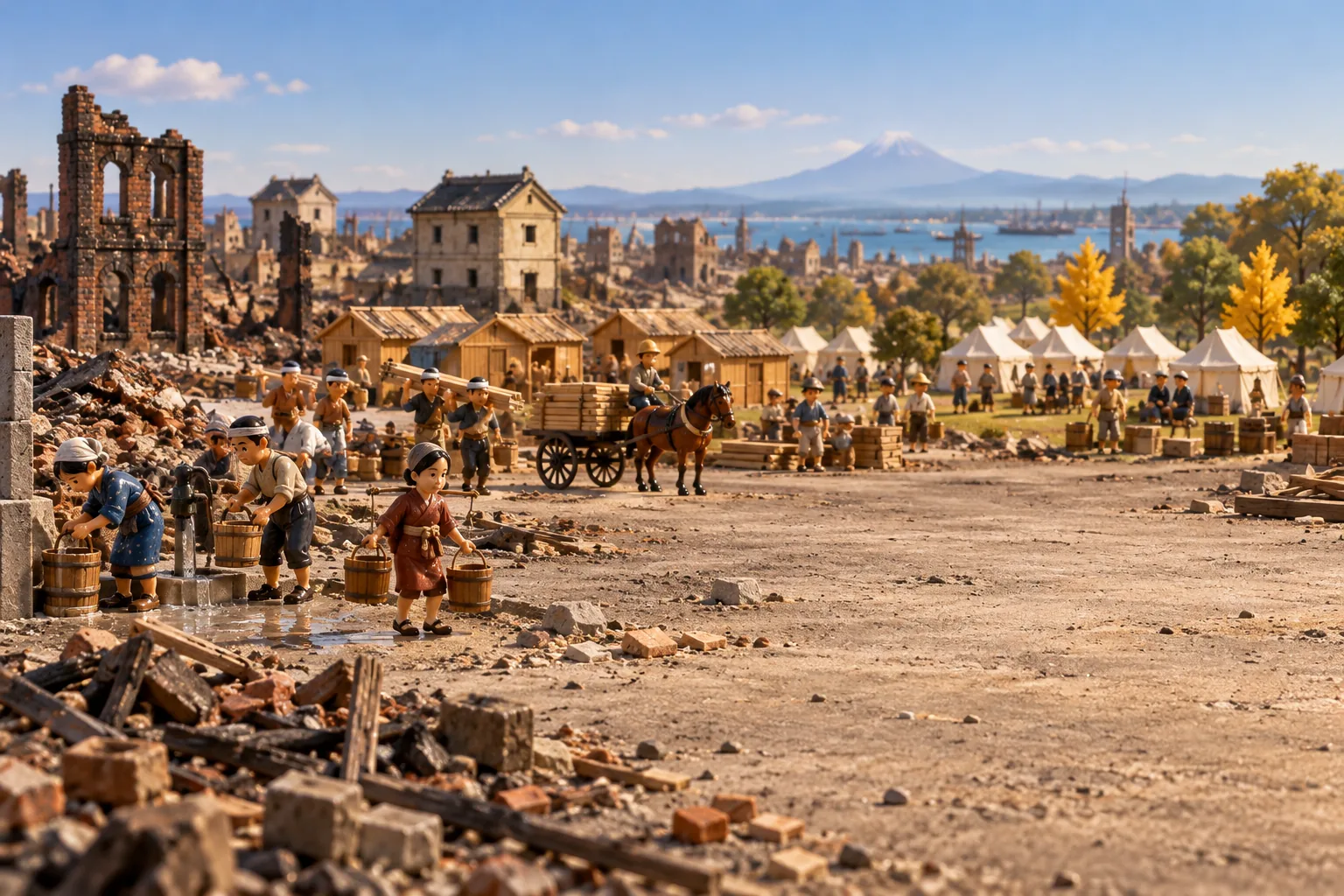
Within 30 minutes more than 130 major fires broke out in Tokyo, fed by overturned charcoal braziers cooking the midday meal, broken gas lines and collapsed wooden houses. Strong winds from a typhoon off the coast drove the flames. At the Honjo Clothing Depot, an open ground where tens of thousands had fled, a whirlwind of fire killed about 40,000 people in minutes. Between 105,000 and 140,000 people died, over half of Tokyo and nearly all of Yokohama were destroyed, and about 2.5 million were left homeless.
False rumours that Koreans were poisoning wells and setting fires spread, and vigilante groups murdered Koreans and others mistaken for them; estimates run from hundreds to about 6,000 victims. The government declared martial law on 2 September. Home Minister Gotō Shinpei drew up grand plans to rebuild Tokyo as a modern capital, and though they were cut back, new parks, bridges and wide avenues followed.
Read more on Wikipedia