Industrial age · state
Gran Colombia
Bolívar's republic joined today's Colombia, Venezuela, Ecuador and Panama, then fell apart within a decade as the men who had fought Spain together turned on each other.
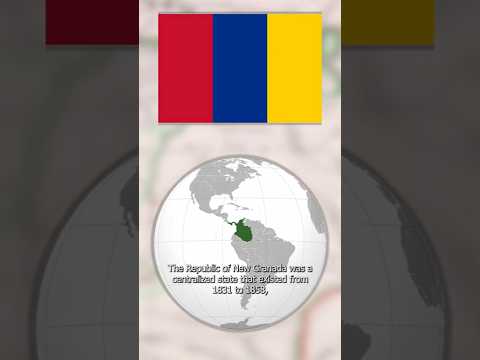
The Congress of Angostura proclaimed the Republic of Colombia in 1819, soon after Simón Bolívar's unexpected victory in New Granada. Historians call it Gran Colombia to tell it apart from today's Colombia. In 1821 the Congress of Cúcuta gave it a constitution, made it a centralist state with its capital at Bogotá, and named Bolívar president and Francisco de Paula Santander vice-president.
Its armies kept fighting Spain. The Battle of Carabobo in 1821 freed almost all of Venezuela, Panama joined in November 1821, and Pasto, Guayaquil and Quito followed in 1822. That year the United States recognised Colombia, the first Spanish American republic it recognised, thanks to the diplomat Manuel Torres. In 1824 its army secured the independence of Peru, and the old departments were cut into smaller ones run by intendants from Bogotá. While Bolívar campaigned, Santander ran the government of about 2.6 million people.
Once the war was over, the regions pulled apart. In 1826 José Antonio Páez defied Bogotá and Venezuela came close to seceding. The Convention of Ocaña broke up in 1828 when Bolívar's supporters walked out, and Bolívar tried to hold the union by concentrating power. That year he also went to war with Peru over Jaén and Maynas. He resigned in 1830, the union broke into Venezuela, Ecuador and New Granada, and it was formally abolished in 1831.
Read more on Wikipedia
Sources: en.wikipedia.org/wiki/Gran Colombia