Middle Ages · state
Göktürks
The Göktürks left the oldest known Turkic writing, runic inscriptions on stone steles in Mongolia's Orkhon valley.
The Göktürks were the Turks led by the Ashina clan. For generations they lived north of the Altai Mountains as subjects of the Rouran Khaganate and worked metal for them. In 552 Bumin Qaghan and his sons overthrew the Rouran and founded the First Turkic Khaganate, the first steppe empire to be in contact with the Byzantine Empire, Persia and China at once. The meaning of kök in Kök-türk is debated: perhaps 'great', perhaps 'blue'.
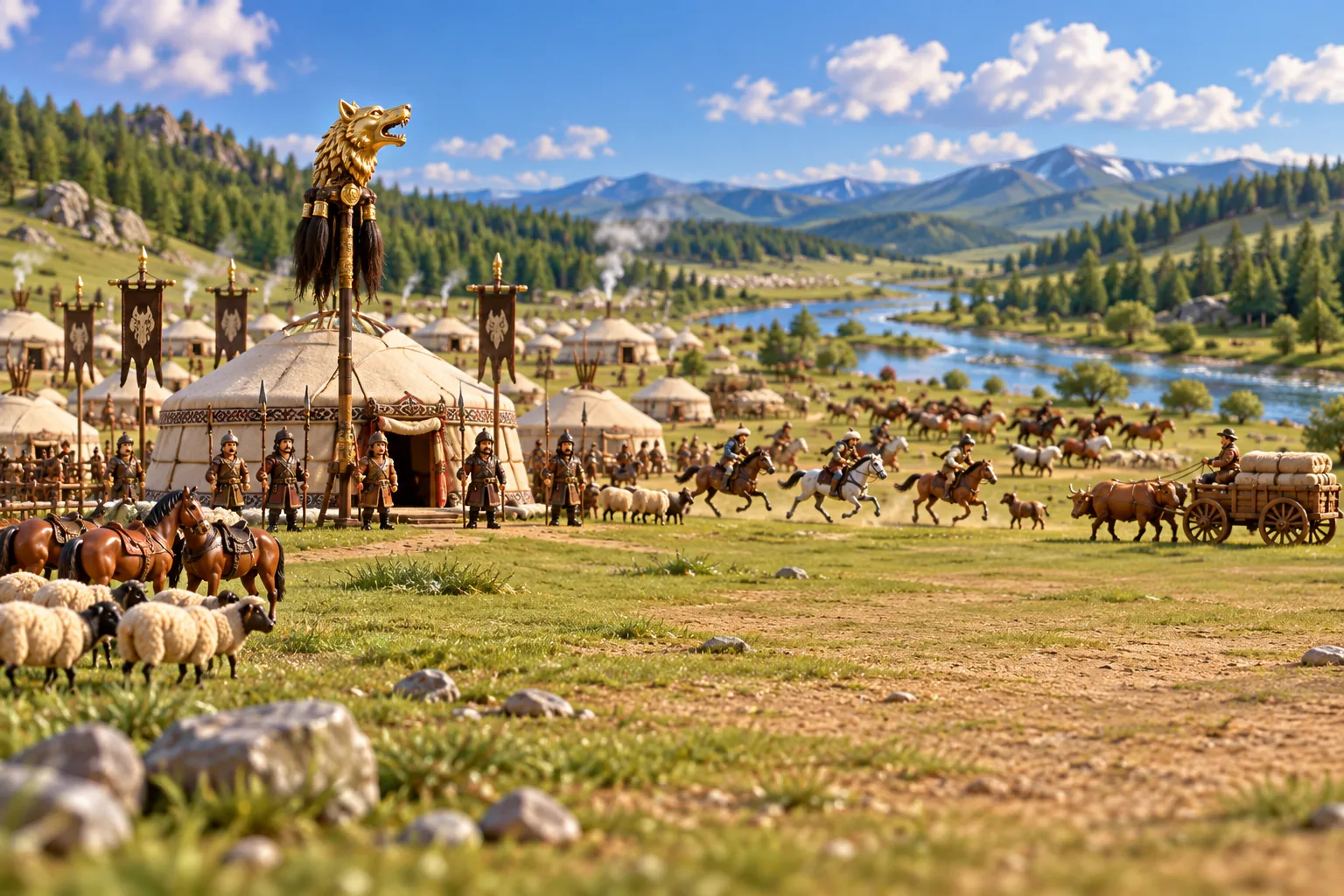
The empire divided into eastern and western halves, and in 603 the split became final. The Eastern Khaganate on the Mongolian Plateau meddled in China's civil wars, and Chinese rebels who became its vassals took Turkic titles and its wolf's-head banners. The Tang overthrew it in 630. The Western Khaganate, ruled from Suyab in the Chui valley, peaked under Tong Yabghu Qaghan (618–630), who ruled from the Tarim Basin to the Caspian Sea, met the Chinese pilgrim Xuanzang and sent troops to meet Heraclius at Tiflis. The Tang destroyed it in 657–659.
The Turks rose again in a Second Turkic Khaganate. In the early 8th century its rulers set up memorial steles in the Orkhon Valley for Bilge Qaghan and his brother Kul Tigin. Written in the Old Turkic alphabet, they are the oldest preserved form of a Turkic language. In 744 the Uyghurs, allied with the Tang, defeated the last Göktürk khaganate.
Read more on Wikipedia
Sources: en.wikipedia.org/wiki/Göktürks, en.wikipedia.org/wiki/Göktürks, en.wikipedia.org/wiki/Eastern Turkic Khaganate, en.wikipedia.org/wiki/Western Turkic Khaganate, en.wikipedia.org/wiki/Orkhon inscriptions


