
Antiquity · state
Goguryeo
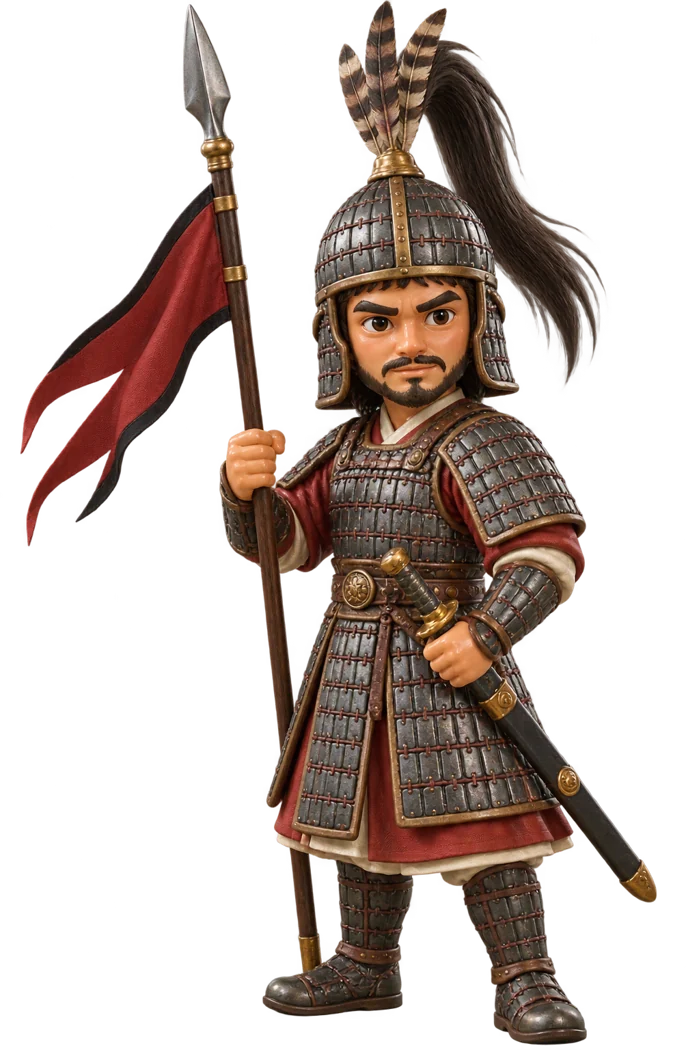
Its fortress kingdom threw back a vast Sui invasion in 612, when only 2,700 of 305,000 men in the main army are said to have got home.
By tradition Goguryeo was founded in 37 BC by Jumong, a prince who fled the kingdom of Buyeo, though archaeology suggests it may be older. It grew from a league of Yemaek tribes in the Yalu and Hun river basins into a state ruling central and southern Manchuria and northern Korea, mountain lands short of good farmland, and in time it annexed all the Four Commanderies of Han. Its name means 'high castle'.
After crushing defeats in the 4th century, King Sosurim made Buddhism the state religion in 372 and founded a national academy, the Taehak. The golden age came under Gwanggaeto the Great and his son Jangsu, who raised a huge stele to his father's deeds at today's Ji'an and in 427 moved the capital to Pyongyang. The painted tombs of this age show hunting, warfare, dancers in white dresses and daily life.
In 612 the Sui sent an army that the Sui history puts at over a million combat troops. At the Battle of Salsu Goguryeo soldiers released water from a dam, splitting the invaders, and of the 305,000 men of the main force only 2,700 are said to have escaped. Goguryeo also held off the Tang, but after the death of the strongman Yeon Gaesomun it was worn down by internal strife, and in 668 a Silla–Tang alliance took Pyongyang.
Read more on Wikipedia
Sources: en.wikipedia.org/wiki/Goguryeo


