Prehistory · culture
Göbekli Tepe
Some 11,500 years ago, people who had no pottery and probably no farms carved giant stone pillars covered in foxes, boars, snakes and vultures.
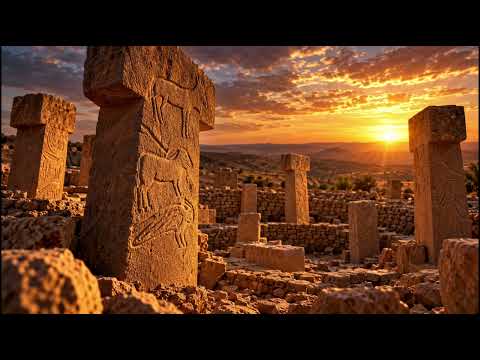
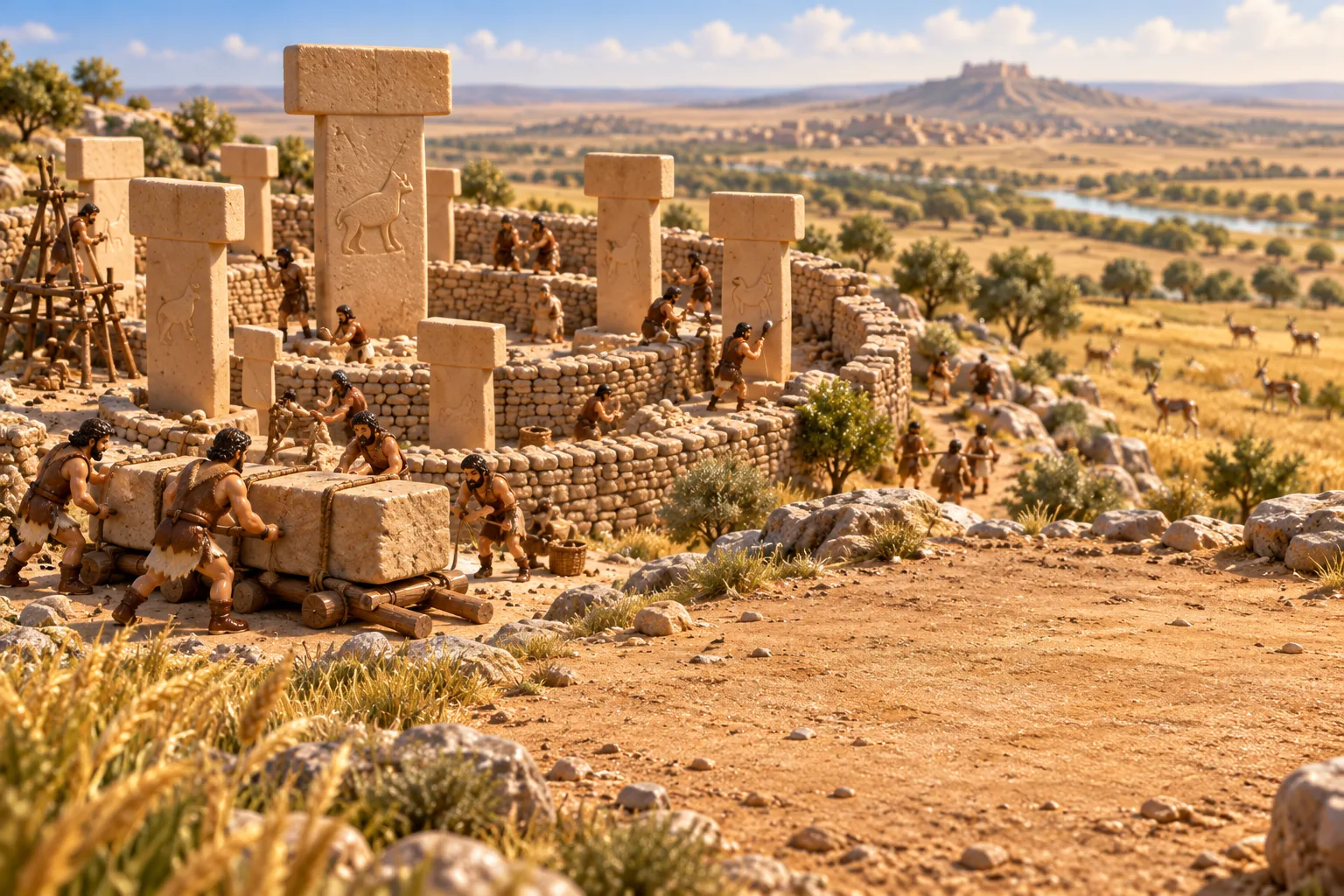
Göbekli Tepe, "Potbelly Hill", is a 15-metre-high mound on a rocky ridge in southeastern Turkey. People lived and built here from around 9500 BC to at least 8000 BC, in the period archaeologists call the Pre-Pottery Neolithic, at the very start of permanent settlement anywhere in the world. Their best-known works are large round enclosures ringed by T-shaped limestone pillars, among the oldest megaliths ever found.
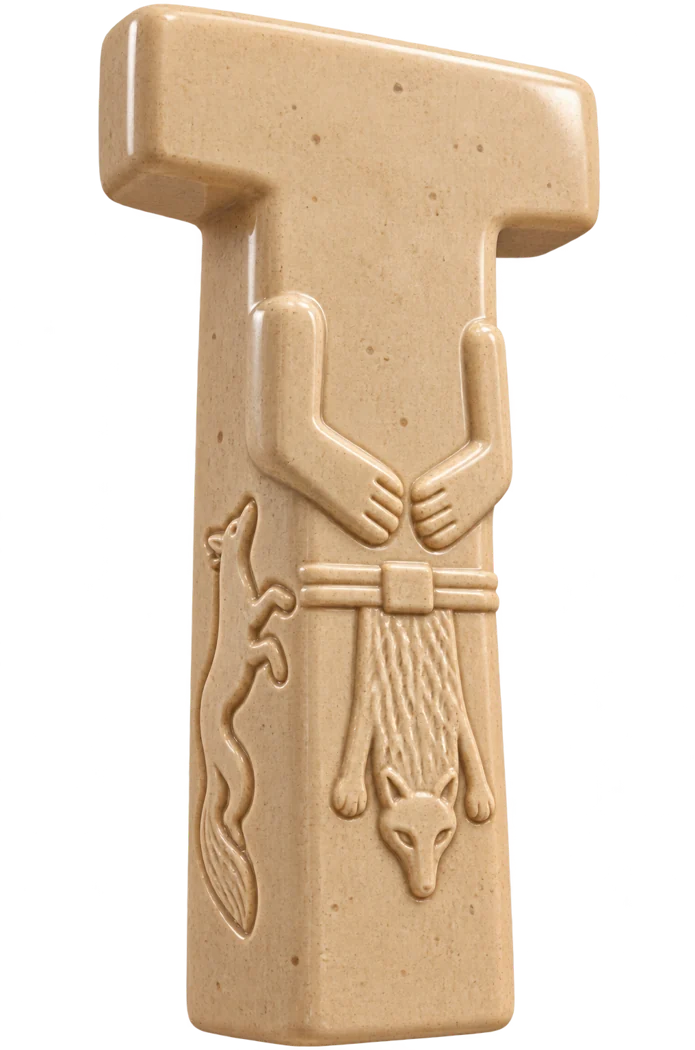
Many pillars are carved. Some have human arms and hands, belts and loincloths, as if each pillar were a stylised person or a god. Others are covered in wild animals: lions, bulls, boars, foxes, gazelles, snakes, scorpions and spiders, and especially vultures. The enclosures were probably roofed, and they seem to have collapsed, been buried by landslides and been rebuilt again and again.
The site matters because it sits in the middle of an old argument: did farming make people settle down, or did settling down lead to farming? German archaeologist Klaus Schmidt, who excavated from 1995 until his death in 2014, saw it as a ritual centre where bands of hunter-gatherers gathered for building projects and feasts. More recent work has found houses, water cisterns and heavy processing of wild cereals, suggesting a real settlement where ritual and daily life went together. The surrounding steppe was full of wild wheat, barley and grazing herds. Göbekli Tepe became a UNESCO World Heritage Site in 2018.
Read more on Wikipedia
Sources: en.wikipedia.org/wiki/Göbekli Tepe