
Our time · politics
Glasnost
An old Russian word for open court hearings became the slogan that let Soviet citizens say out loud what had gone wrong with their country.
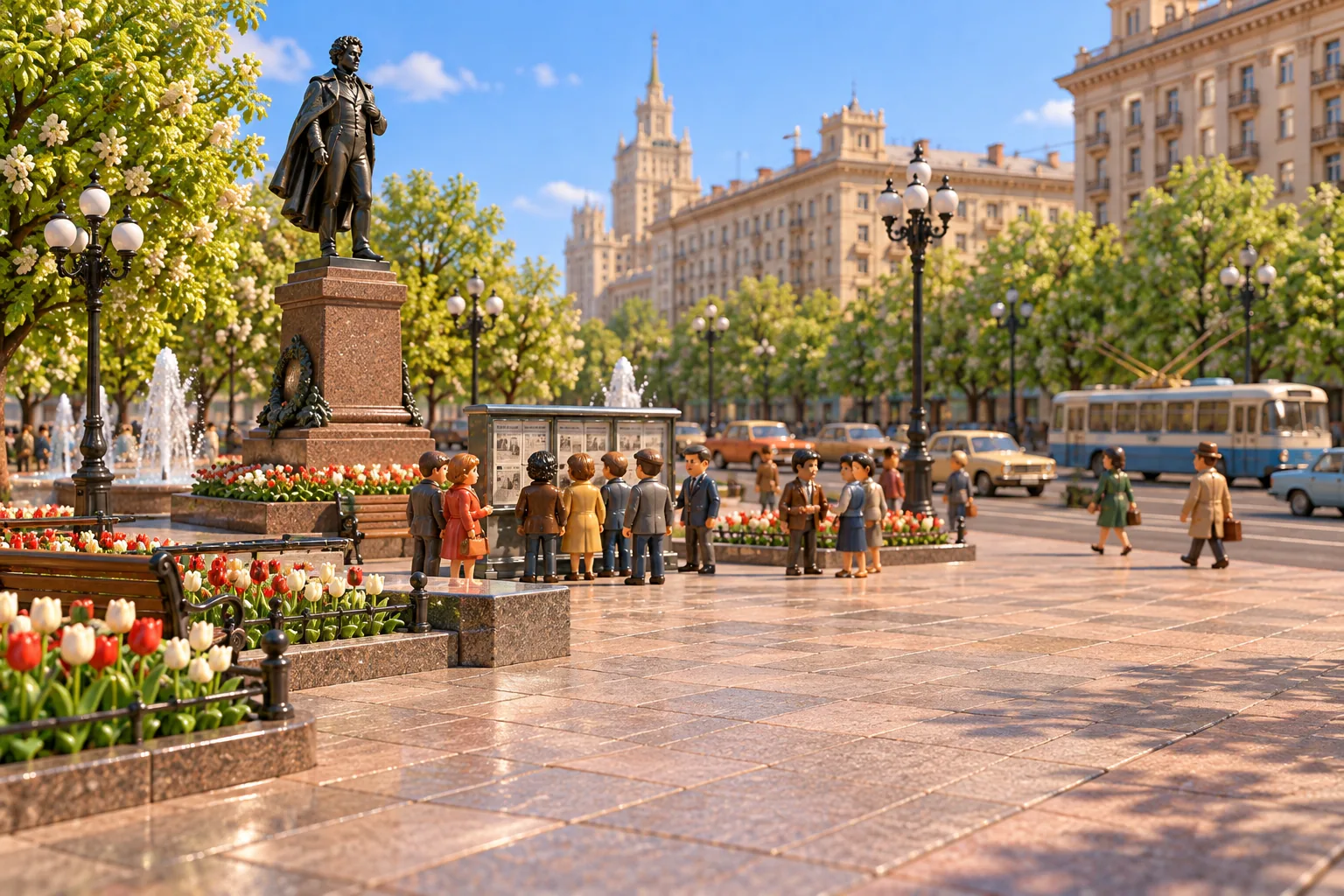
In Russian, glasnost has long meant openness or publicity. In the late 19th century the word was used for reforms that let the press and the public attend trials. On 5 December 1965 it became a protest slogan: dissidents led by the mathematician Alexander Yesenin-Volpin gathered on Pushkin Square in Moscow to demand that the trial of the writers Yuly Daniel and Andrei Sinyavsky be held in public, as Soviet law required. The Glasnost rally is seen as a key moment in the birth of the Soviet civil rights movement.
On 10 December 1984, as he was about to take over the Soviet Union, Mikhail Gorbachev gave a speech on the need for glasnost, and after he became General Secretary in 1985 he made it policy, together with perestroika, restructuring. Alexander Yakovlev, head of the party's propaganda department, is considered the intellectual force behind the reforms. Censorship before publication and broadcast was eased, citizens were encouraged to discuss the failures of the system and to criticise their leaders, travel abroad became easier, and books long locked away in libraries came back out.
In the late 1980s most Soviet people learned for the first time about the crimes of Stalin and other events that had been hidden from them. Critics found the policy vague and limited. Similar reforms spread to Poland, Hungary, Czechoslovakia and other communist states, while Romania under Nicolae Ceaușescu, Cuba and North Korea refused them. The era of glasnost lasted until the Soviet Union itself came to an end in 1991.
Read more on Wikipedia
Sources: en.wikipedia.org/wiki/Glasnost