Middle Ages · state
Ghurid dynasty
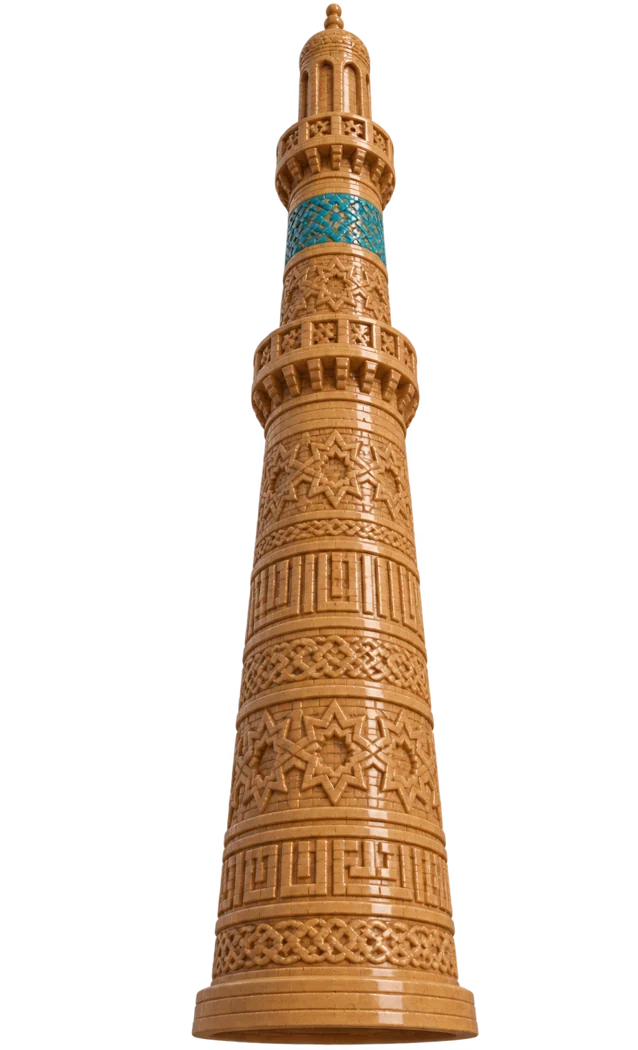
From a remote valley in central Afghanistan the Ghurids raised the Minaret of Jam and conquered northern India as far as Bengal.
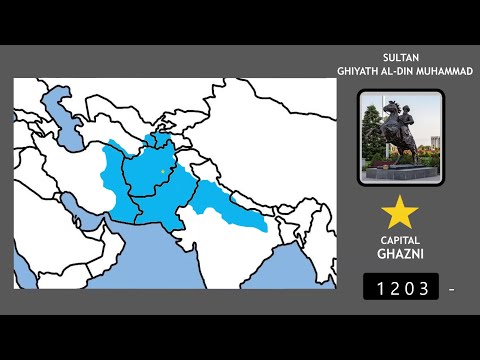
The Ghurids were local chiefs in the hills of Ghor in central Afghanistan, of eastern Iranian Tajik origin, who took up Sunni Islam after Mahmud of Ghazni conquered the region in 1011. For about 150 years they served the Ghaznavids and the Seljuks. Then Ala al-Din Husayn took revenge for his murdered brothers and sacked the Ghaznavid capital Ghazni, which burned for seven days and seven nights. People called him Jahānsūz, the world burner, and he made Firozkoh in Ghor the capital.
His nephews ruled together. Ghiyath al-Din Muhammad fought the Khwarazm Shahs in the west and took Herat in 1175, while his brother Muhammad of Ghor retook Ghazni in 1173 and turned to India. Beaten by Prithviraja III at Tarain in 1191, Muhammad came back the next year with Turkish mounted archers, won, and had Prithviraja executed. His Turkish generals took Delhi, and around 1203 Bakhtiyar Khalji swept into Bihar and Bengal, sacking the great Buddhist monasteries.
Ghiyath al-Din died in 1203, the Khwarazmians and Qara Khitai crushed the Ghurids at Andkhud in 1204, and Muhammad was assassinated in March 1206. The Khwarazm Shah finished the dynasty off by 1215, but its Indian conquests lived on as the Delhi Sultanate of Qutb ud-Din Aibak.
Read more on Wikipedia
Sources: en.wikipedia.org/wiki/Ghurid dynasty, en.wikipedia.org/wiki/Minaret of Jam