Middle Ages · state
Ghassanids
Christian Arabs guarding Byzantium's desert frontier, the Ghassanids fought Persia's Arab allies for a century before the Muslim armies swept both away.
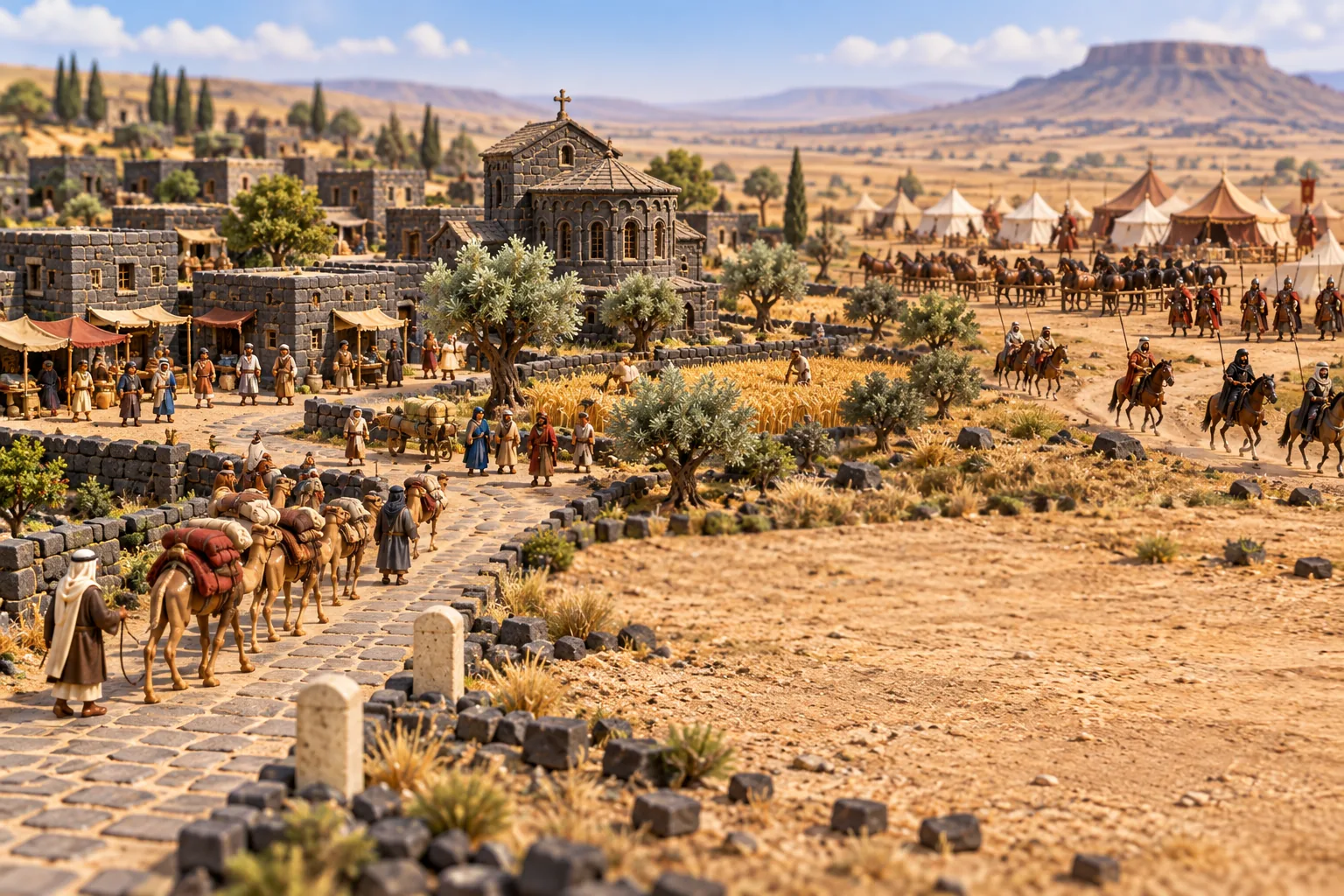
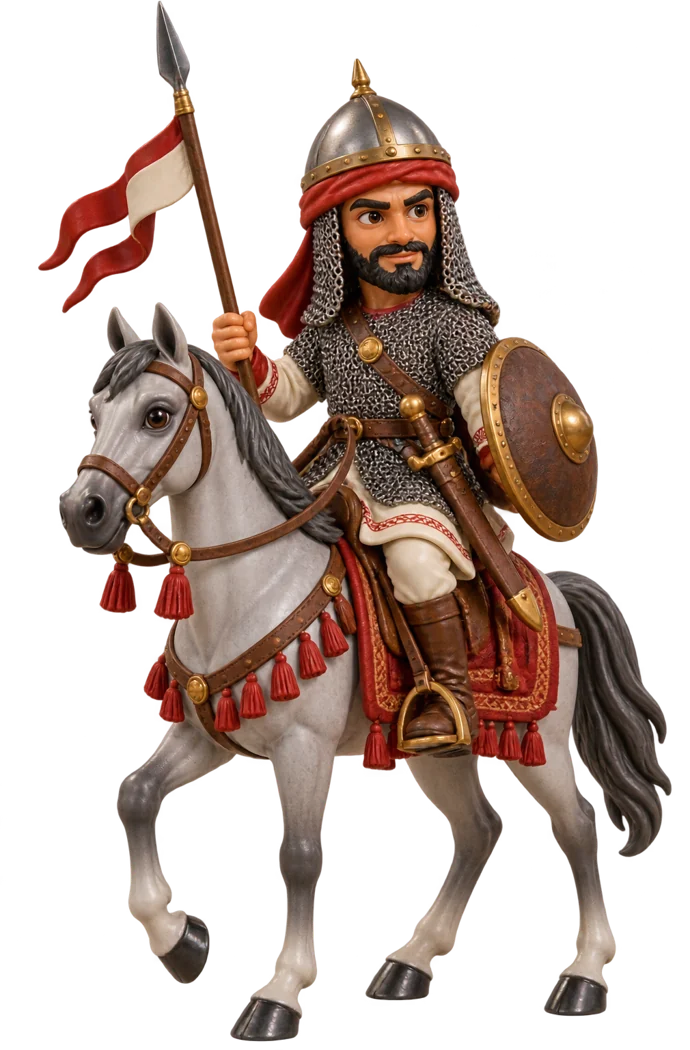
The Ghassanids were a confederation of Arab tribes. Later genealogists traced them to the Azd of South Arabia, and they moved north from the Hejaz into Syria. There they became clients of the Roman Empire, guarding its desert frontier against Bedouin raids, and they converted to Christianity. Their great rivals were the Lakhmids of al-Hira, Arab allies of Sasanian Persia.
In 529 the emperor Justinian I gave the Ghassanid king al-Harith ibn Jabalah the highest title ever granted to a foreign ruler and made him chief of all of Rome's Arab allies. Al-Harith, who reigned until 569, was a Miaphysite Christian, and in the 540s he helped win the ordination of Jacob Baradaeus, after whom the Jacobite Syriac Church is named. From their capital at Jabiyah in the Golan, the Ghassanids built churches and monasteries, and their courts were famed for luxury, music and poetry.
Byzantium distrusted their faith. Al-Harith's son al-Mundhir III was exiled to Sicily, and in the 580s the emperor Maurice had al-Mundhir's son al-Nu'man arrested for treason and ended the alliance. Under Heraclius the Ghassanids fought for Byzantium again, but at the Yarmuk in 636 the Muslims routed the Byzantine army, in which their last phylarch, Jabala ibn al-Ayham, led the Arab allies.
Read more on Wikipedia
Sources: en.wikipedia.org/wiki/Ghassanids, en.wikipedia.org/wiki/Al-Harith ibn Jabalah
