Middle Ages · state
Ghana Empire
Arab writers called its king the lord of gold, and in 1068 al-Bakri described his capital as twin towns, one royal and one Muslim.
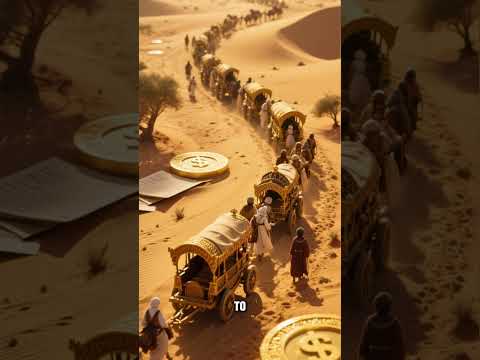
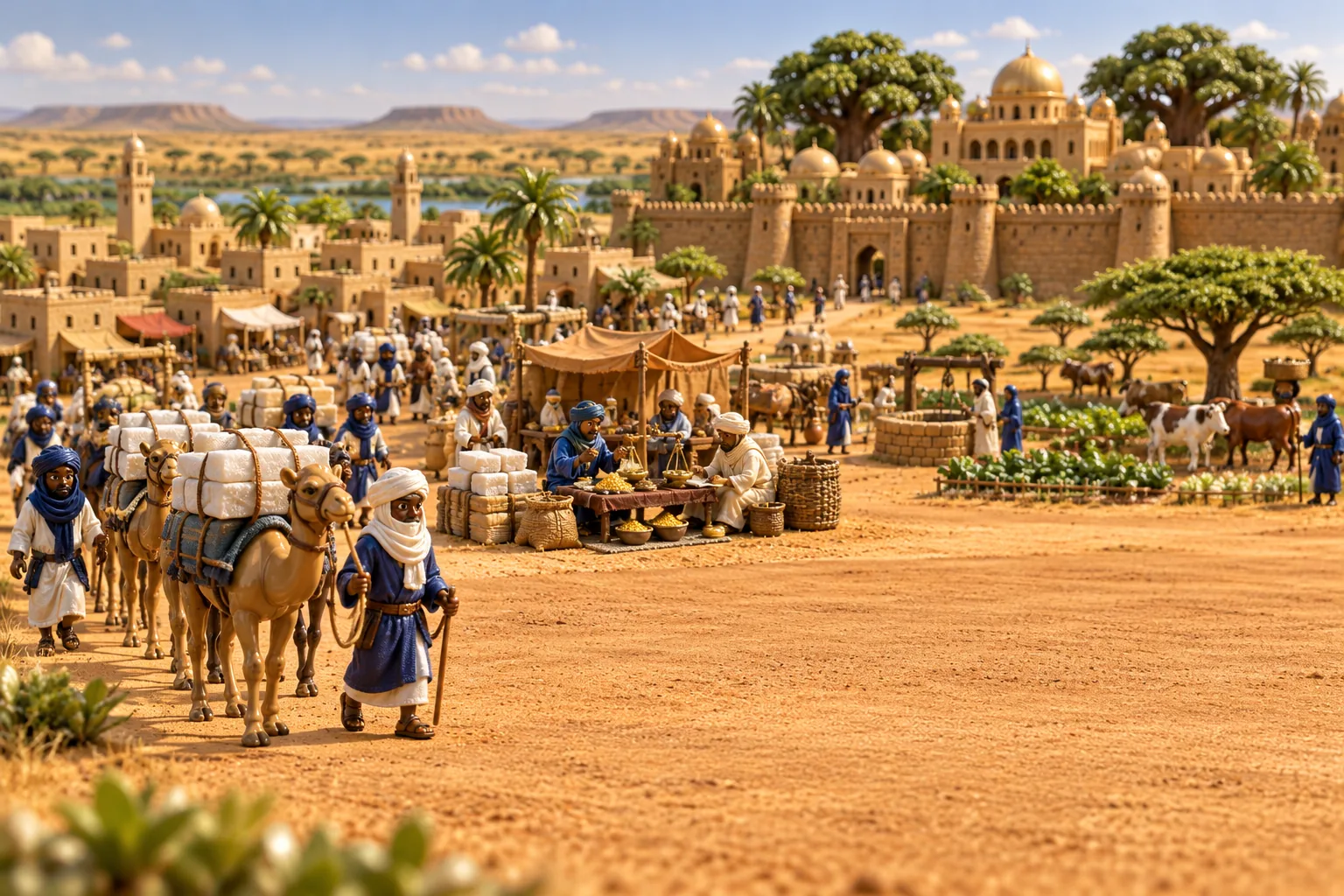
The Soninke called their state Wagadu. Ghana, meaning warrior or war chief, was the title of its kings, who were also called Kaya Maghan, king of gold. It grew out of farming and herding chiefdoms on the edge of the Sahara in today's south-eastern Mauritania and western Mali, and Arab sources mention it from the late 8th century as a wealthy state. The camel let caravans cross the desert, and Ghana sat between the gold of the south and the salt of the Sahara.
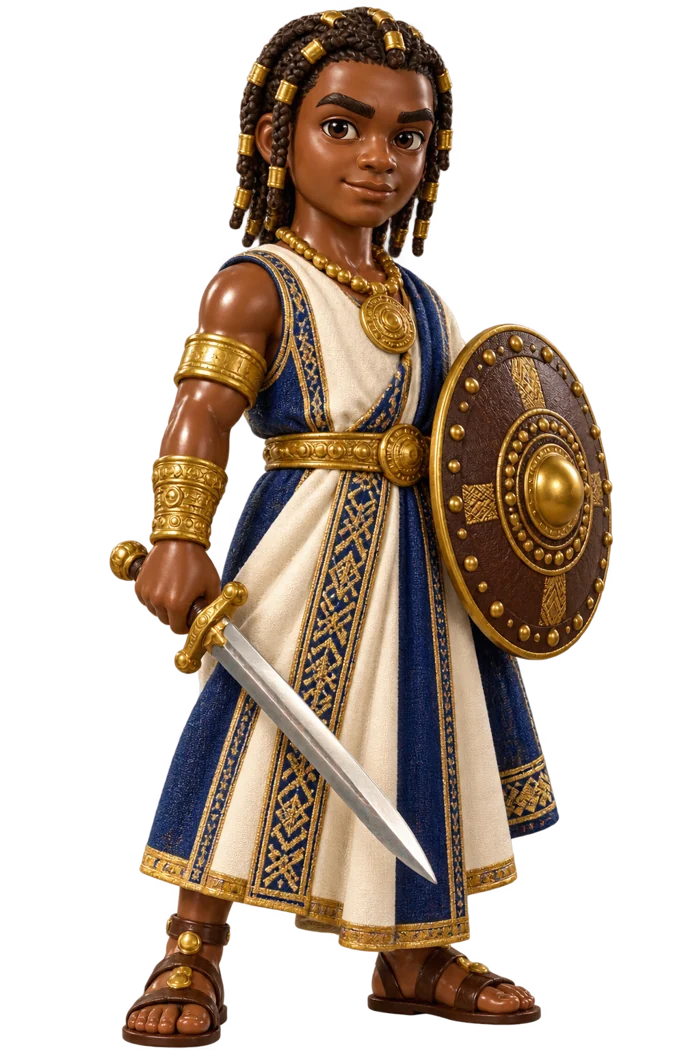
Merchants paid one gold dinar to bring a load of salt in and two to take one out, and the king claimed every gold nugget, leaving others only gold dust. In 1067–1068 the Andalusian geographer al-Bakri described the capital as two towns. In the royal town, behind a stone wall, the king held court in a domed pavilion, with ten horses in gold-embroidered cloth, pages holding gold-decorated shields and swords, and guard dogs in collars of gold and silver. The Muslim merchants' town had twelve mosques. The throne passed to the son of the king's sister.
The country turned to Islam around 1076. By 1203 the Sosso had conquered it, and in the 13th century it became a vassal of the rising Mali Empire.
Read more on Wikipedia
Sources: en.wikipedia.org/wiki/Ghana Empire