Industrial age · person
Gertrude Bell
On 23 August 1921 Faisal was crowned king of Iraq, and the Englishwoman who had pushed hardest for him wrote that she would never make kings again: "it's too great a strain".
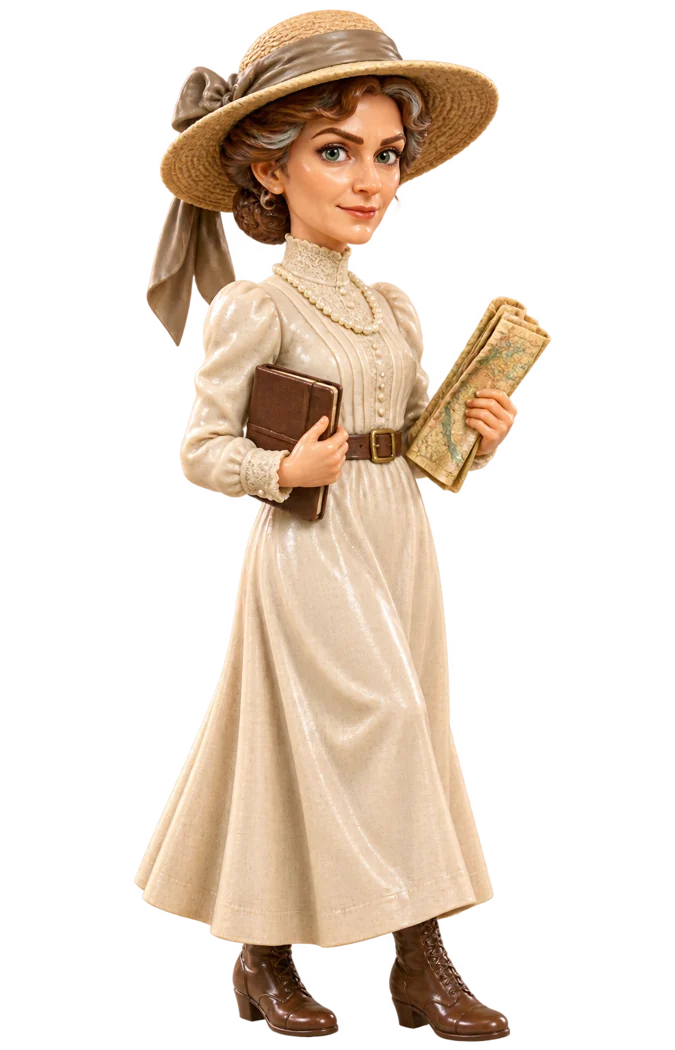
Gertrude Bell was born on 14 July 1868 at Washington New Hall in County Durham, the granddaughter of the ironmaster Sir Isaac Lowthian Bell. Her mother died when she was three. At Lady Margaret Hall, Oxford, she became the first woman to take first-class honours in Modern History, in only two years, though women were not yet given degrees. In 1892 she visited her uncle Sir Frank Lascelles, the British minister in Tehran, and later published Persian Pictures and a translation of the poems of Hafez.
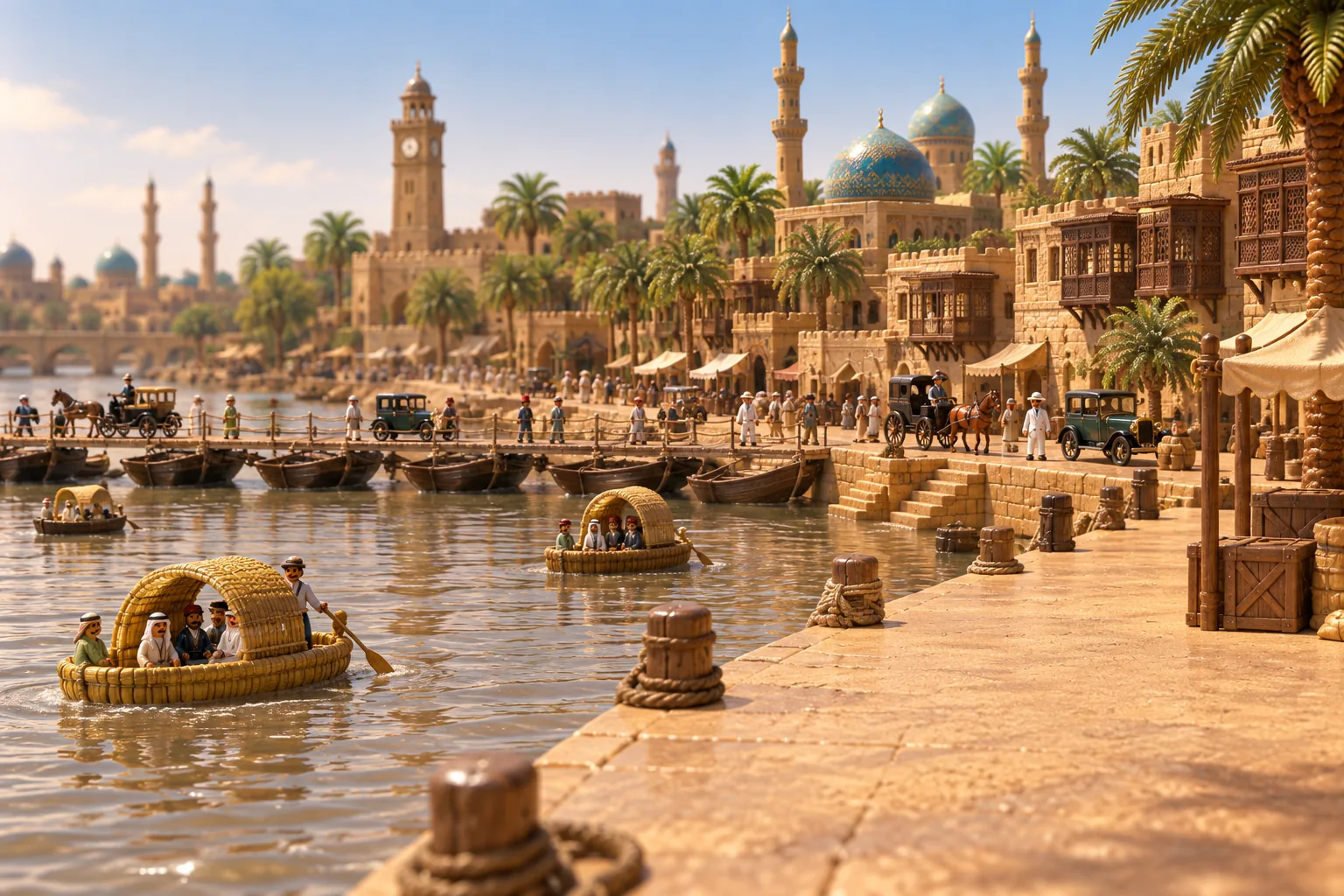
She climbed in the Alps, where the Gertrudspitze is named after her, and crossed the deserts of Syria, Mesopotamia and Arabia, writing Syria: The Desert and the Sown in 1907. In 1913 she reached Ha'il, where she was held for eleven days. In the First World War she worked with T. E. Lawrence at the Arab Bureau in Cairo, and from 1917 she served in Baghdad as a political officer and Oriental Secretary, the only woman in such high civil roles in the British Empire. At the 1921 Cairo Conference she backed Faisal as ruler of the new Iraq, and he was crowned on 23 August 1921.
King Faisal made her Honorary Director of Antiquities. She catalogued finds, kept treasures in the country and opened the Baghdad Archaeological Museum, now the Iraq Museum, in June 1926. On 12 July 1926 she was found dead of an overdose of sleeping pills, and was buried in Baghdad the same day.
Read more on Wikipedia
Sources: en.wikipedia.org/wiki/Gertrude Bell, en.wikipedia.org/wiki/1921 Cairo Conference

