Industrial age · state
German Confederation
A loose league of 39 German states led by Austria, it broke apart in 1866 when Prussia beat Austria in a few weeks of war.
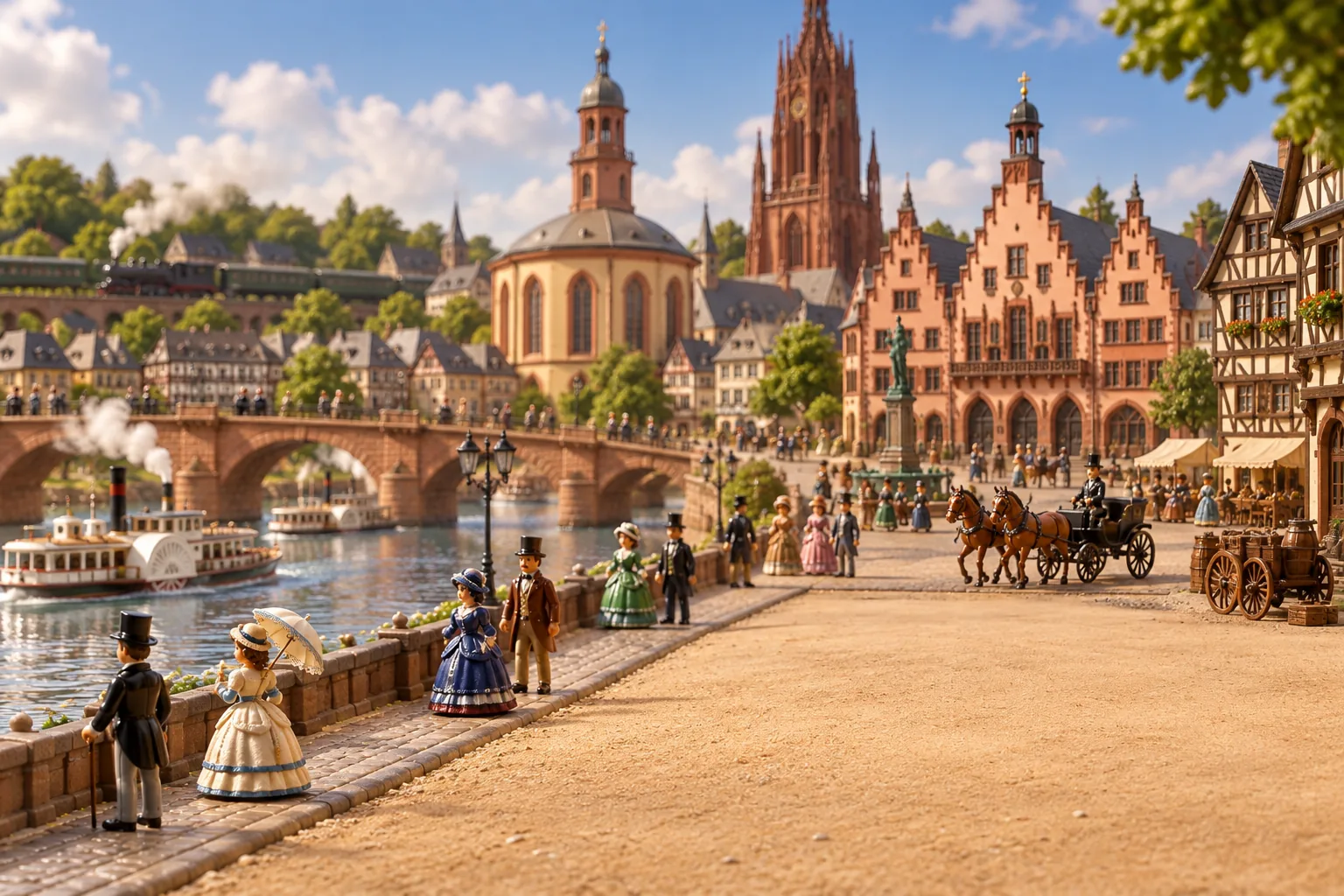
The German Confederation was created by the Congress of Vienna in 1815 to replace the Holy Roman Empire, which had dissolved in 1806 during the Napoleonic Wars. It joined 39 mostly German-speaking sovereign states, from the Austrian Empire and Prussia to the free cities of Bremen, Frankfurt, Hamburg and Lübeck. Its only organ was the Federal Convention in Frankfurt, permanently presided over by Austria's envoy. Foreign monarchs sat in it too, such as the king of Denmark as duke of Holstein.
Austria's chancellor Metternich saw nationalism as the gravest danger. After the student Karl Ludwig Sand murdered the writer August von Kotzebue in 1819, Metternich used the Carlsbad Decrees to dissolve the student fraternities, crack down on the liberal press and restrict academic freedom. The economy pulled the other way: the Prussian-led customs union, the Zollverein, began in 1834 and included most German states by 1842, and between 1815 and 1865 the population outside Austria grew from 21 to 34 million.
In the revolution of 1848 the Convention handed its powers to the government of the Frankfurt National Assembly, which tried to turn the league into a united German state with a liberal constitution. The revolution was crushed and the Convention was restored in 1850. Prussia's victory over Austria in 1866 ended the Confederation, and in 1867 Prussia led a new North German Confederation.
Read more on Wikipedia
