Our time · politics
Gandhi and Indian independence
On the day India won the freedom he had spent thirty years fighting for, Gandhi stayed away from the celebrations and spent it fasting in Calcutta.
Mohandas Karamchand Gandhi was born on 2 October 1869 in Porbandar, on India's west coast. He trained as a lawyer in London, failed to make a living in India, and in 1893 went to South Africa to work on a lawsuit. He stayed 21 years, and there he developed his method of nonviolent resistance to unjust laws. Back in India he took over the independence movement and brought it to ordinary people. In 1930 he walked 388 kilometres to the sea at Dandi to make salt in defiance of the British salt tax, and in 1942 he called on the British to quit India.
After the Second World War Britain was ready to leave, but Muslim and Hindu leaders could not agree on one country. In June 1947 the leaders of Congress, the Muslim League and the Sikhs accepted the viceroy Lord Mountbatten's plan to divide British India, against Gandhi's wishes. At midnight on 14–15 August 1947 India and Pakistan came into existence. The provinces of Punjab and Bengal were cut in two along a border drawn by a London barrister, Sir Cyril Radcliffe.
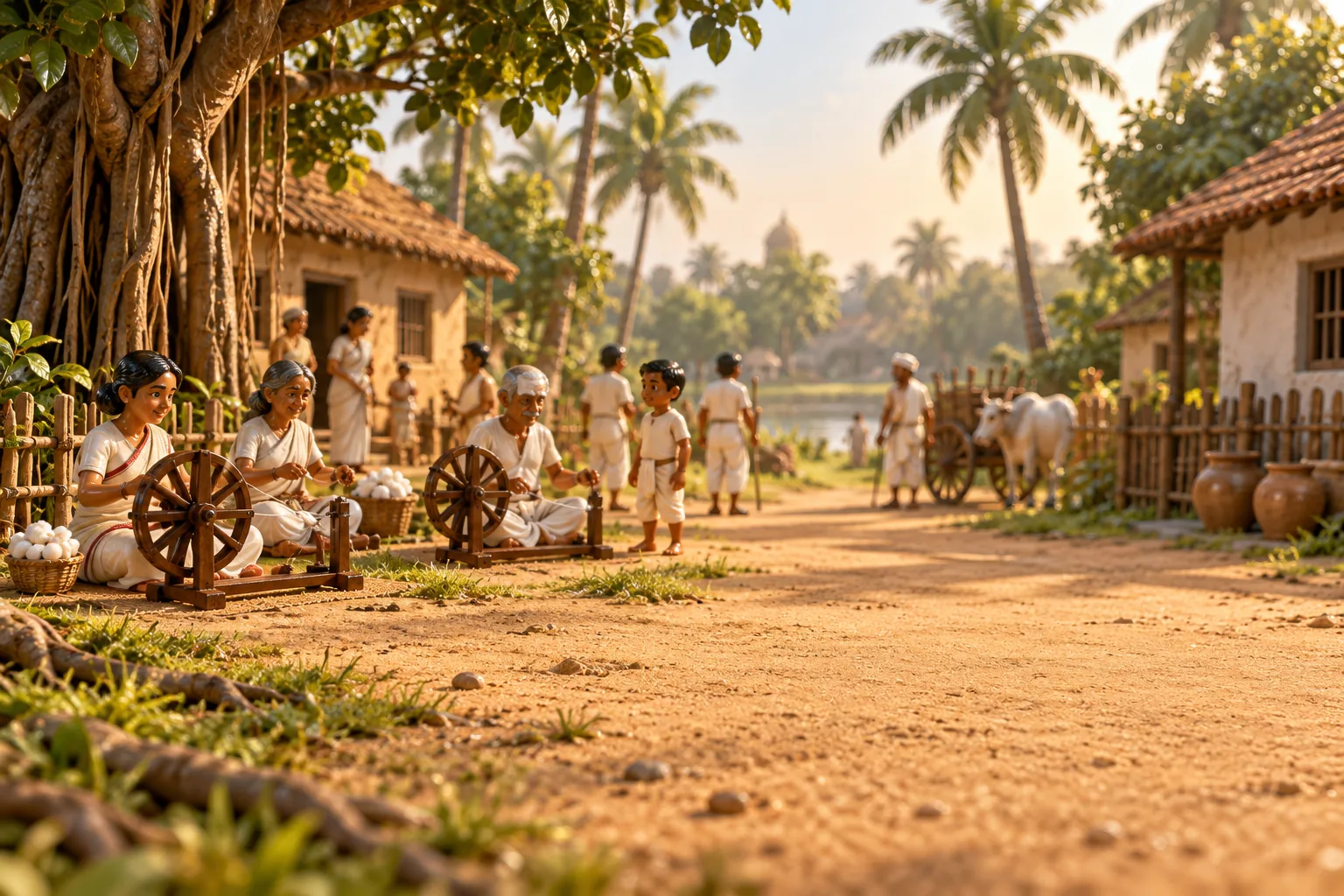
What followed was one of the largest migrations in history. Between 12 and 20 million people fled across the new borders, and communal violence killed somewhere between two hundred thousand and two million. Gandhi spent independence day fasting and spinning in Calcutta, appealing for peace. On 30 January 1948 he was shot dead in Delhi by a Hindu nationalist, Nathuram Godse.
Read more on Wikipedia
Sources: en.wikipedia.org/wiki/Mahatma Gandhi, en.wikipedia.org/wiki/Partition of India


