
Our time · person
Gamal Abdel Nasser
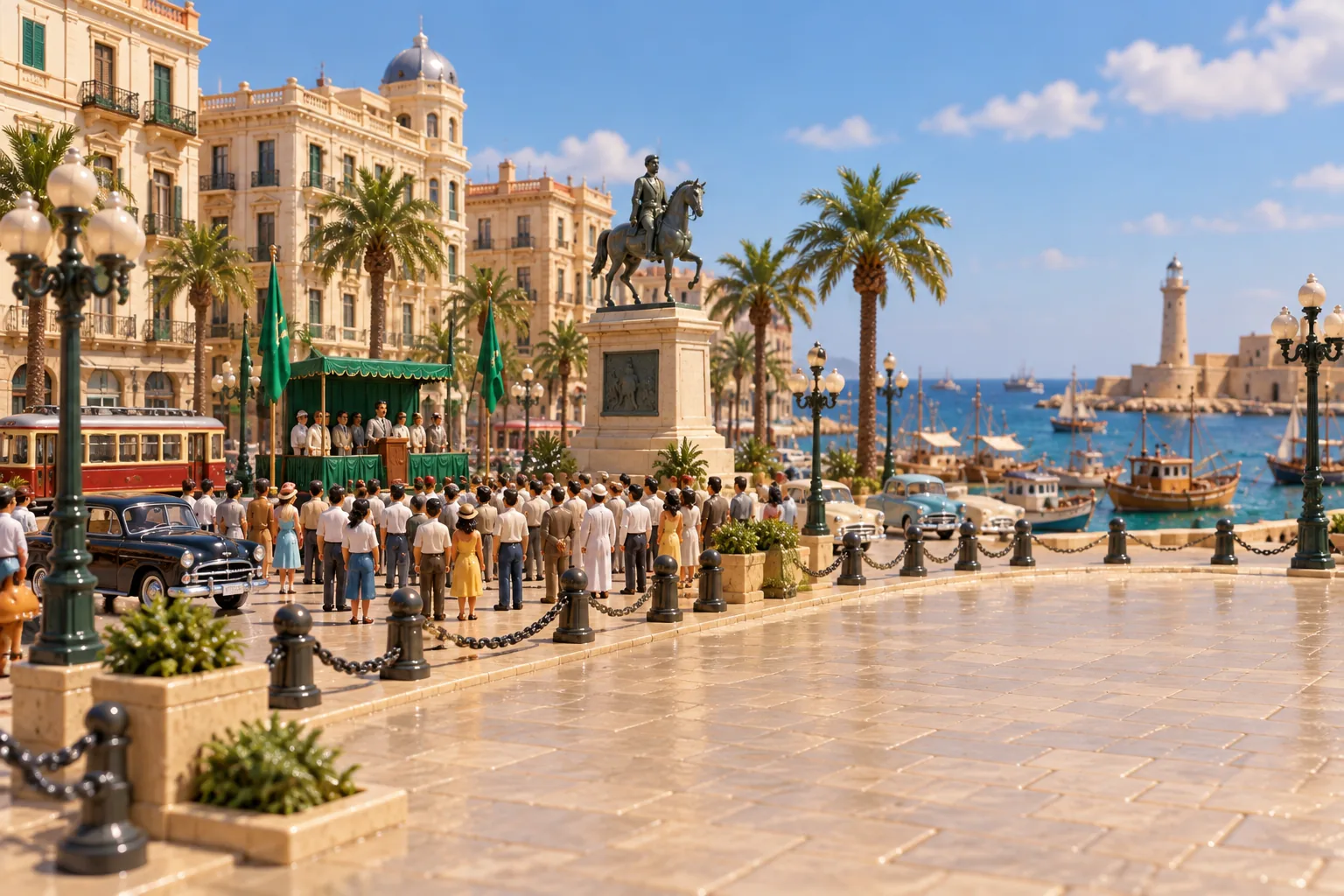
Before a crowd in his home city, the president of Egypt announced that the Suez Canal Company was now Egypt's, and the Arab world poured into the streets to cheer.
Gamal Abdel Nasser was born on 15 January 1918 in Bakos, Alexandria, the son of a postal worker from Upper Egypt. As a schoolboy in Alexandria he saw protesters clashing with police in Manshia Square and joined in without knowing what the demonstration was about. He became an army officer and first saw battle in the 1948 Arab–Israeli War, where his unit was besieged in the Faluja pocket.
Back home he organised the secret Free Officers, and in July 1952 they seized power with the popular General Mohamed Naguib as their figurehead. The monarchy was abolished in June 1953 and political parties were banned. In 1954 Nasser pushed Naguib aside and put him under house arrest. On 26 October 1954, while he was speaking in Alexandria, a Muslim Brotherhood member fired eight shots at him and missed; Nasser went on speaking, and then cracked down on the Brotherhood. When Britain and the United States withdrew their offer to fund the Aswan Dam, he announced in a speech in Alexandria on 26 July 1956 that the Suez Canal Company was nationalised. Britain, France and Israel attacked, but the Suez Crisis ended as a political victory for him.
He led the union with Syria in the United Arab Republic from 1958 to 1961 and built the Aswan Dam. After defeat in the Six-Day War of 1967 he resigned, but returned after mass demonstrations. He died of a heart attack on 28 September 1970, and five to six million people attended his funeral in Cairo.
Read more on Wikipedia