
Antiquity · war
Gallic Wars
Caesar went to Gaul deep in debt and came back rich, famous and ready to take Rome itself.
In 59 BC Julius Caesar was consul in Rome and badly in debt. He then took command of Roman Gaul, and historians agree that his conquests that followed were driven above all by his political career and his need for money. The war began in 58 BC with the migration of the Helvetii, which drew in other tribes and the Germanic Suebi. By 57 BC Caesar had decided to conquer all of Gaul. The Nervii almost beat him in the east, and in 56 BC he defeated the Veneti at sea and took most of the northwest.
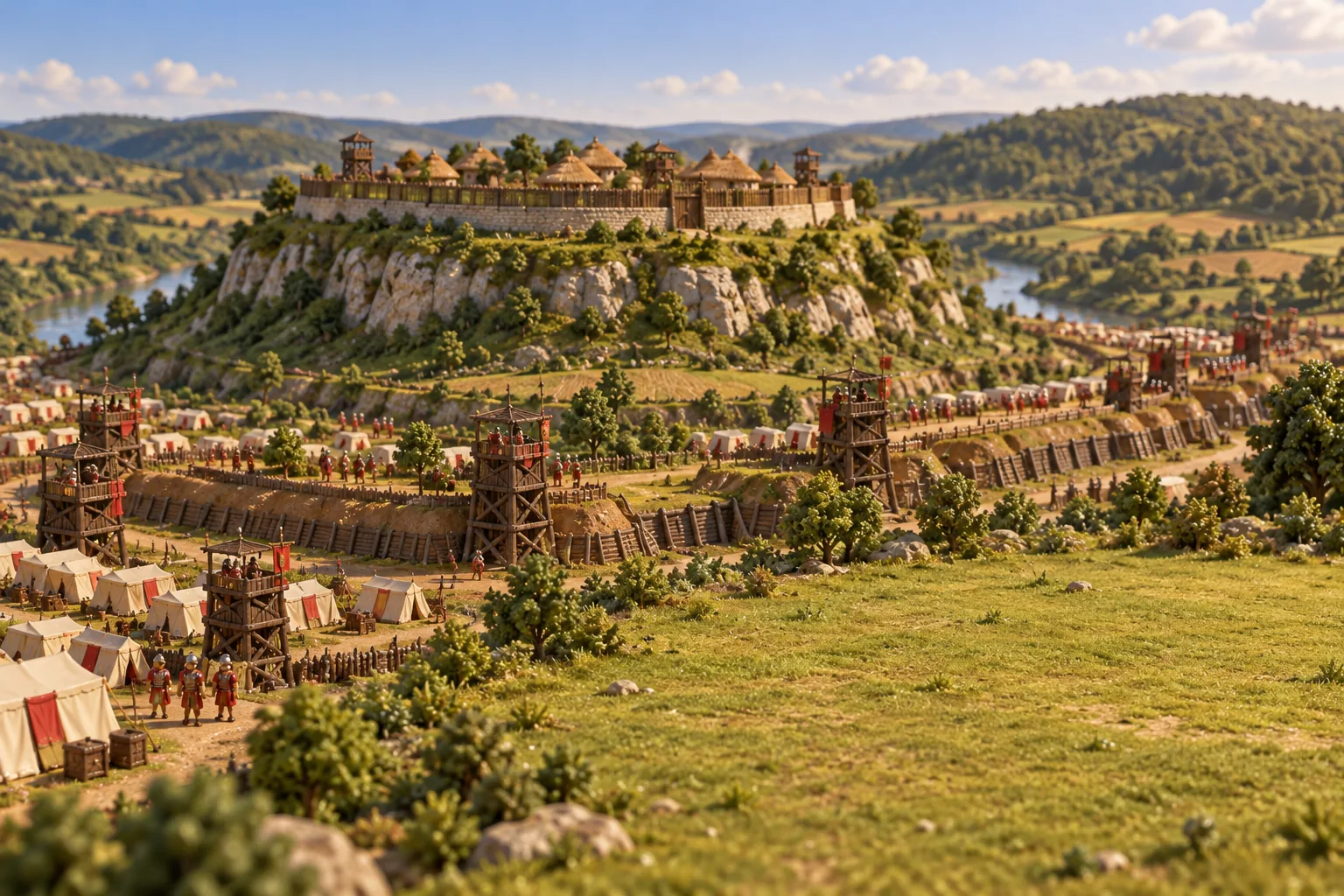
In 55 BC, needing to stay in the public eye, he did what no Roman army had tried before: he bridged the Rhine with timber in just ten days and crossed the English Channel to Britain, returning with a larger army the next year. Revolts followed. In 52 BC the chieftain Vercingetorix united much of Gaul and beat the Romans at Gergovia. He then took refuge in the hill fort of Alesia. In about a month Caesar's men dug some 40 km of fortifications in two rings, one facing the town and one facing outward against a Gallic relief army. The relievers failed, and Vercingetorix surrendered.
By 50 BC Gaul was conquered, though it became a Roman province only in 27 BC. Untold numbers of Gauls, many of them civilians, were killed or enslaved. Caesar told the story himself in his Commentarii de Bello Gallico, and the wealth and fame he won carried him to power in the civil war that followed.
Read more on Wikipedia
Sources: en.wikipedia.org/wiki/Gallic Wars