Early modern · person
Galileo Galilei
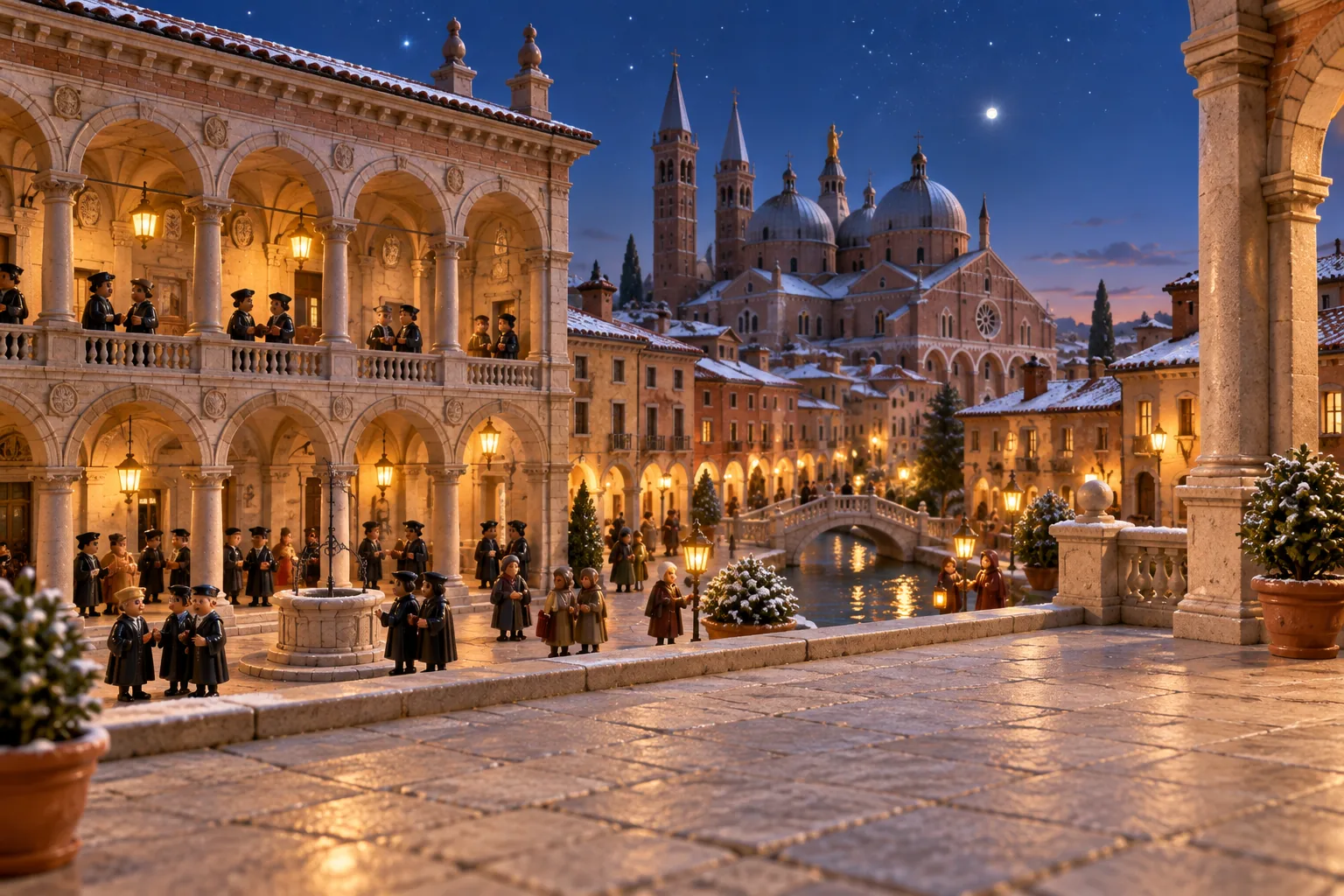
On a January night in 1610 a professor in Padua saw three tiny "stars" lined up beside Jupiter, and within a week he realised they were moons circling another world.
Galileo Galilei was born in Pisa on 15 February 1564, the first of six children of Vincenzo Galilei, a lutenist and music theorist. He went to the University of Pisa in 1580 to study medicine, but mathematics won him over, and in 1589 he took the chair of mathematics there. In 1592 he moved to the University of Padua, in the Republic of Venice, and taught there for eighteen years.
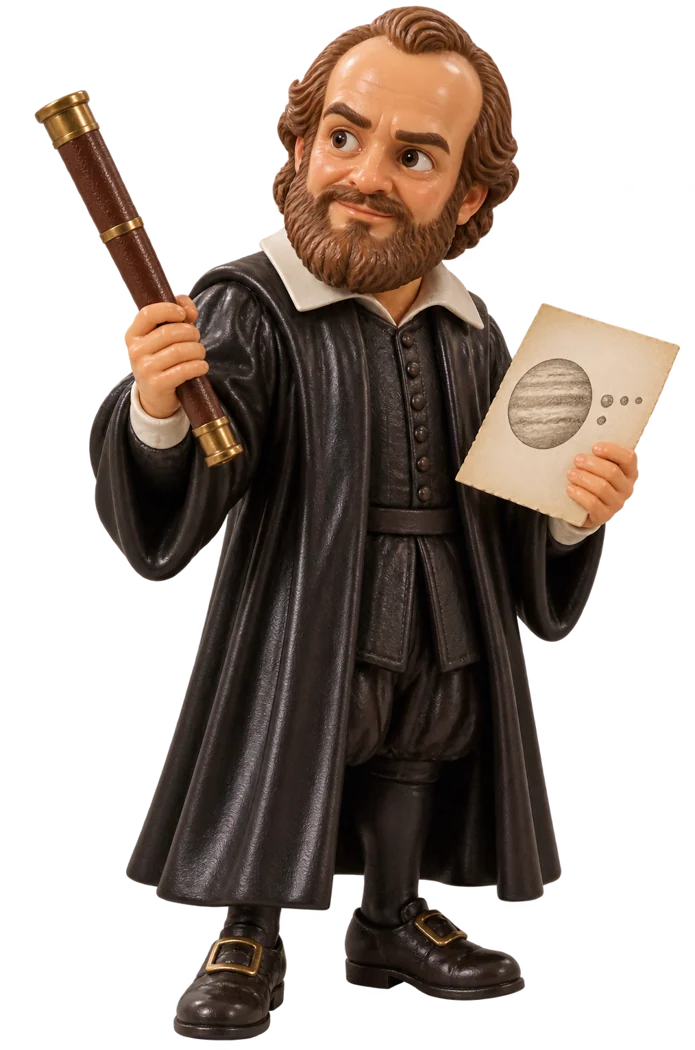
In 1609, after news of a Dutch invention, he built his own telescope and improved it to about 30 times magnification. He saw mountains on the Moon, and on 7 January 1610 three small points of light beside Jupiter. By 15 January he had concluded that four moons were orbiting the planet. He named them the Medicean stars after his future patron Cosimo II de' Medici, Grand Duke of Tuscany, and announced them in The Starry Messenger (Sidereus Nuncius). Later that year he saw the phases of Venus, strong evidence for Copernicus's idea that the planets go round the Sun.
In 1616 the Church declared that idea heretical. His Dialogue Concerning the Two Chief World Systems (1632) seemed to mock Pope Urban VIII, once his admirer, and in 1633 the Inquisition found him "vehemently suspect of heresy" and forced him to recant. He spent his last years under house arrest at his villa in Arcetri near Florence, where he wrote Two New Sciences and went blind. He died there on 8 January 1642. In 1992 Pope John Paul II acknowledged that the Church had erred in condemning him.
Read more on Wikipedia


