Industrial age · person
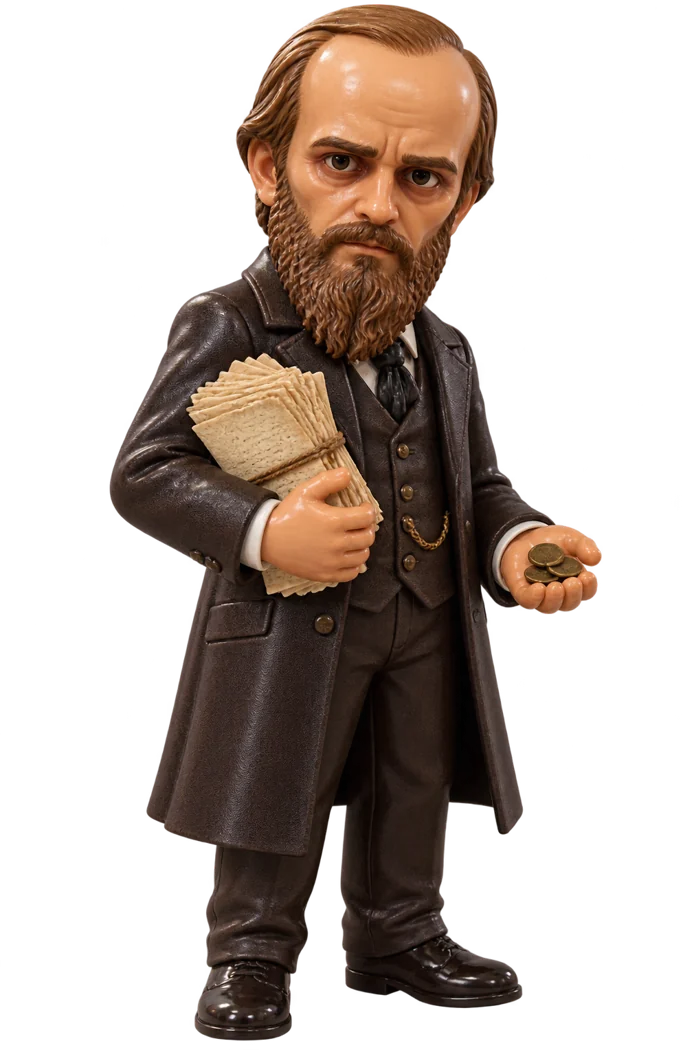
Fyodor Dostoevsky
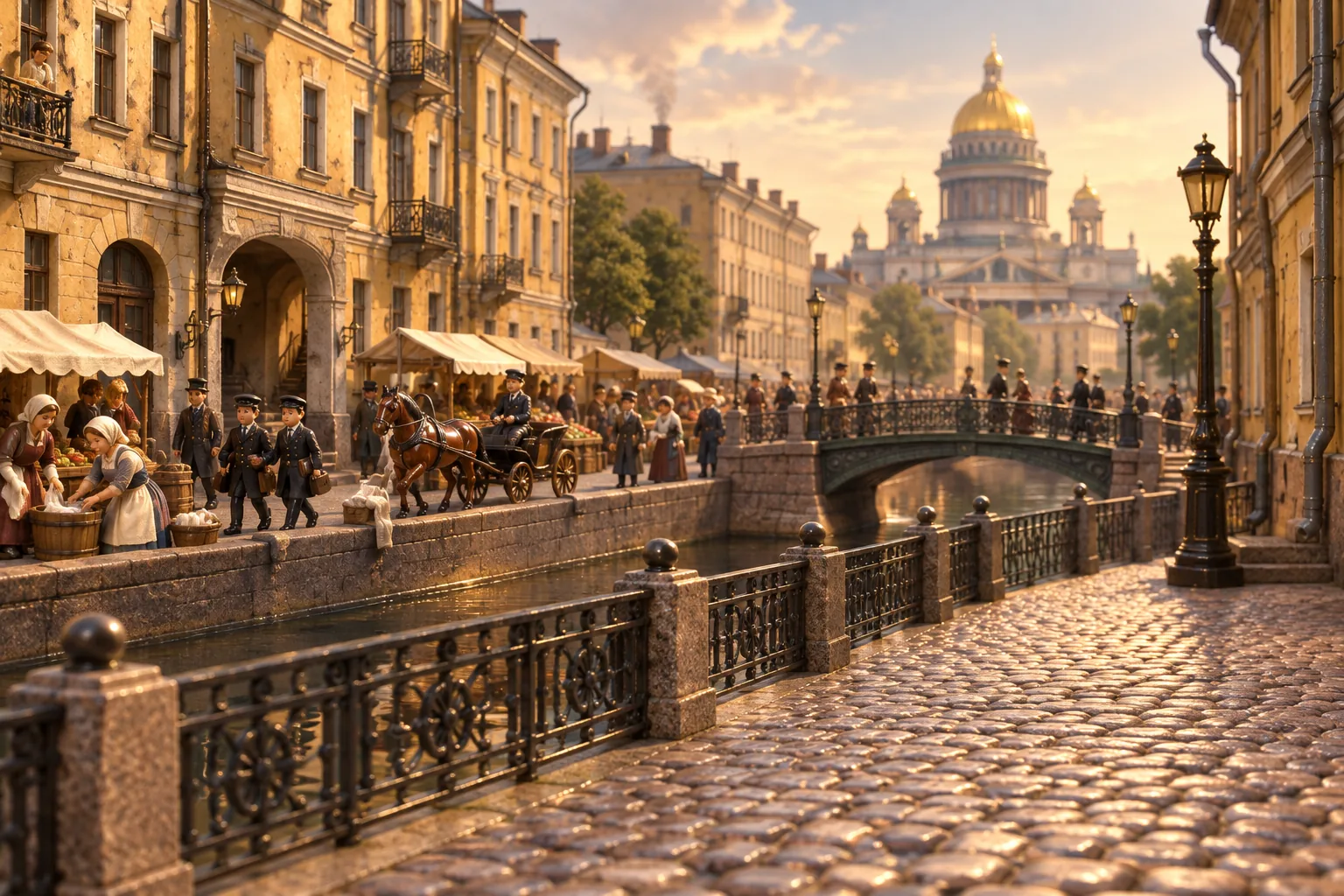
Once led out to face a firing squad and reprieved at the last moment, he wrote a novel from inside the mind of a young murderer in the back streets of Saint Petersburg.
Fyodor Mikhailovich Dostoevsky was born in Moscow on 11 November 1821, the second child of a doctor, and grew up in the grounds of the Mariinsky Hospital for the Poor. He trained as a military engineer in Saint Petersburg but left to write. His first novel, Poor Folk, came out in January 1846, and the critic Vissarion Belinsky hailed it as Russia's first social novel. Then he joined the Petrashevsky Circle, a group that read banned books, and in 1849 he was arrested.
On 23 December 1849 the members were taken to Semyonov Place to be shot, and were reprieved at the last moment. Dostoevsky spent four years at hard labour in a prison camp at Omsk in Siberia, then served as a soldier in Semipalatinsk. Back in Saint Petersburg, deep in debt and hooked on roulette, he published Crime and Punishment in The Russian Messenger in 1866: the story of Raskolnikov, a poor former student who kills an old pawnbroker to prove a theory and is broken by his own conscience.
In 1867 he married Anna Snitkina, who became his stenographer, publisher and business manager. The Idiot, Demons and The Adolescent followed, and finally The Brothers Karamazov in 1880. That year his speech at the unveiling of a monument to Pushkin in Moscow was a sensation. He died in Saint Petersburg on 9 February 1881, and his novels went on to shape modern literature, psychology and existentialist thought.
Read more on Wikipedia
Sources: en.wikipedia.org/wiki/Fyodor Dostoevsky, en.wikipedia.org/wiki/Crime and Punishment


