Industrial age · politics
French Equatorial Africa
In 1940, while France itself lay under German occupation, a colonial federation on the Congo River became the heart of Free France in Africa.
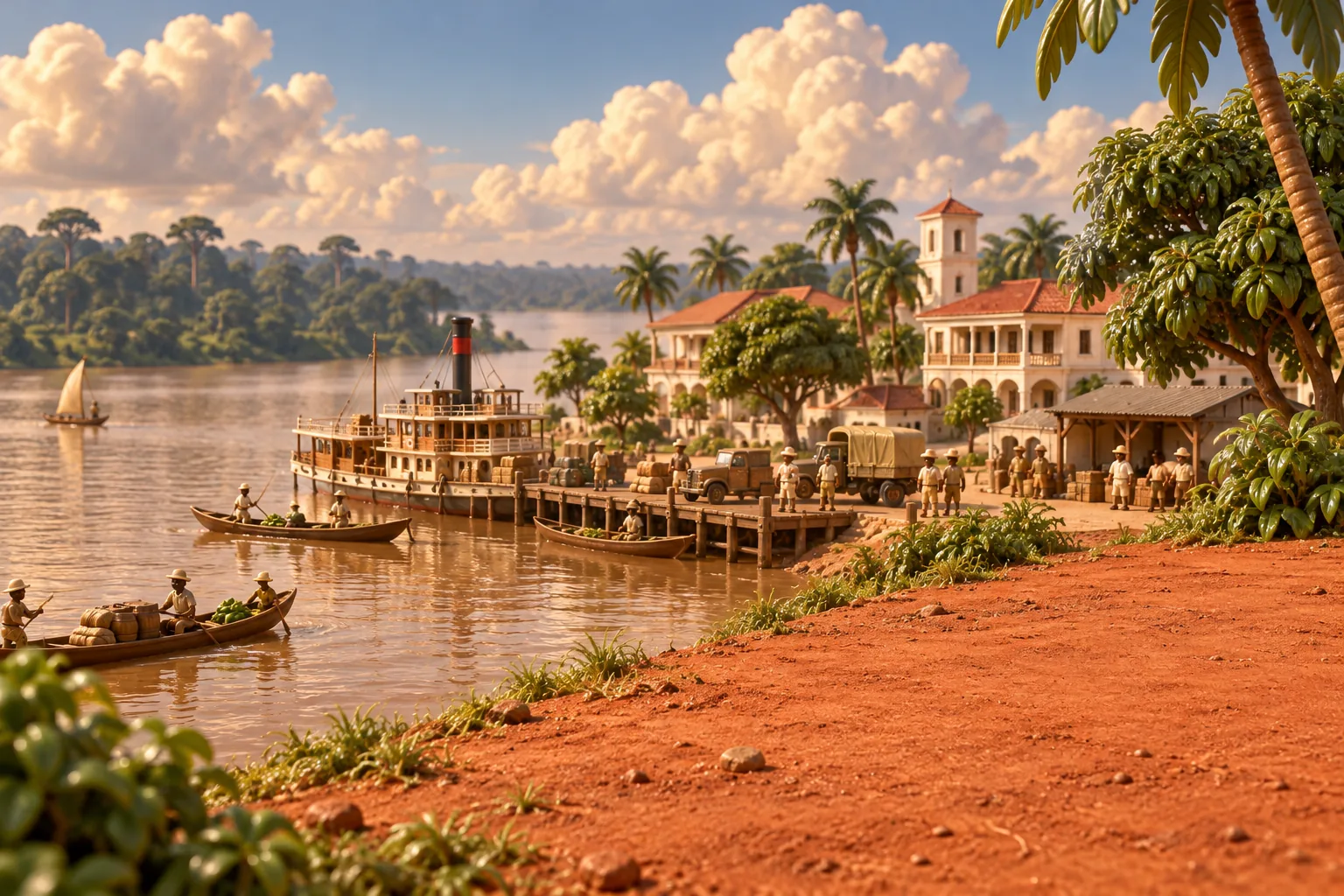
France's hold on Central Africa began with the explorer Pierre Savorgnan de Brazza, who in the 19th century signed treaties with local rulers promising French protection and trade. In 1910 the colonies were joined into a federation, French Equatorial Africa (AEF): Gabon, French or Middle Congo, Ubangi-Shari and Chad, ruled by a governor-general in Brazzaville. It covered a little less than an eighth of Africa, from the deserts of the Tibesti in the north through savannah to the rainforests of the Congo basin.
France invested little. Instead it gave private concession companies the right to exploit ivory and rubber, and they forced people to work with heavy taxes, little or no pay and great cruelty, especially in Ubangi-Shari. The writer André Gide described the abuses in his book Travels in the Congo in 1927, which stirred the anti-colonial movement in France. No one knows how many people died under the concession system.
In August 1940 all of the AEF except Gabon rallied to Charles de Gaulle's Free French, and Gabon followed after a short battle in November. Félix Eboué was made governor-general, and Brazzaville became the centre of Free French Africa. After 1946 the territories sent members to the French parliament. In the 1958 referendum they chose autonomy, the federation was dissolved, and in August 1960 the four became independent states.
Read more on Wikipedia