Industrial age · exploration
Franklin's lost expedition
Two of the best-equipped ships in the Royal Navy sailed into the Arctic with 129 men and three years of food, and simply never came back.
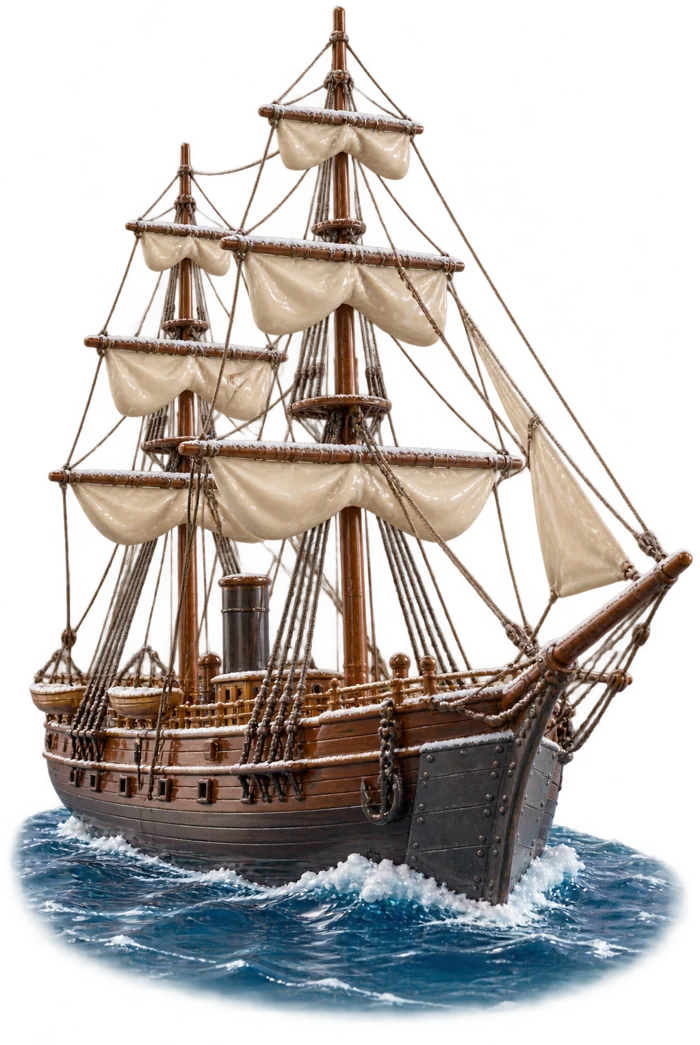
On 19 May 1845 Captain Sir John Franklin left Greenhithe in Kent with HMS Erebus and HMS Terror to sail through the last unknown stretch of the Northwest Passage over the top of Canada. The ships had reinforced bows, steam heating and engines made from old railway locomotives, libraries of more than 1,000 books and three years of food, much of it in tins. In late July 1845 two whaling ships saw them for the last time.
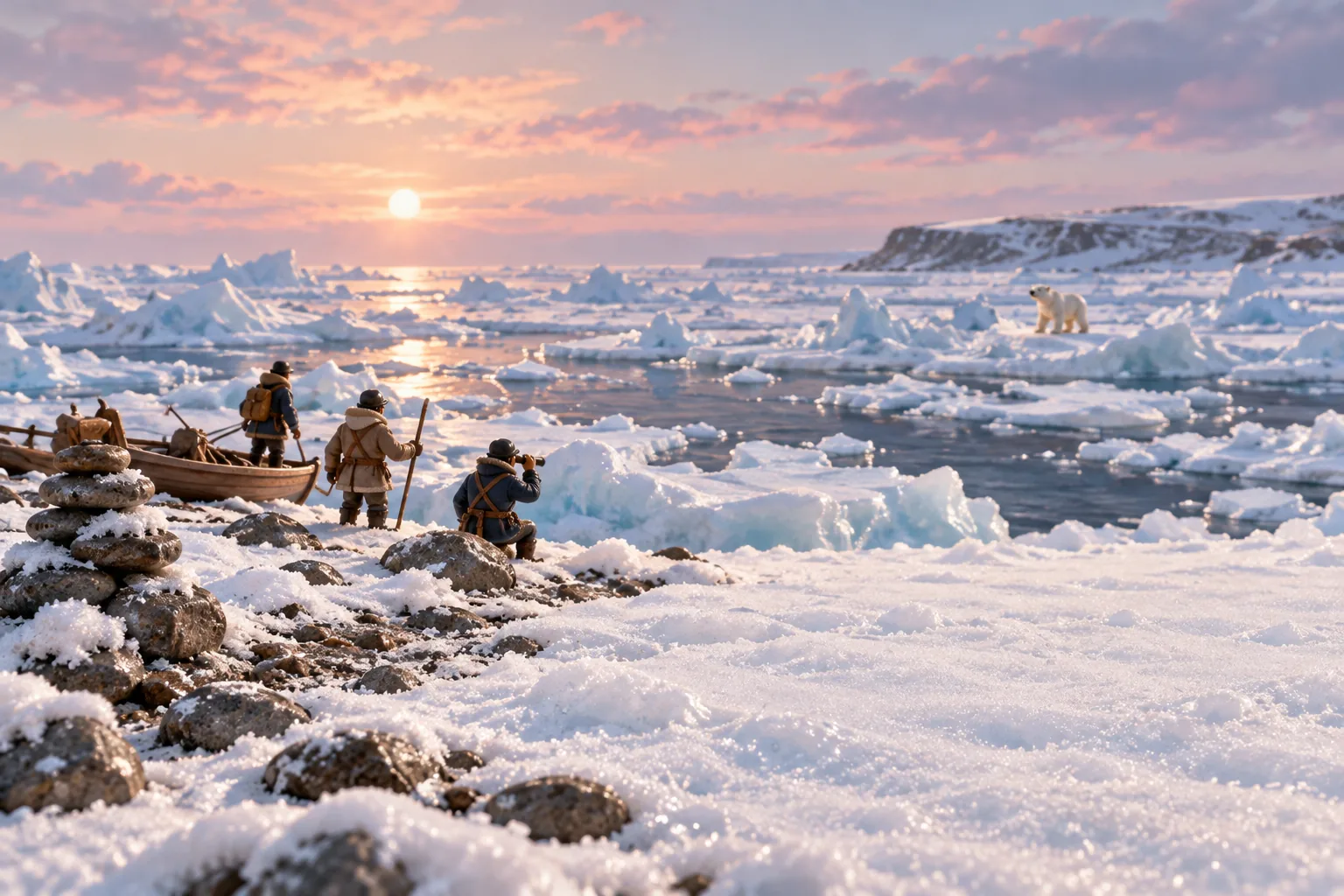
They spent the first winter at Beechey Island, where three men died and were buried. In September 1846 both ships were trapped by ice in Victoria Strait, off King William Island. A note later found in a stone cairn tells the rest: Franklin died on 11 June 1847, and on 22 April 1848 the remaining 105 men under Captain Francis Crozier abandoned the ships and set off on foot toward the Back River. None survived.
Pushed by Franklin's wife Jane, the Admiralty began searching in 1848, and dozens of expeditions followed. In 1854 the explorer John Rae heard from Inuit of men who had starved near the Back River, and he bought from them silver spoons and forks belonging to the officers. Modern studies point to cold, starvation, scurvy and lead poisoning, perhaps from badly soldered tins.
Read more on Wikipedia

