Our time · state
Francoist Spain
After winning the civil war, Franco ruled Spain for 36 years and chose a king, Juan Carlos, as his successor.
General Francisco Franco's Nationalists won the Spanish Civil War in 1939, and the state they had built in the lands they held during the war came to cover all of Spain. The Falange became the only legal party, and the regime imprisoned and executed people found guilty of supporting the values of the Republic. It took away the official status the Republic had given to the Basque, Galician and Catalan languages. In the hungry years after the war, a famine killed more than 200,000 people.
In the Second World War Spain was formally non-belligerent or neutral, but it helped the Axis, sending the Blue Division to fight on the Eastern Front. After 1945 it was isolated: a United Nations resolution condemned it in 1946, and it joined the UN only in 1955. Franco's anti-communism tilted Spain towards the United States, which gave about 1.5 billion dollars in aid between 1954 and 1964.
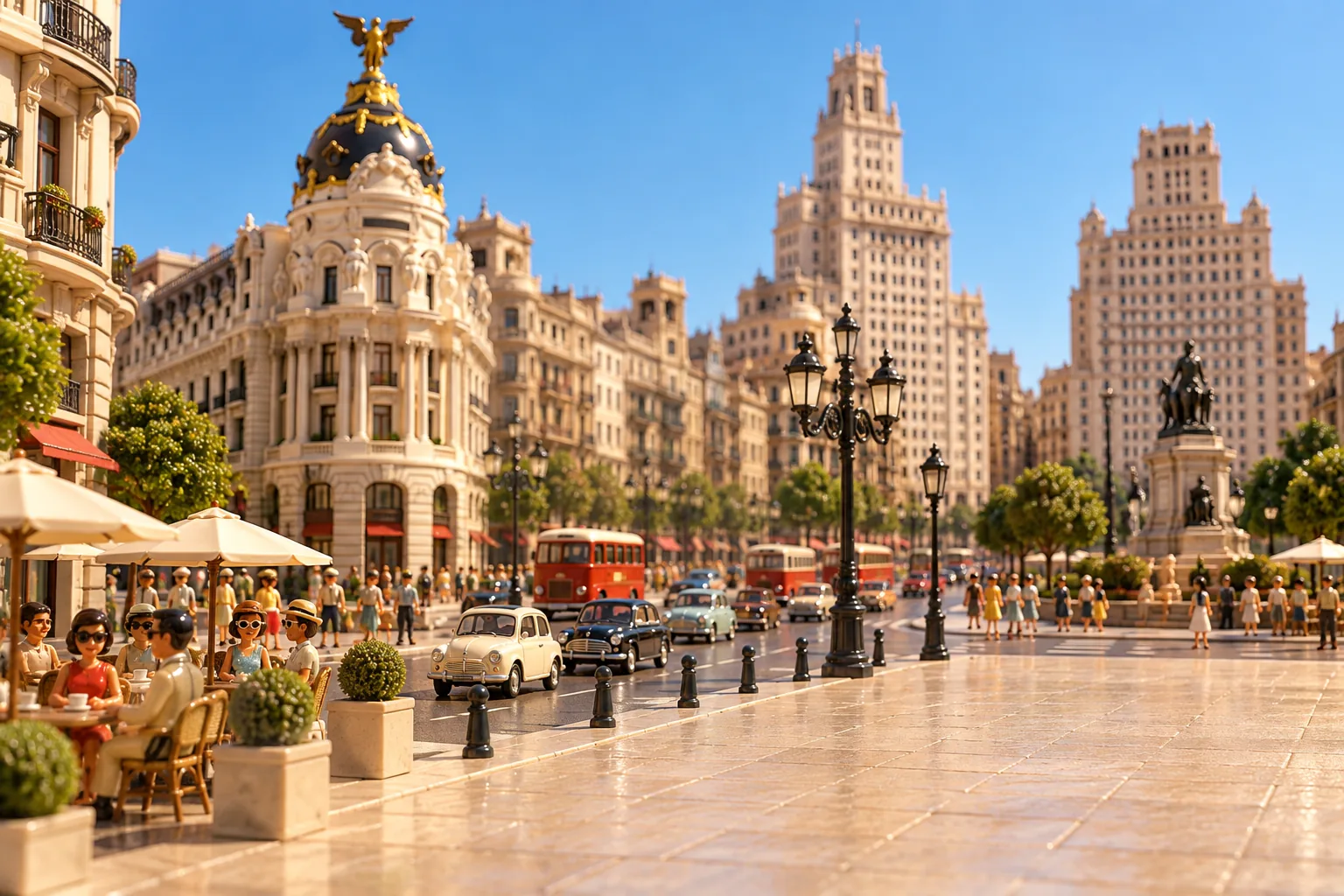
On the brink of bankruptcy, the regime let technocrats open up the economy in 1959, and the Spanish miracle followed: Spain became the second-fastest-growing economy in the world, just behind Japan. In 1969 the Cortes named Juan Carlos of Bourbon Franco's successor as king. When Franco died on 20 November 1975, Juan Carlos took the throne and led Spain's transition to democracy.
Read more on Wikipedia
Sources: en.wikipedia.org/wiki/Francoist Spain, en.wikipedia.org/wiki/SEAT 600