Industrial age · war
Franco-Prussian War
A telegram that Bismarck edited before handing it to the press helped start a war that ended with an emperor taken prisoner.
In 1870 Spain offered its vacant throne to Prince Leopold of Hohenzollern, a relative of the Prussian king. Leopold withdrew, but the French ambassador went to King Wilhelm I at the spa town of Ems and demanded that Prussia renounce any future claim. Wilhelm refused. The report of the meeting, the Ems dispatch, reached Berlin on 13 July, and chancellor Otto von Bismarck published it with altered wording. Crowds in Paris demanded war, and on 16 July the French parliament voted for it.
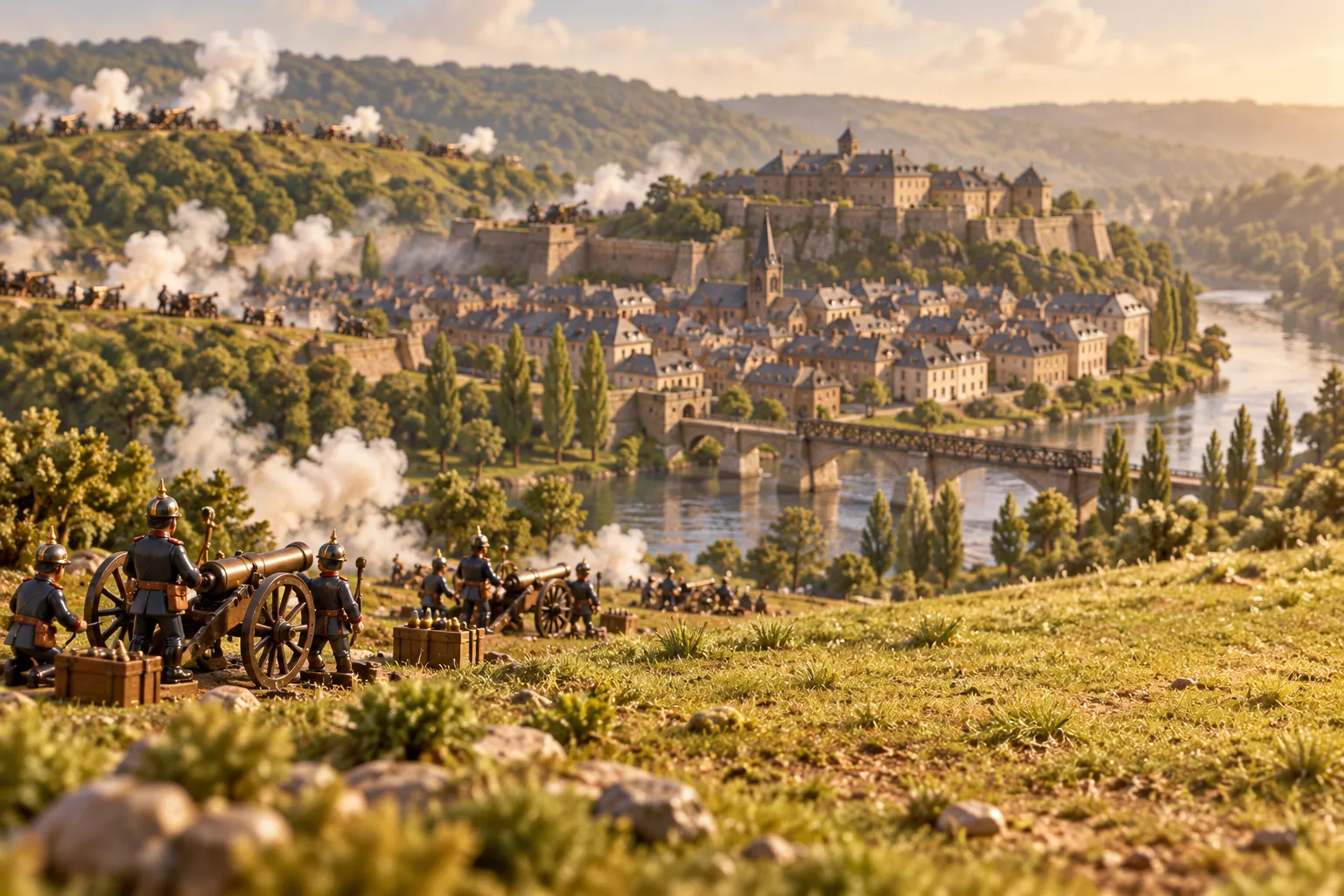
The German states mobilised far faster, using railways and the telegraph under the chief of staff Helmuth von Moltke, and invaded northeastern France on 4 August. French infantry had the excellent Chassepot rifle, but Prussian batteries had Krupp steel breech-loading cannons that outranged the French bronze guns. One French army was trapped in Metz. The other, with Emperor Napoleon III himself, was surrounded at Sedan, and on 2 September the emperor surrendered and was taken prisoner with 104,000 of his soldiers.
In Paris, crowds overthrew the Second Empire and a Government of National Defence fought on. The Germans began the siege of Paris on 19 September. In the last days of the war, on 18 January 1871, the German states proclaimed their union as the German Empire under Wilhelm I. The Treaty of Frankfurt of 10 May 1871 gave Germany most of Alsace and part of Lorraine and an indemnity of five billion francs.
Read more on Wikipedia