Industrial age · war
First Sino-Japanese War
China's modern battle fleet had to signal its orders by watching the flagship's movements, because its signal book was written in English, which few of its officers could read.
In the late 19th century Korea was still a tributary state of Qing China, while Japan, modernised by the Meiji Restoration, saw it as a target for expansion. In June 1894, at the request of Korea's ruler Gojong, China sent troops to help crush the Tonghak peasant revolt. Japan answered with 8,000 soldiers, who seized Gojong in Seoul and set up a pro-Japanese government on 23 July. Two days later the Japanese navy sank the steamer Kowshing, carrying 1,200 Chinese reinforcements, and war was declared on 1 August.
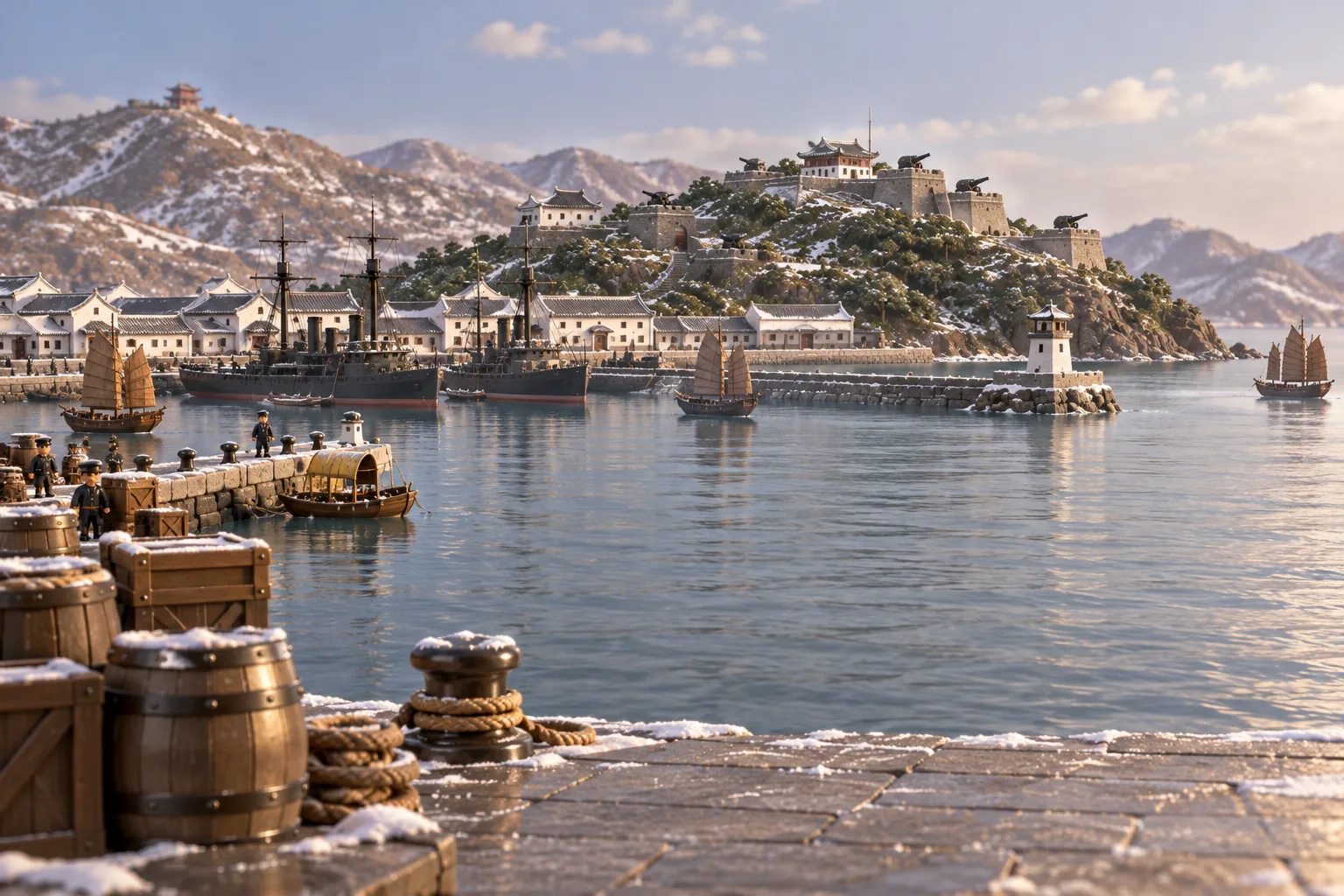
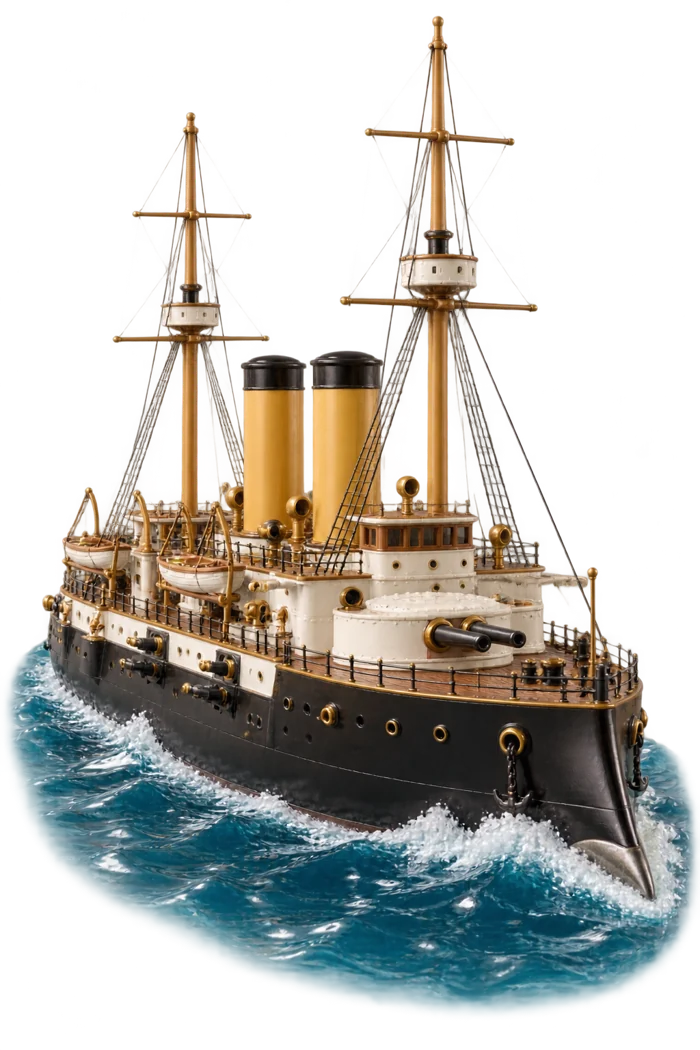
Japan won almost every battle. After the Battle of Pyongyang on 15 September the Chinese left Korea, and two days later, at the mouth of the Yalu River, the Japanese navy destroyed eight of the ten Chinese warships engaged; its faster, better-armed ships carried the day. In the autumn Japanese armies invaded Manchuria and took Port Arthur on 21 November, and on 12 February 1895 they captured the naval base of Weihaiwei, opening the road to Beijing.
The Treaty of Shimonoseki of 17 April 1895 made China pay 200 million taels of silver and give Taiwan to Japan. Russia, Germany and France forced Japan to hand back the Liaodong Peninsula, for another 30 million taels. For the first time, Japan rather than China was the leading power in East Asia, and in China the shock helped bring on the revolution of 1911.
Read more on Wikipedia


