Industrial age · state
First Saudi State
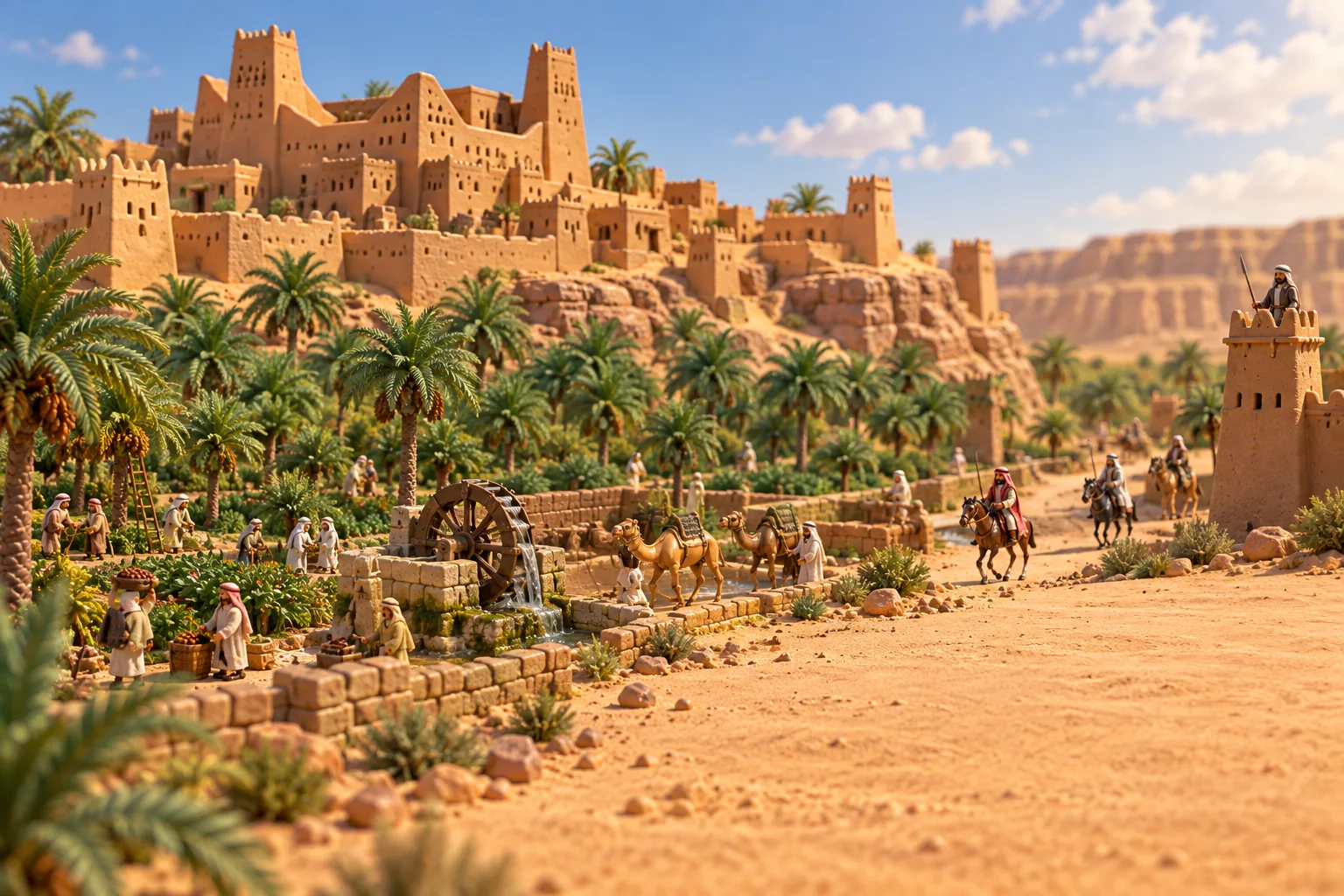
Born from a 1744 pact between an emir and a preacher, Ibn Abd al-Wahhab, it ended when Ottoman-Egyptian troops razed Diriyah.
In 1744 Muhammad bin Saud, emir of the small Najdi oasis town of Diriyah, made a pact with the religious leader Muhammad ibn Abd al-Wahhab. The emir would lead the state, the preacher would guide its faith, and together they launched a reform movement under the House of Saud. Their forces conquered Najd, then the eastern coast of Arabia from Kuwait down to the borders of Oman, and the highlands of Asir.
Muhammad bin Saud died in 1765 and his son Abdulaziz took over; Ibn Abd al-Wahhab died in 1792. In 1801 Saudi forces captured the Shia holy city of Karbala in Ottoman Iraq, destroyed its shrines and killed more than 5,000 civilians, and in 1803 a young Shia assassinated Abdulaziz. His son Saud then took the Hejaz: Taif fell first, then Mecca and Medina. This was a direct challenge to the Ottoman sultans, who had held the holy cities since 1517.
The Ottomans gave the task of crushing the Saudis to Muhammad Ali Pasha, the viceroy of Egypt. His son Ibrahim Pasha marched into Najd, took town after town and besieged Diriyah for several months until it surrendered in 1818. The emir Abdullah bin Saud was sent to Constantinople and executed.
Read more on Wikipedia
Sources: en.wikipedia.org/wiki/First Saudi state, en.wikipedia.org/wiki/Ottoman–Saudi war


