Middle Ages · state
Fatimid Caliphate
A Shi'a dynasty from Tunisia conquered Egypt, built Cairo from scratch in 969 and opened the mosque that lives on as al-Azhar University.
The Fatimids were an Isma'ili Shi'a dynasty named after Fatima, the Prophet Muhammad's daughter. From 902 the missionary Abu Abdallah al-Shi'i led Kutama Berber warriors against the Aghlabid rulers of Ifriqiya, today's Tunisia. In January 910 his master Abdallah proclaimed himself caliph at Raqqada as al-Mahdi, a rival to the Abbasids of Baghdad. In 921 he opened a fortified new capital on the coast, al-Mahdiyya.
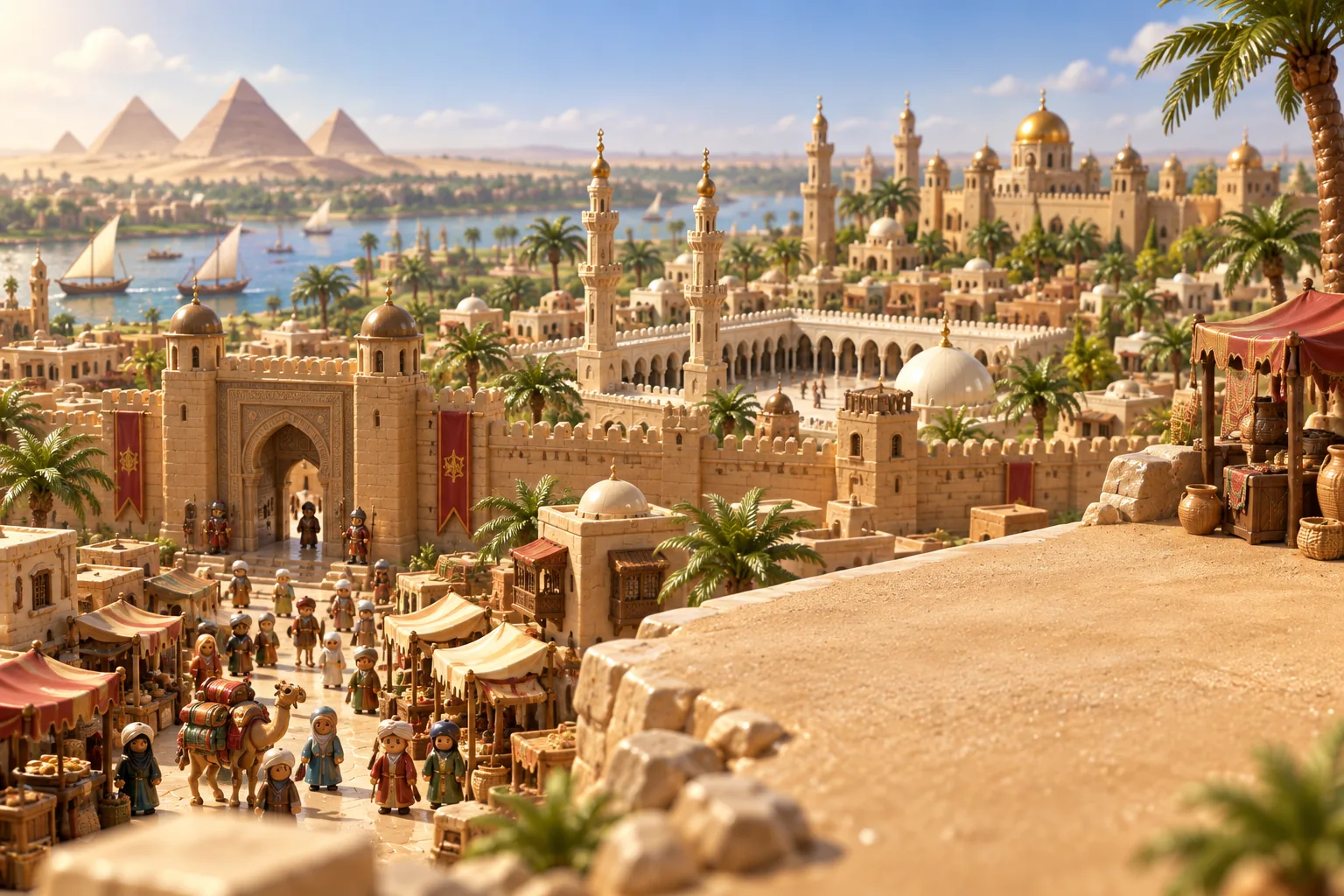
In 969 the general Jawhar conquered Egypt and laid out a new palace city, al-Qahira, or Cairo, a few miles from old Fustat. Caliph al-Mu'izz moved there in 973, and its state mosque, Al-Azhar, became a centre of teaching in 988. At its peak the empire held parts of North Africa, Sicily, the Levant, the Hejaz and Yemen, and Egypt grew rich on flax and Mediterranean and Indian Ocean trade. Caliph al-Hakim opened the House of Knowledge library but persecuted Christians and in 1009 ordered the demolition of the Church of the Holy Sepulchre in Jerusalem.
Under al-Mustansir, who reigned from 1036 to 1094, army factions fought in Cairo during a seven-year famine. The vizier Badr al-Jamali restored order from 1074 and rebuilt the city walls in stone. Seljuk Turks took much of Syria, and in 1099 the crusaders captured Jerusalem. The last caliphs came to the throne as children, and in September 1171 the vizier Saladin deposed al-Adid and founded the Ayyubid dynasty.
Read more on Wikipedia