Prehistory · science
Farming begins
Farming let humans multiply, build towns and eventually write, and it also made them shorter, sicker and more tied to one place.
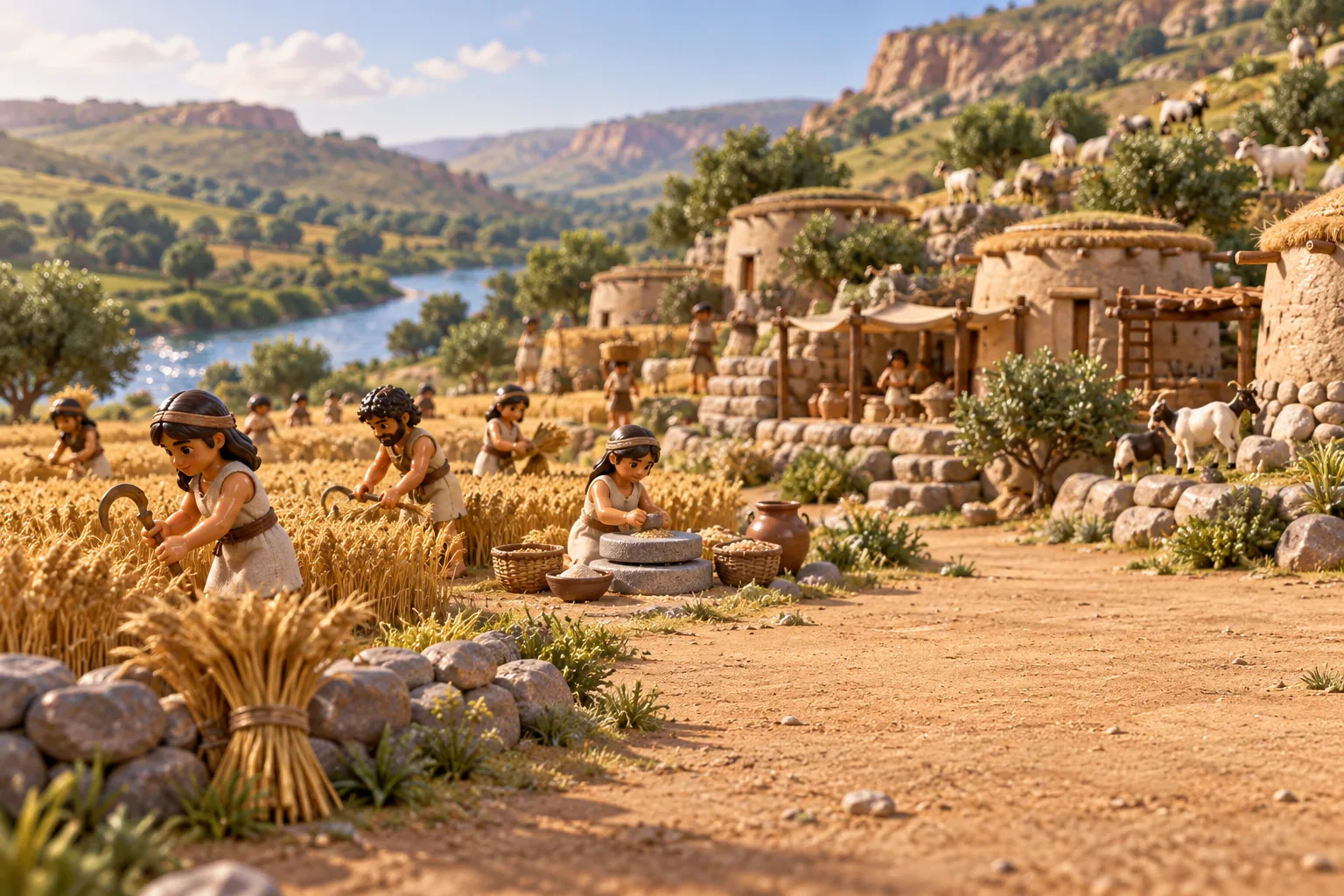
For almost all of human history, people lived by hunting animals and gathering wild plants, moving with the seasons. After the last Ice Age ended, about 11,700 years ago, that began to change. In the Fertile Crescent of Southwest Asia, farming began between about 10,000 and 8,000 BC. People there domesticated three cereals, einkorn wheat, emmer wheat and barley, along with lentils, peas, bitter vetch, chickpeas and flax. It was slow: centuries, perhaps millennia, of tending wild plants came before true crops. At Gilgal I, archaeologists found caches of figs, wild barley and wild oats about 11,000 years old, far too many to have been gathered in the wild.
The same step was taken again, independently, in other places. Farmers along the Yellow River domesticated millet about 8,000 years ago, and rice was domesticated in the Yangtze basin. At Kuk Swamp in Papua New Guinea, taro and yams were being grown at least 10,200 years ago. In Mesoamerica maize domestication began around 7000 BC, alongside squash and beans.
Farming fed far more people and tied them to villages and then towns, with pottery, polished stone tools, rectangular houses and herds of animals. It laid the ground for cities, writing and states. It also had a price. Farmers ate more carbohydrates and less protein than foragers, their teeth decayed, their children grew more slowly, and diseases such as influenza, smallpox and measles jumped from livestock to people.
Read more on Wikipedia
