Middle Ages · war
Fall of Constantinople
When his warships could not get past a chain across the harbour, the young sultan had them dragged over a hill on greased logs.
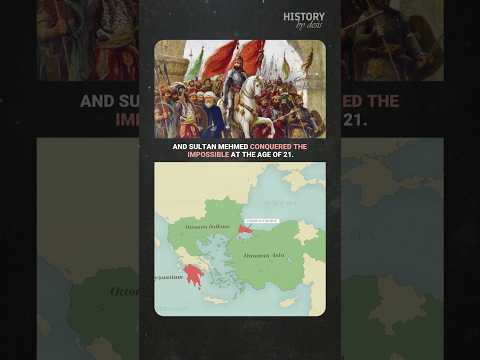
Constantinople had been an imperial capital since 330 and had fallen only once, to crusaders in 1204. By 1453 the Black Death and long decline had left it a string of walled villages and fields inside its great fifth-century walls. Its emperor, Constantine XI, had about 7,000 soldiers. Sultan Mehmed II, who had come to the throne in 1451 at 19, brought somewhere between 50,000 and 80,000, and something new: heavy cannon. One, called Basilica, was 27 feet long and threw a 600-pound stone ball more than a mile.
The siege began on 6 April. The guns pounded the land walls, the only side of the city not protected by water. A floating chain kept the Ottoman fleet out of the Golden Horn, the city's harbour, until 22 April, when Mehmed built a road of greased logs across the hill of Galata and dragged his ships overland into the water behind the chain. His miners dug tunnels under the walls; a German engineer in the city dug counter-tunnels to meet them.
Shortly after midnight on Tuesday 29 May the final assault began, wave after wave. When the Genoese commander Giovanni Giustiniani was badly wounded and carried away, panic spread and the Janissaries broke in. Constantine's fate is unknown; legend says he threw off his purple regalia and died fighting in the streets. Mehmed rode into the city, turned Hagia Sophia into a mosque and made Constantinople his capital.
Read more on Wikipedia