Ancient world · state
Etruscans
They gave early Rome its kings and its fasces, and their language is still only partly understood.
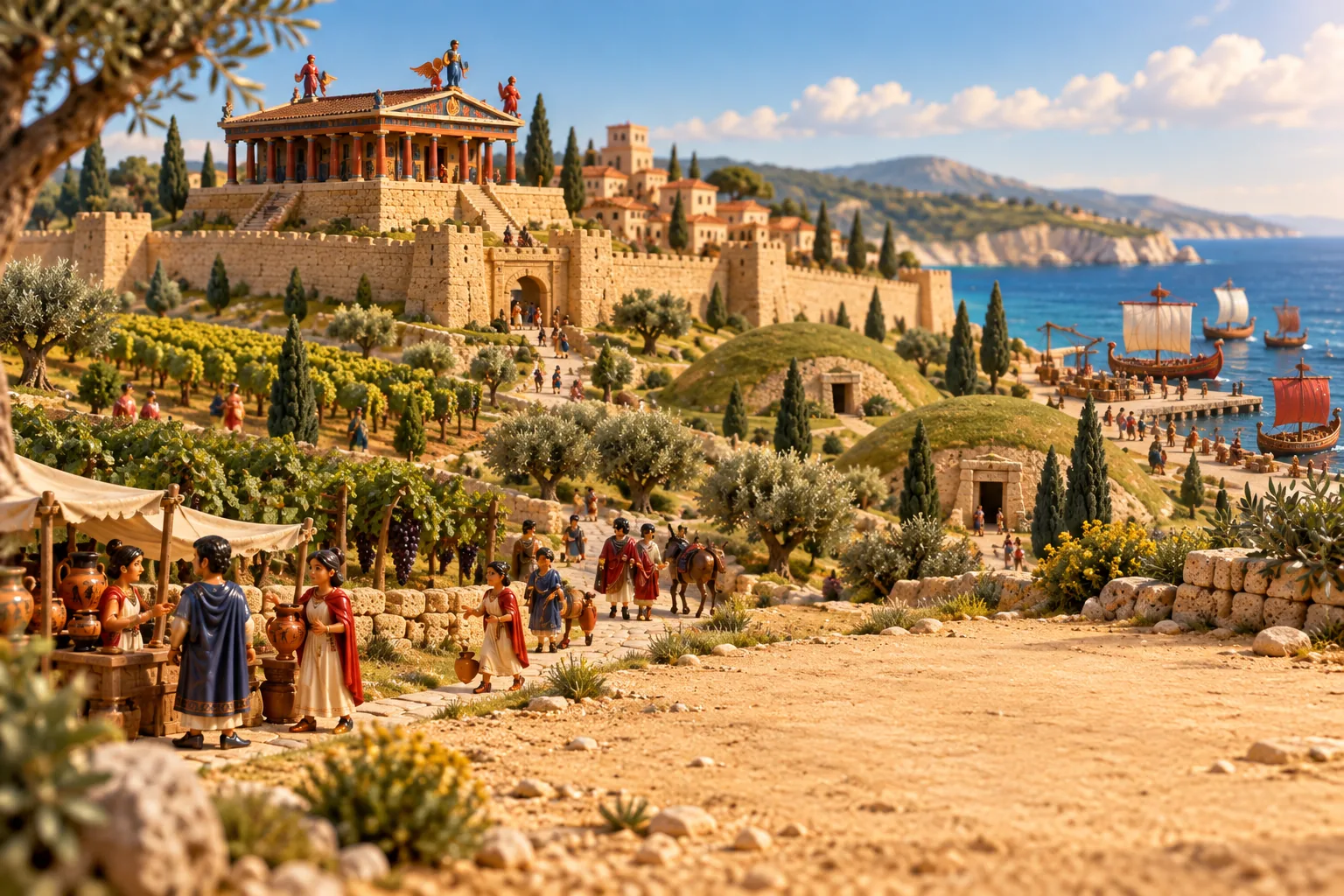
The earliest culture that is clearly Etruscan, the Iron Age Villanovan culture, dates from about 900 BC in central Italy, and most scholars today see the Etruscans as a native people. Through the Greek colonies at Pithecusae and Cumae they took up a form of the Greek alphabet and new ways of banqueting. Their Roman name survives in the name of their heartland, Tuscany.
Etruria was never one state but a set of independent city-states such as Tarquinia, Caere, Veii, Volsinii and Vulci; according to Livy, twelve of them met once a year at the sanctuary of Fanum Voltumnae to choose a leader. Allied with Carthage against the Greeks, they fought the naval battle of Alalia off Corsica around 540 BC, but in 474 BC Hiero of Syracuse beat them at Cumae. Etruscan kings ruled Rome until Lucius Tarquinius Superbus fell in 510 BC, and Rome kept Etruscan signs of power such as the curule chair and the fasces.
Rome destroyed Veii after a siege from 396 BC, and from the late 4th century BC it swallowed the other cities in the Roman–Etruscan Wars. The Etruscans became Roman citizens in 90 BC, and by 27 BC all their land was part of the Roman state. Etruscan haruspices, who read the will of the gods in animal entrails, were still consulted by the Roman senate.
Read more on Wikipedia


