Early modern · war
English Civil War
It ended with something no one in 1642 had set out to do: an English king put on trial and beheaded outside his own palace.
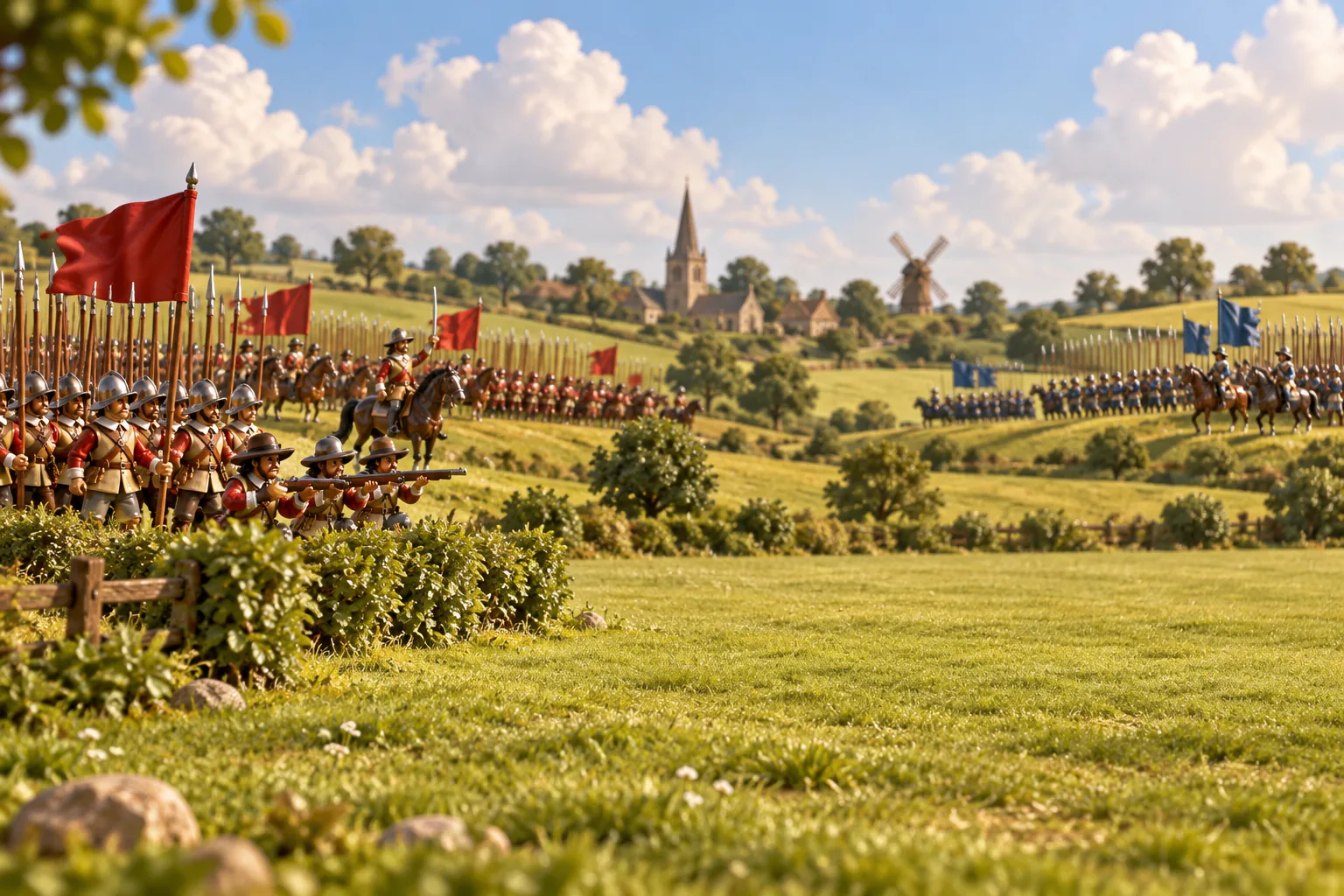
King Charles I and Parliament quarrelled for years over money, religion and power. Charles raised taxes such as ship money without Parliament's consent, and on 4 January 1642, followed by 400 soldiers, he entered the House of Commons to arrest five members for treason. They had already fled. On 22 August 1642 Charles raised the royal standard at Nottingham, and the country split between Royalists, nicknamed Cavaliers, and Parliamentarians, the Roundheads.
The first pitched battle, at Edgehill on 23 October 1642, was inconclusive. With Scottish help Parliament won at Marston Moor on 2 July 1644, and its new professional force, the New Model Army, smashed the king's armies at Naseby on 14 June 1645 and Langport soon after. In June 1646 the war ended with Charles in custody. But he refused to make real concessions, and a second war in 1648 was lost by the Royalists too.
Most Parliamentarians had gone to war to assert Parliament's rights, not to abolish the monarchy. Yet on 30 January 1649 Charles was beheaded on a scaffold in front of the Banqueting House in Whitehall, and England became a republic, the Commonwealth. His son's attempt to return with a Scottish army ended at Worcester on 3 September 1651. Oliver Cromwell ruled as Lord Protector until his death in 1658, and the monarchy was restored in 1660.
Read more on Wikipedia


