Our time · politics
The end of the Soviet Union
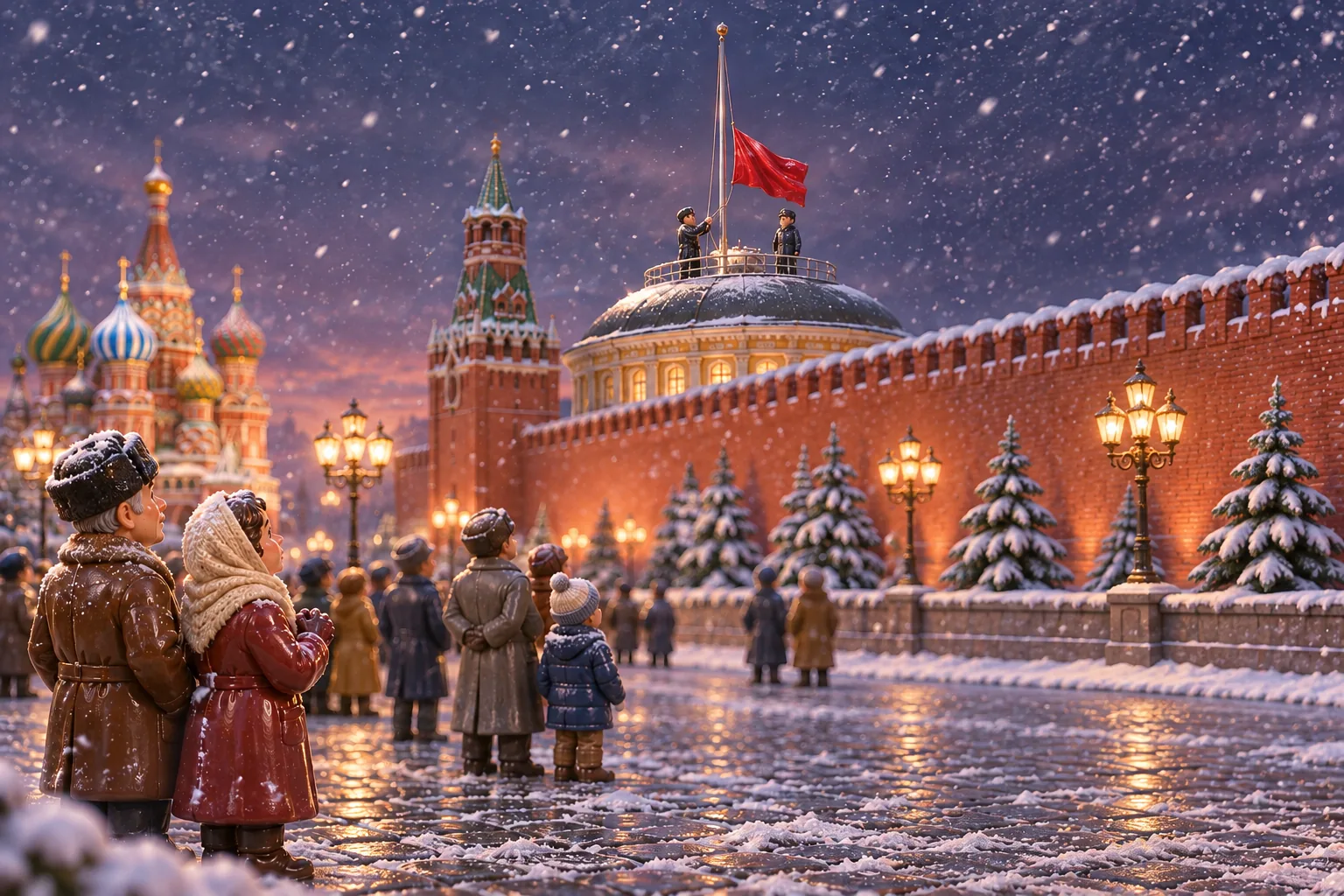
At 7:45 in the evening on 25 December 1991 the red flag came down over the Kremlin, and a superpower simply stopped existing.
By the late 1980s the Soviet Union was in trouble. Its economy had stagnated for years, the arms race with the United States was draining it, and its 15 union republics, each the homeland of a different people, were pulling away. Mikhail Gorbachev tried to save the system with openness and reform, glasnost and perestroika, but the new freedom let the grievances out. Estonia declared sovereignty in November 1988; Lithuania declared outright independence in March 1990.
In March 1991 a union-wide referendum still showed 77.85 percent of voters backing a reformed Soviet Union. Then, in August, communist hardliners tried to overthrow Gorbachev. The coup collapsed after three days, but it shattered the central government's authority. Republic after republic declared independence. On 8 December the leaders of Russia, Ukraine and Belarus, the three founders of the union, met in the Belovezha Forest and declared that the Soviet Union no longer existed, setting up the Commonwealth of Independent States in its place.
On the evening of 25 December Gorbachev went on television and resigned, handing his powers, including control of the nuclear arsenal, to Russian president Boris Yeltsin. Minutes later the Soviet flag was lowered from the Kremlin and the Russian tricolour raised. The next day the upper chamber of the Supreme Soviet formally dissolved the country. Russia became the recognised successor state, fifteen countries took the union's place, and the Cold War was over.
Read more on Wikipedia
Sources: en.wikipedia.org/wiki/Soviet Union, en.wikipedia.org/wiki/Dissolution of the Soviet Union