Middle Ages · state
Empire of Harsha
Crowned at sixteen, Harsha ruled much of northern India from Kannauj, and a Chinese pilgrim wrote down how he ruled and how freely he gave.
After the Gupta Empire fell in the sixth century, northern India broke into rival kingdoms. One of them was Thanesar, north of Delhi, ruled by the Vardhana family. When King Prabhakaravardhana died in 605, his elder son Rajyavardhana was murdered by Shashanka, king of Gauda in Bengal, and the younger son Harsha came to the throne at sixteen. He first rescued his sister Rajyashri, whose husband had been killed, finding her just as she was about to throw herself on a fire.
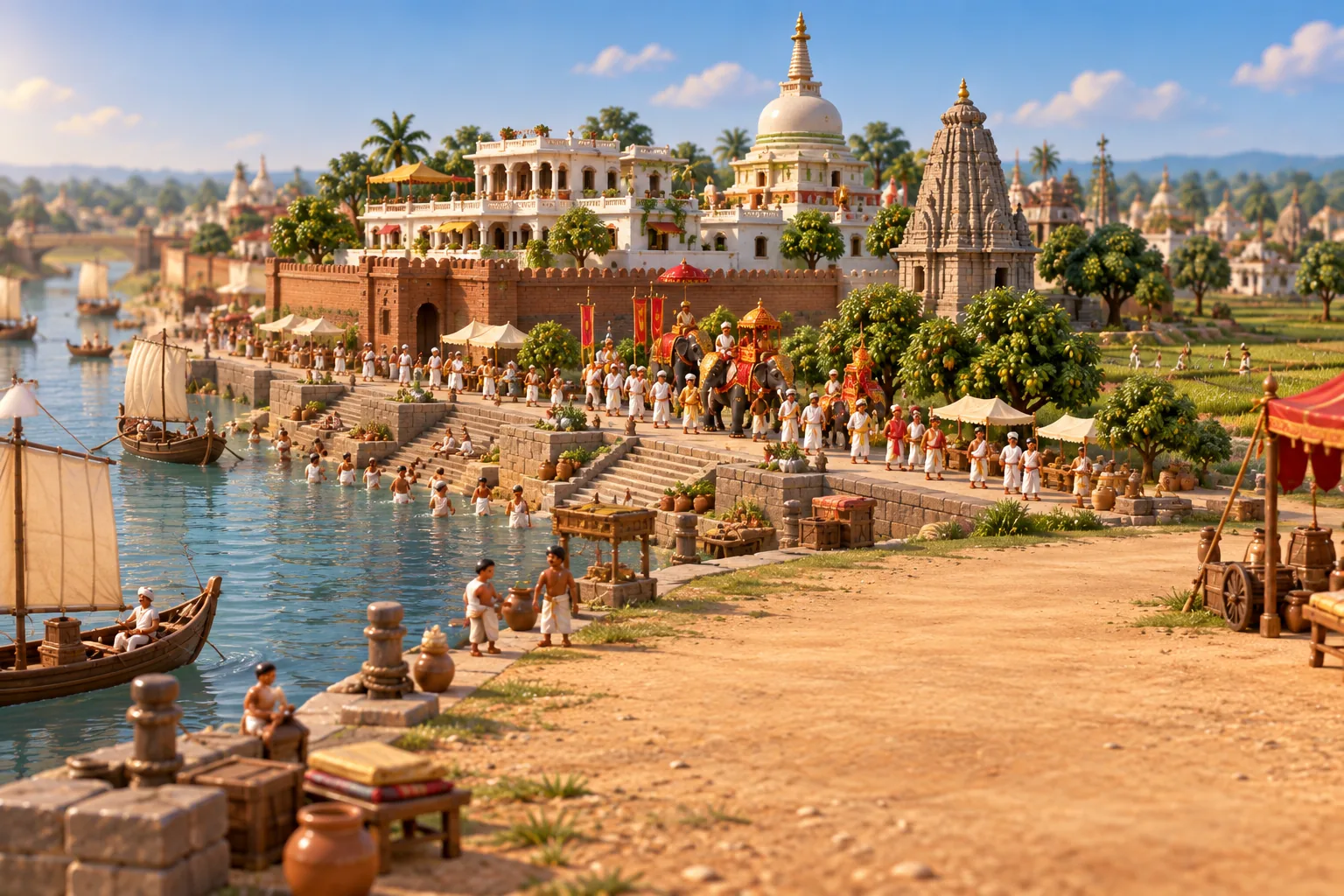
Harsha made Kannauj on the Ganges his capital and built a realm across much of northern India. When he tried to push south, the Chalukya king Pulakeshin II stopped him on the Narmada River in the winter of 618–619, and the river became the border. Harsha worshipped Shiva but gave generously to Buddhists, and three Sanskrit plays, Ratnavali, Nagananda and Priyadarsika, are credited to him.
The Chinese monk Xuanzang, who knew him as Shiladitya, praised his justice and generosity. He described a 21-day festival at Kannauj before a life-sized golden statue of the Buddha, and a great assembly that Harsha held every five years. Harsha sent an envoy to the Tang court, but he died in 647, and his realm soon fell apart.
Read more on Wikipedia
Sources: en.wikipedia.org/wiki/Harsha, en.wikipedia.org/wiki/Xuanzang