Middle Ages · state
Emirate of Granada
The last Muslim state in western Europe, it built the Alhambra and held out until Boabdil surrendered on 2 January 1492.
As Almohad power collapsed in al-Andalus, a commander named Muhammad ibn Nasr, known as Ibn al-Ahmar, was declared emir at Arjona on 16 July 1232. Town after town accepted him, and he made Granada his capital, a city easier to defend and farther from the Castilian frontier. In 1246 he gave up Jaén and became the vassal of Ferdinand III of Castile, who in turn recognised his emirate. By 1250 it was the last independent Muslim state in the peninsula.
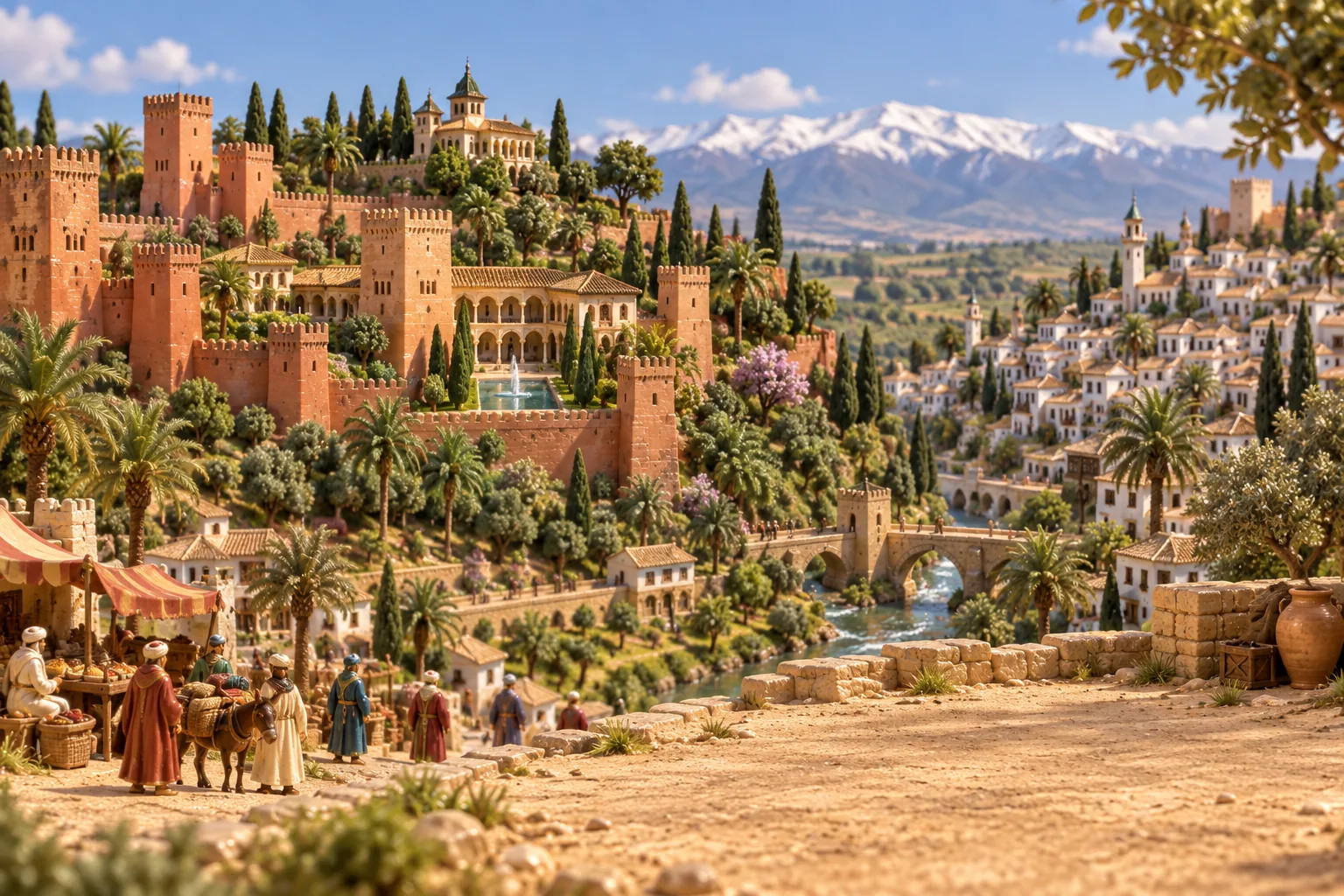
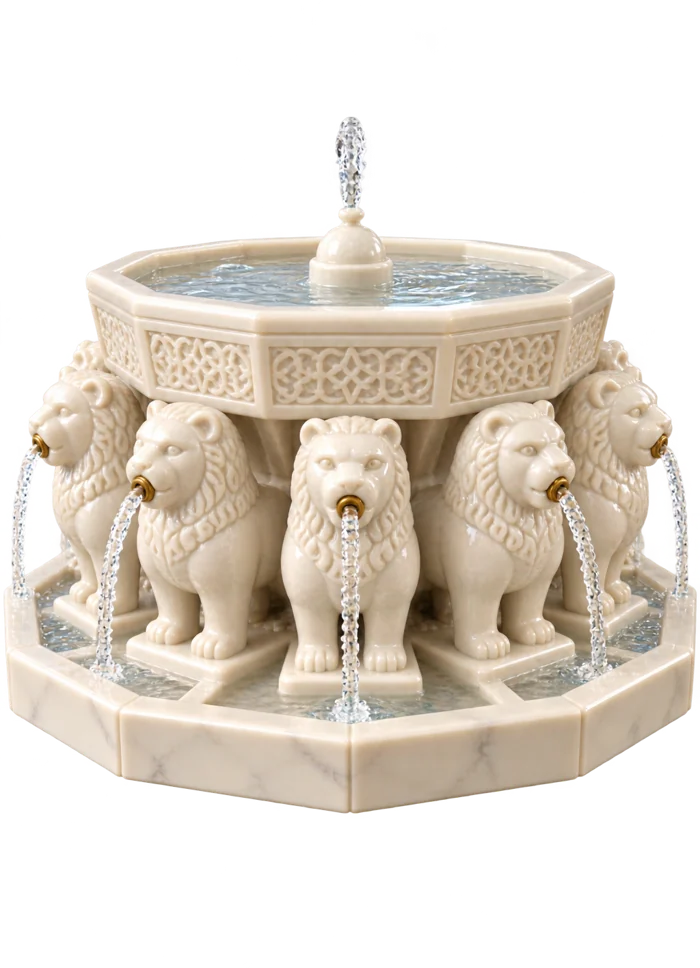
The emirate, roughly today's provinces of Granada, Almería and Málaga, was crowded with refugees from the north: perhaps 300,000 people, about 50,000 of them in Granada. It sold sugar, silk and dried fruit across Europe. On the hill above the city Ibn al-Ahmar founded the Alhambra, the Red Citadel, and his heirs filled it with palaces. The high point came under Muhammad V, who built the Palace of the Lions, with the poet and vizier Ibn al-Khatib at his court.
After 1479 Granada faced a united Castile and Aragon under Ferdinand and Isabella. Muhammad XI, known to the Christians as Boabdil, seized power from his father in 1482, and the family feud weakened the emirate through the ten-year Granada War. On 2 January 1492 Boabdil surrendered Granada, and he later left for Fez.
Read more on Wikipedia
Sources: en.wikipedia.org/wiki/Emirate of Granada, en.wikipedia.org/wiki/Alhambra
