Middle Ages · state
Emirate of Córdoba
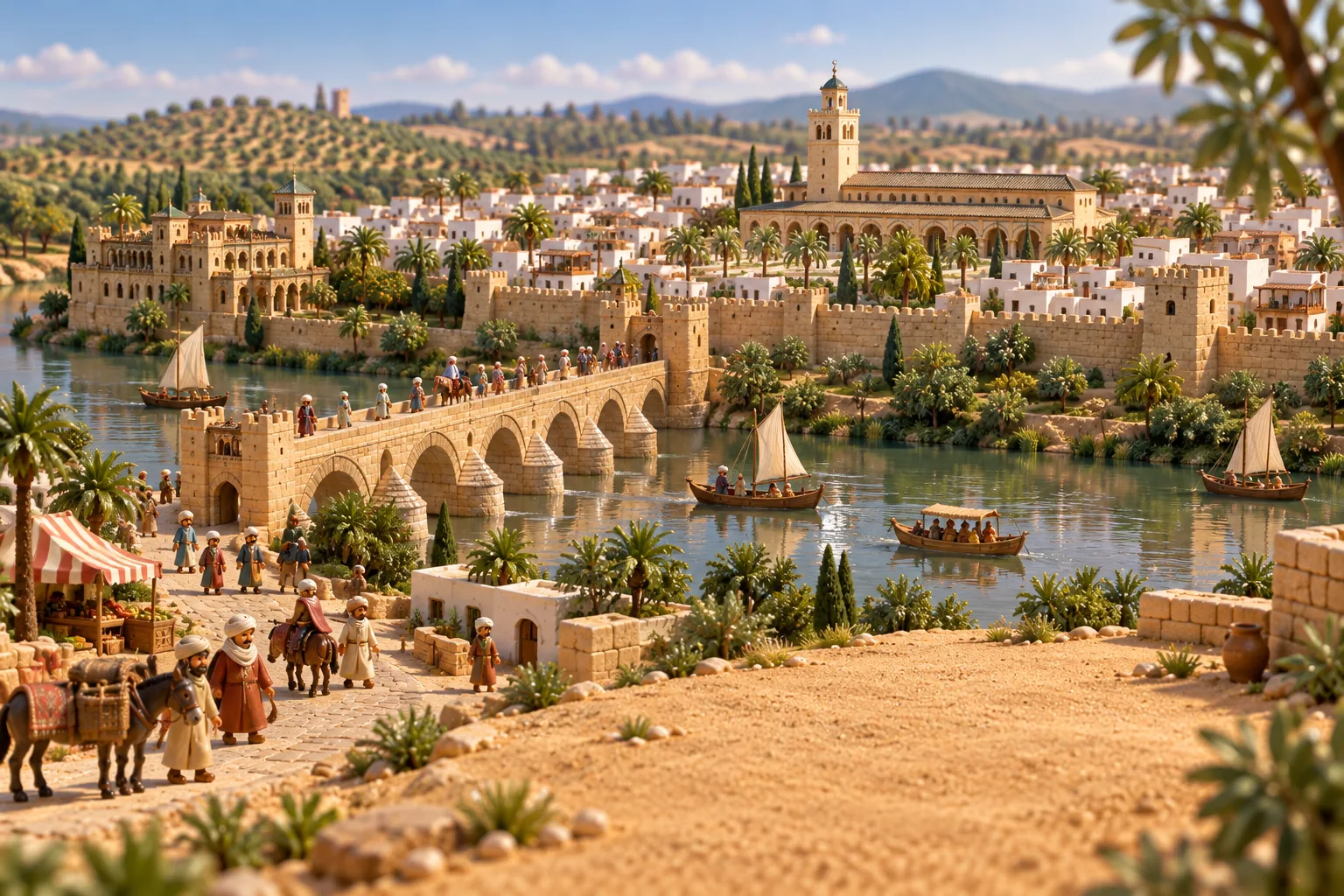
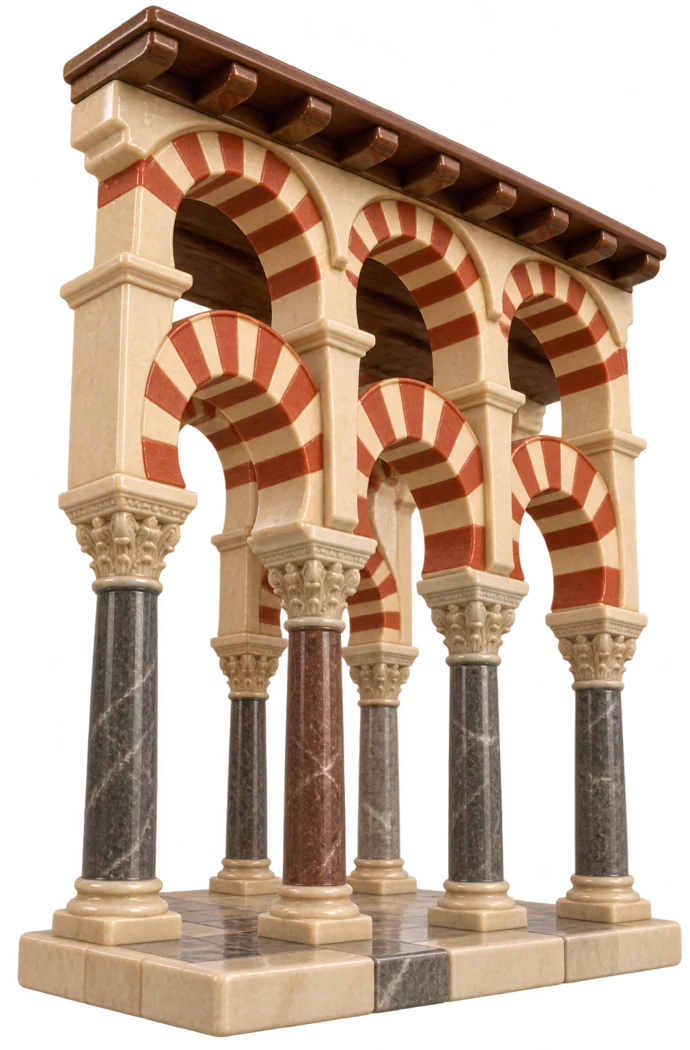
Founded by an Umayyad prince who escaped the massacre of his family, it built Córdoba's Great Mosque, a forest of red-and-white arches.
In 750 the Abbasids overthrew the Umayyad caliphs of Damascus. One prince of the family, Abd al-Rahman, spent six years on the run before reaching al-Andalus, the Muslim part of Iberia. In 756 he defeated its rulers and became the independent emir of Córdoba, refusing to obey the Abbasids. Uniting al-Andalus took him more than twenty-five years, with campaigns reaching Toledo, Zaragoza, Pamplona and Barcelona. In 785–786 he began the Great Mosque of Córdoba, built in a year with columns reused from Roman and Visigothic buildings.
His descendants ruled as emirs for a century and a half, though their grip on the frontier marches depended on the strength of each emir. In 818 the suburb of al-Rabad rose against al-Hakam I and was expelled, and some of its people went on to found an emirate on Crete. Under Abd al-Rahman II, who reigned from 822 to 852, the fashions of Baghdad came to Córdoba: he sent envoys east for books, and the musician Ziryab set styles in dress, hairstyles and hygiene.
In 929 Abd al-Rahman III took the title of caliph. Córdoba grew past 100,000 people, one of the two largest cities in Europe. After the regent Almanzor, civil war broke out in 1009, and in 1031 the caliphate split into rival taifa kingdoms.
Read more on Wikipedia
Sources: en.wikipedia.org/wiki/Umayyad state of Córdoba, en.wikipedia.org/wiki/Mosque–Cathedral of Córdoba

