Industrial age · state
Emirate of Bukhara
Its emir had two British officers beheaded as spies in 1842, then burst out laughing at the missionary who came looking for them.
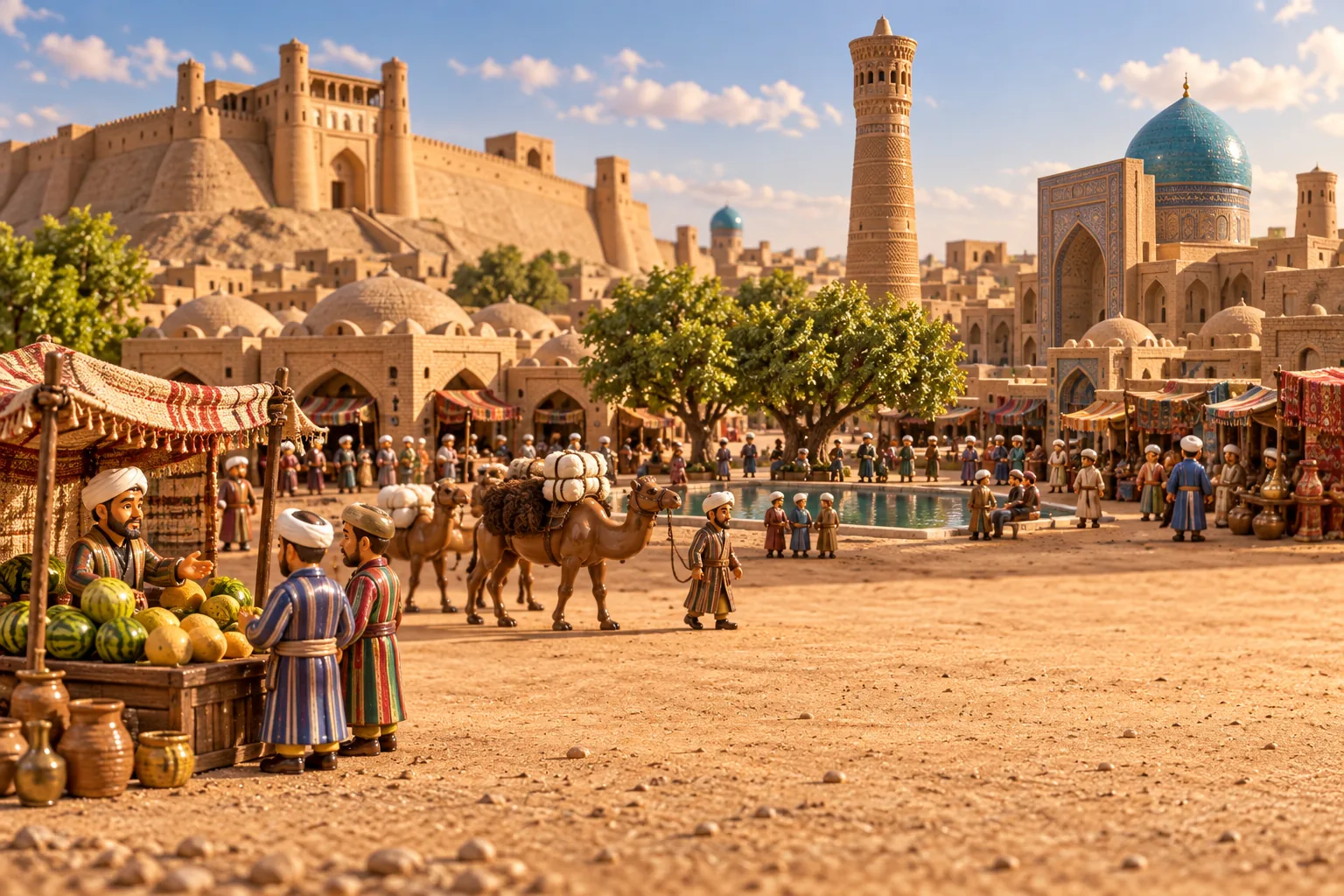
For much of the 18th century the Uzbek Manghit clan held real power in the Khanate of Bukhara as ataliqs, chief ministers behind puppet khans. In 1785 the Manghit Shah Murad took the throne openly. Not being descendants of Genghis Khan, his family based its right to rule on Islam and took the title emir instead of khan. The emirate held the fertile Zarafshan valley between the Amu Darya and Syr Darya, with Bukhara as its capital and Samarkand as its second city.
Most people were Hanafi Sunni Muslims, many attached to Sufi brotherhoods of the Naqshbandi order, but the emirate also had Shia former slaves from Iran, Bukharan Jews and a small Hindu community. Under Emir Nasrullah it reached its greatest size, with thirty provinces. In the Great Game between Britain and Russia, Nasrullah had the British officers Charles Stoddart and Arthur Conolly executed as spies on 24 June 1842.
In 1868 Bukhara lost a war with the Russian Empire, which annexed Samarkand, and in 1873 the rest became a Russian protectorate. In September 1920 the Red Army took the city, the last emir, Mohammed Alim Khan, fled, and the emirate became the Bukharan People's Soviet Republic.
Read more on Wikipedia
Sources: en.wikipedia.org/wiki/Emirate of Bukhara, en.wikipedia.org/wiki/Charles Stoddart

