Industrial age · person
Eliezer Ben-Yehuda
He forbade his son to hear any language but Hebrew, even scolding his wife for a Russian lullaby, and the boy became its first native speaker in modern times.
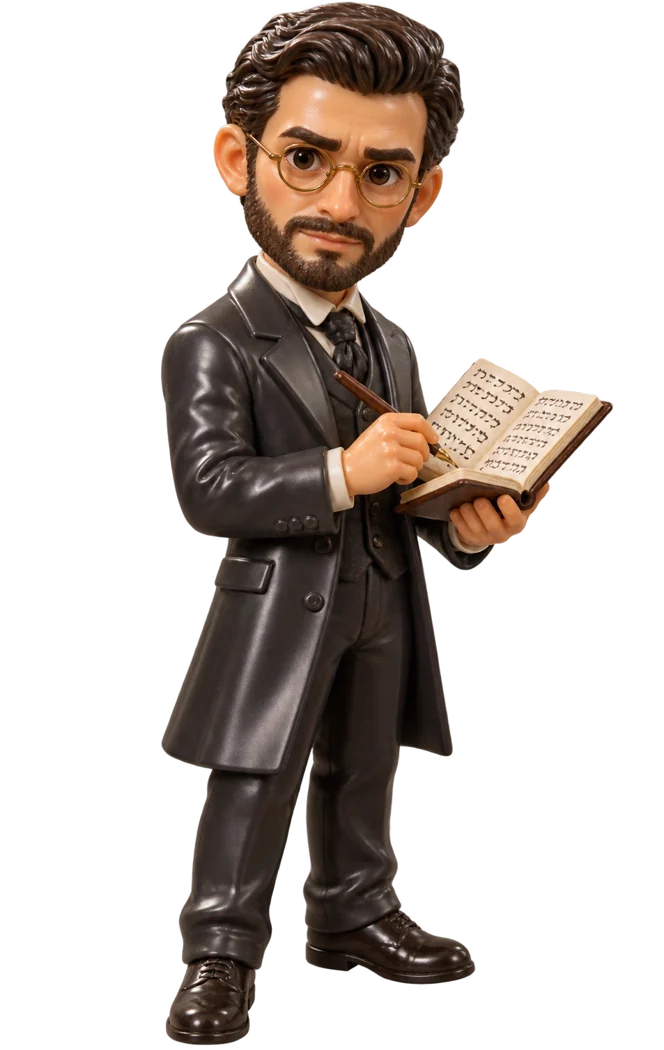
Eliezer Yitzhak Perlman was born on 7 January 1858 in Luzhki, in the Vilna Governorate of the Russian Empire, now in Belarus. His family were Chabad Hasidim and his first language was Yiddish. He studied Hebrew and the Bible from the age of three, and after his father died he was raised by an uncle who hoped he would become a rabbi. At a yeshiva he discovered the secular Hebrew writing of the Jewish Enlightenment, then learned French, German and Russian. In 1877 he went to Paris to study at the Sorbonne, where a conversation in Hebrew with a Jew from Jerusalem convinced him the language could live again.
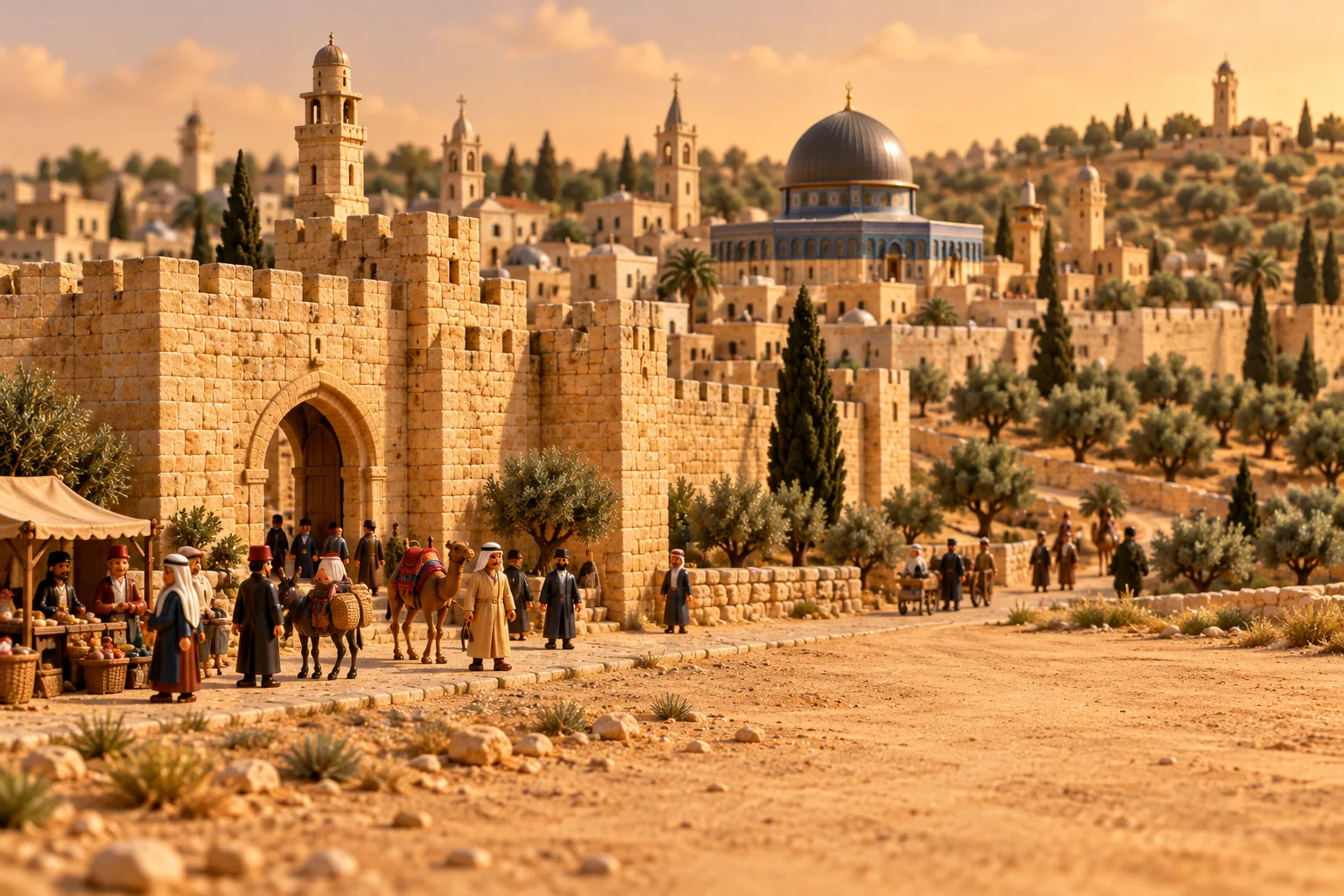
In 1881 he settled in Jerusalem, then ruled by the Ottoman Empire, and taught at the school of the Alliance Israélite Universelle. He set out to make Hebrew the everyday language of Jews arriving from many lands. He raised his son Ben-Zion entirely in Hebrew and edited Hebrew newspapers, among them HaZvi, which was shut for a year after protests from ultra-Orthodox Jews who wanted Hebrew kept for holy things. He helped found the Committee of the Hebrew Language, later the Academy of the Hebrew Language, and coined words from Semitic roots, many still in use.
His first wife Devora died in 1891, and he married her sister, who took the name Hemda. He died of tuberculosis on 16 December 1922, aged 64, and 30,000 people attended his funeral on the Mount of Olives. Hemda saw to it that his great Hebrew dictionary was completed.
Read more on Wikipedia
Sources: en.wikipedia.org/wiki/Eliezer Ben-Yehuda, en.wikipedia.org/wiki/Revival of the Hebrew language