Ancient world · politics
Egypt unites
For most of the next three thousand years Egypt was known as 'the Two Lands', a memory of the time when two rival kingdoms became one.
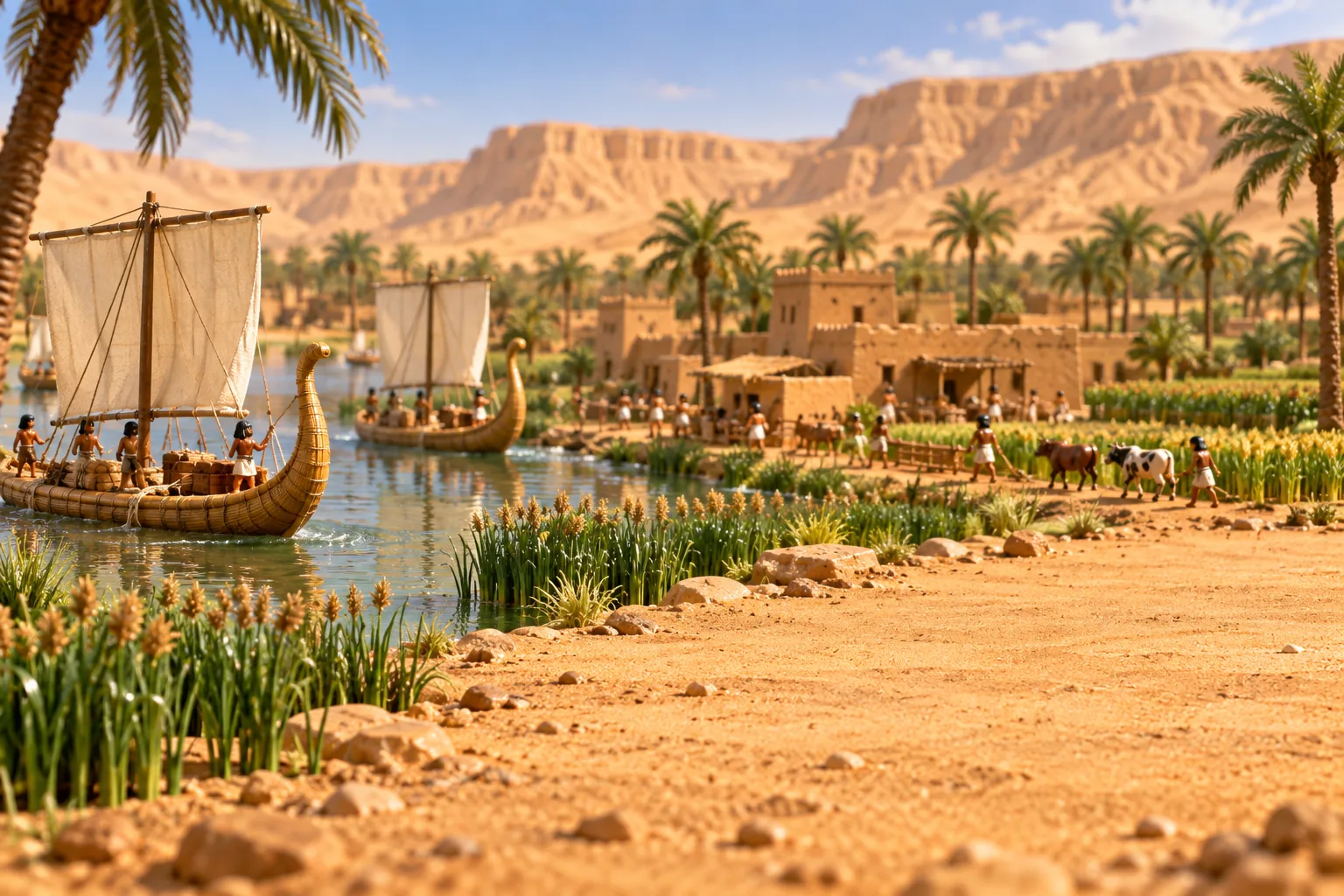
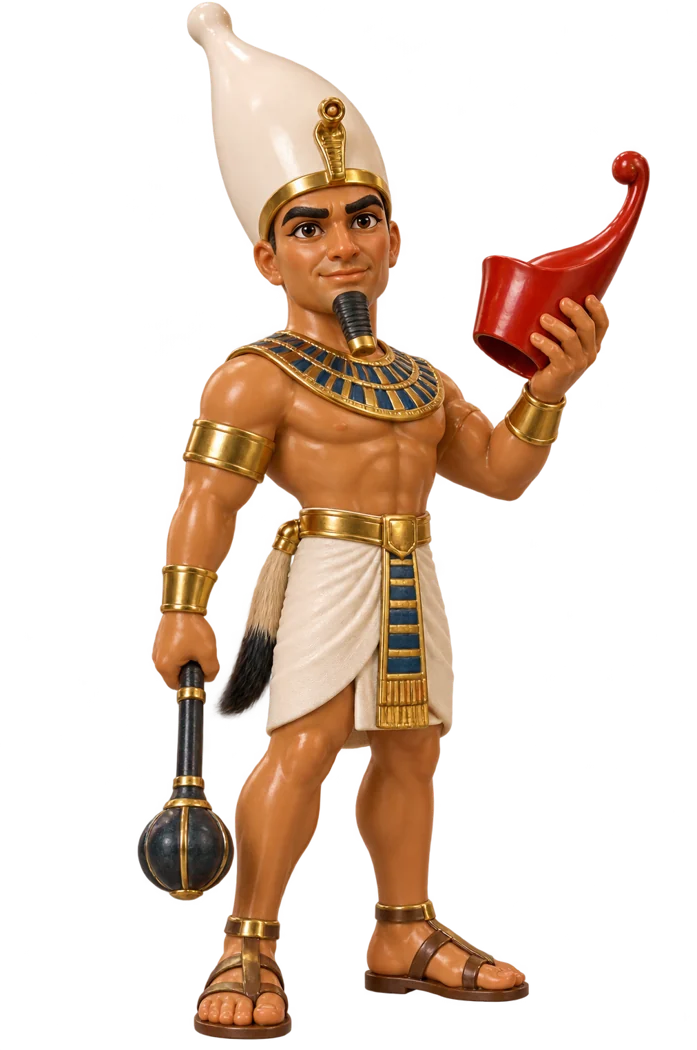
By about 3600 BC, farming villages lined the Nile. Over the next few centuries they drew together into two rival kingdoms: Upper Egypt, along the river valley in the south, and Lower Egypt, in the Delta in the north. The two fought often. Around 3150 BC a southern king, Narmer, defeated his enemies in the Delta and brought both lands under his rule. A carved stone palette shows him wearing the crowns of Upper and Lower Egypt. Most scholars now think he is the Menes whom later Egyptian tradition named as the first king.
The kings of the First and Second Dynasties, who came from the town of Thinis, moved the capital to Memphis and built a national government with royal governors. The country became known as 'the Two Lands', ruled by a god-king, and divine kingship remained the basis of Egyptian government for the next three millennia. Abydos, in the south, stayed the great religious centre, and the rich began to build mastaba tombs, the models for the later pyramids.
Much of what we recognise as Egyptian took shape in these centuries, from art and architecture to religion. Egyptian power also reached abroad: settlers spread into southern Canaan, and the state's authority may have stretched as far as modern Tel Aviv and as far south as the second cataract of the Nile in Nubia. The period ended around 2686 BC, with the start of the Old Kingdom.
Read more on Wikipedia
Sources: en.wikipedia.org/wiki/Early Dynastic Period (Egypt)