Our time · state
East Germany
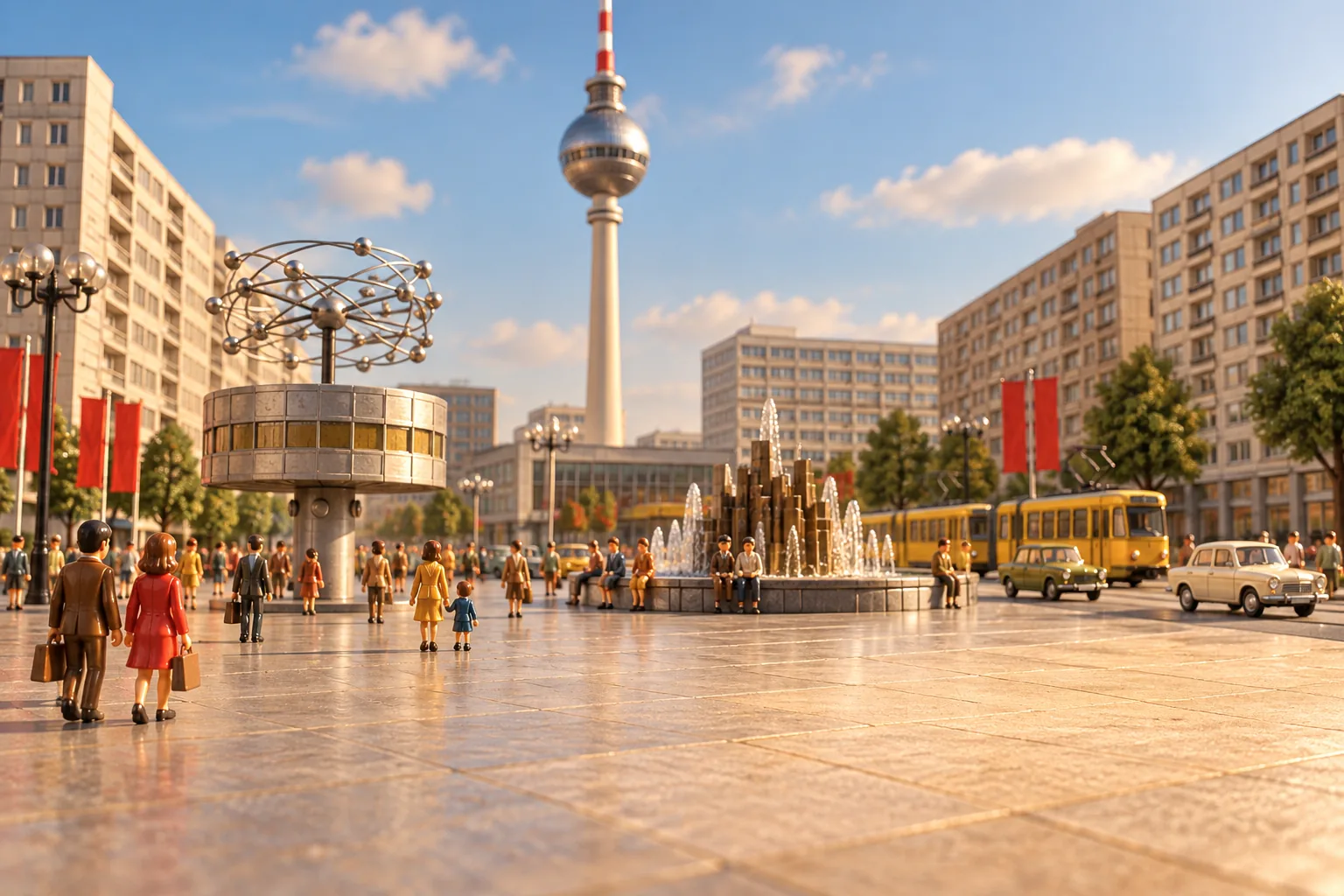
Its rulers built a wall through Berlin in 1961 to stop their own people leaving, and 28 years later crowds simply walked through it.
After the Second World War the Soviet Union occupied eastern Germany up to the Oder–Neisse line. Under Soviet pressure the Communist Party and the eastern Social Democrats merged in April 1946 into the Socialist Unity Party (SED). On 7 October 1949 the SED proclaimed the German Democratic Republic, with Wilhelm Pieck as president and Otto Grotewohl as prime minister, while real power lay with Walter Ulbricht.
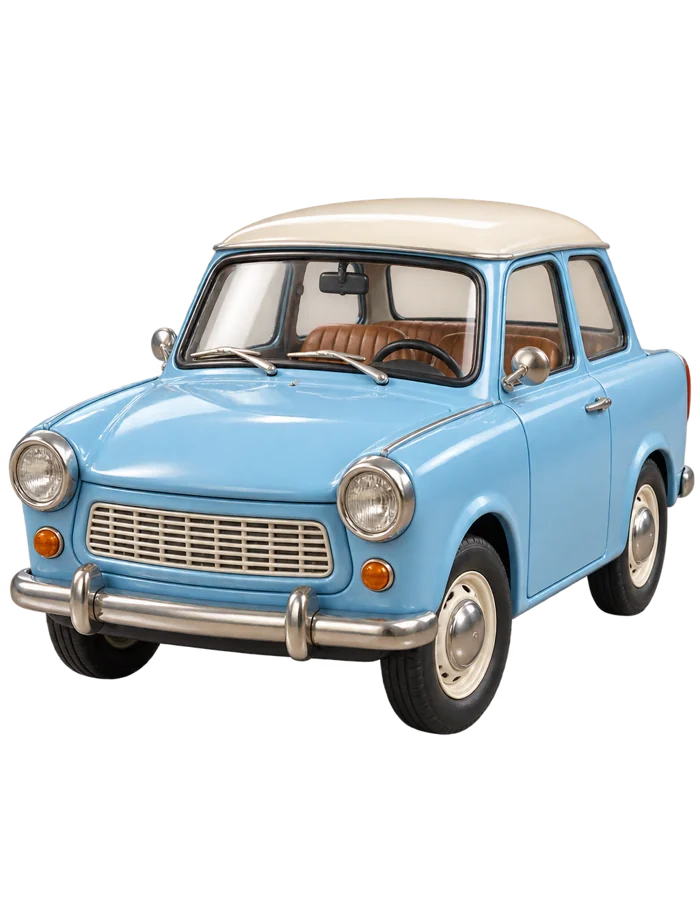
In June 1953 builders on the Stalinallee in East Berlin protested against higher work quotas; more than a million people struck across some 700 towns until Soviet troops crushed the uprising. Reparations to the Soviets and the pull of the West drove young, educated people out, so on the night of 12 August 1961 soldiers began building the Berlin Wall. Erich Honecker replaced Ulbricht in 1971, and in 1973 both German states joined the United Nations. The GDR made Praktica cameras and Trabant cars, while the Stasi read letters, tapped phones and kept a vast web of informants.
In 1989 Hungary opened its border with Austria and thousands of East Germans fled. Weekly protests in Leipzig grew to some 300,000 people, Honecker resigned in October, and on 9 November the Berlin Wall opened. After free elections in March 1990, the GDR's five states joined the Federal Republic on 3 October 1990.
Read more on Wikipedia
Sources: en.wikipedia.org/wiki/East Germany