Early modern · state
Dzungar Khanate
The last great nomad empire of the steppe fought Qing China for decades, until the Qianlong Emperor's armies destroyed both the state and most of its people.
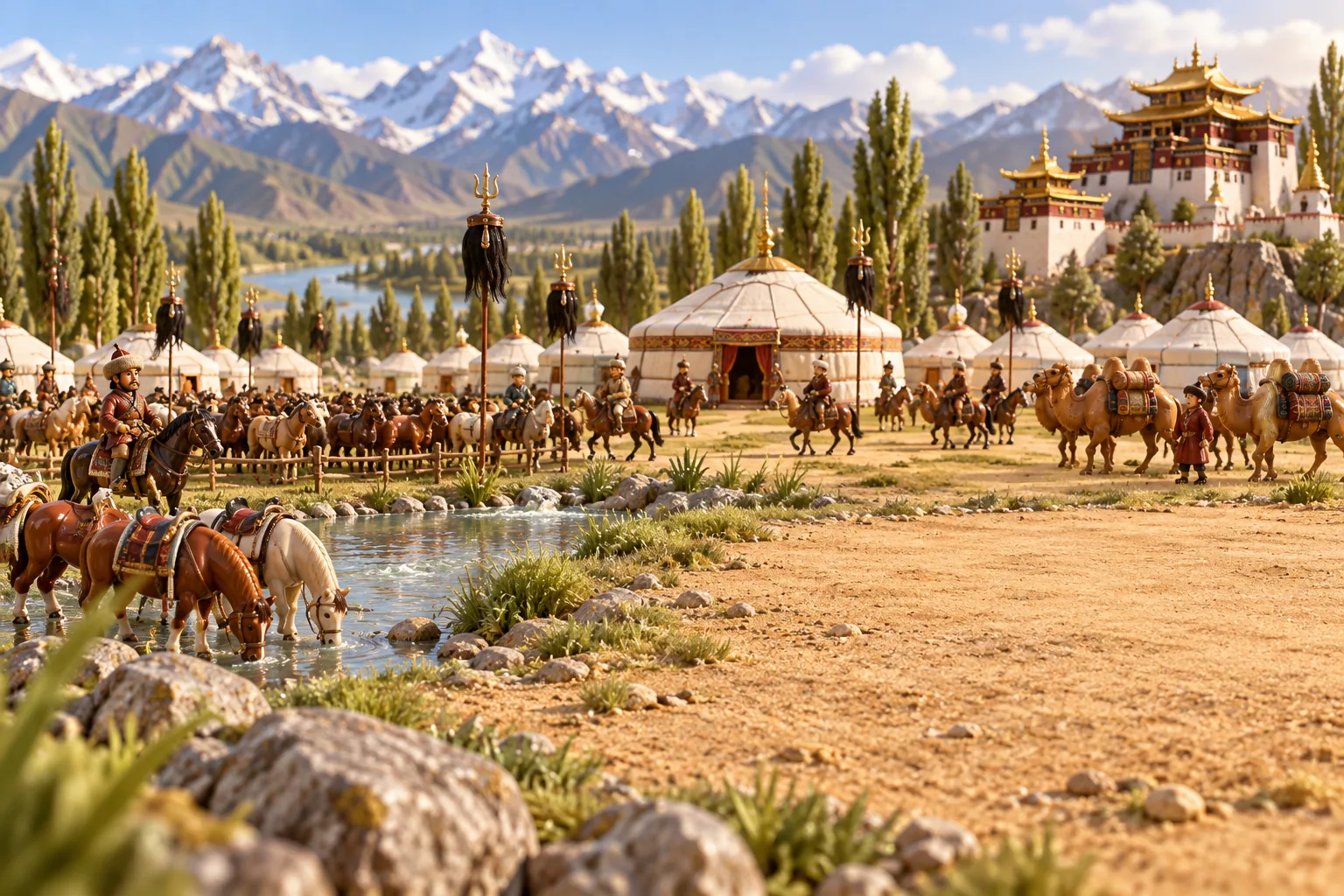
The Oirats, or western Mongols, united in the Junggar Basin around 1620. Their leader Erdeni Batur raided the Kazakhs, made Ghulja his capital and helped the monk Zaya Pandita create the Clear Script. In 1640 they issued a legal code backing the Gelug school of Tibetan Buddhism, and in 1678 the Dalai Lama gave Galdan, a former monk, the title Boshogtu Khan.
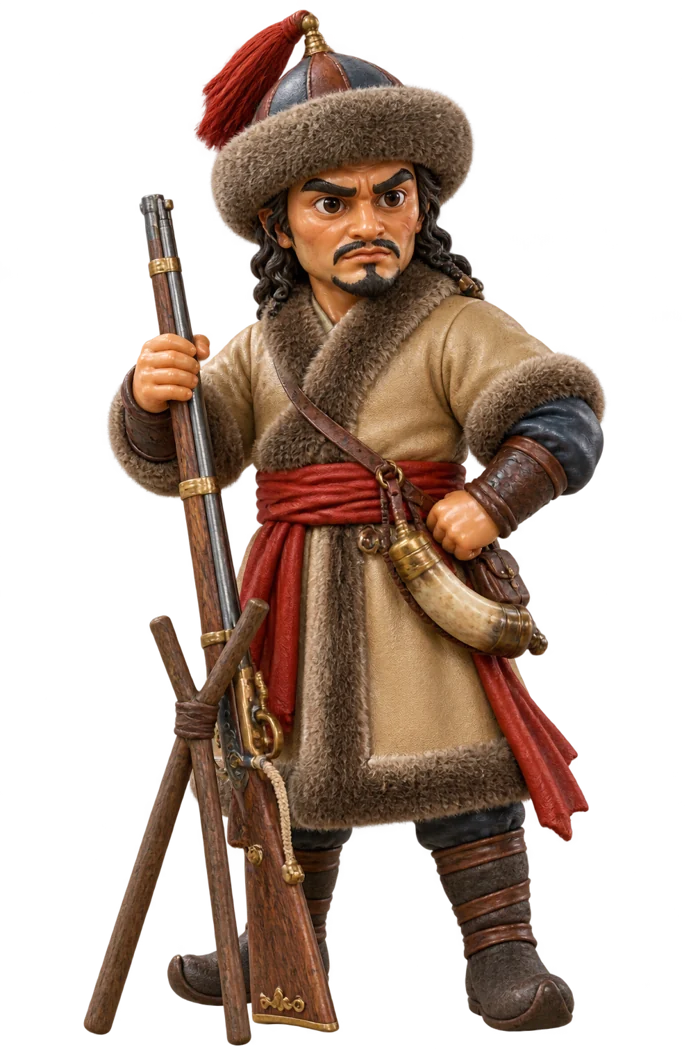
Galdan conquered the Tarim Basin in the 1680s, and in 1688, armed with Russian firearms, he led 30,000 men into Khalkha Mongolia. In 1696 the Kangxi Emperor led 100,000 troops into Mongolia and beat Galdan at Jao Modo, and Galdan died the next year. His nephew Tsewang Rabtan sacked Hami in 1714, and in 1717 Dzungar troops looted Lhasa before a Qing army drove them from Tibet in 1720. By 1745 the khanate was the largest power in Central Asia.
The death of Galdan Tseren in 1745 started a civil war. In 1755 the Qianlong Emperor sent an army that destroyed the khanate in 100 days. When the noble Amursana rebelled, Qianlong, as the historian Peter Perdue argues, ordered the Dzungars exterminated. The Qing scholar Wei Yuan wrote that of some 600,000 Dzungars, about 40 percent died of smallpox, 20 percent fled and 30 percent were killed by Manchu bannermen. Many historians call it a genocide. Settlers filled the emptied land, which became Xinjiang.
Read more on Wikipedia

