Early modern · state
Dutch Republic
A republic of about 1.5 million people ran trade routes around the globe, and its East India Company founded the world's oldest stock exchange in 1602.
In 1568 the Low Countries, led by William I of Orange, rose against Philip II of Spain over high taxes and the persecution of Protestants, starting the Eighty Years' War. The northern provinces allied in the Union of Utrecht in 1579 and declared independence in 1581. William was assassinated in 1584, Henry III of France and Elizabeth I of England both declined the crown, and on 12 April 1588 the seven provinces became a republic governed by the States General.
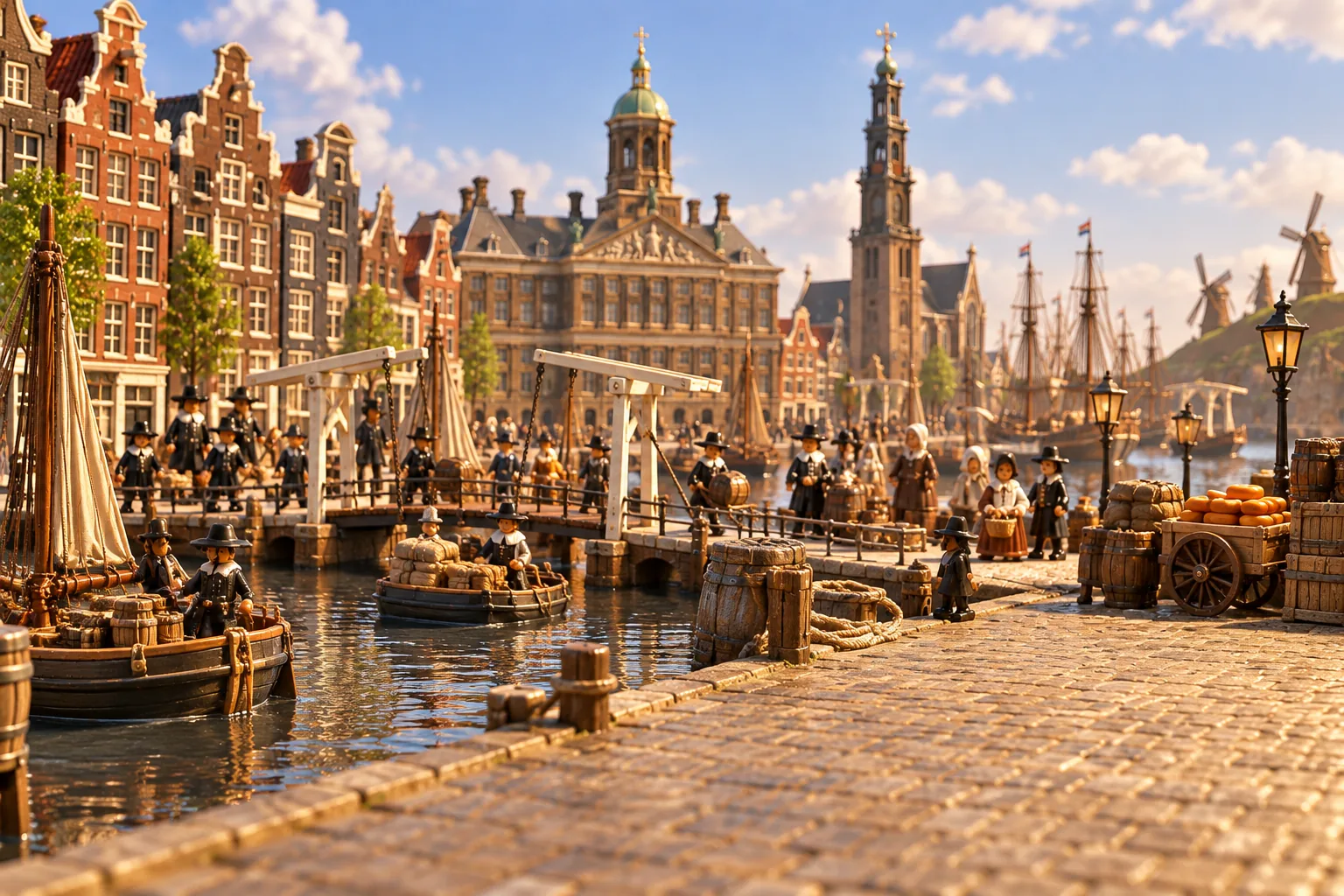
In the Golden Age that followed, Amsterdam became the hub of world trade and grew to about 200,000 people by the 1660s. The Dutch East India Company and West India Company built a colonial empire, and refugees poured in: Jews from Portugal and Spain, French Huguenots, English dissenters. Rembrandt and Vermeer painted, while Christiaan Huygens and Antonie van Leeuwenhoek did science. Spain recognised the republic in 1648, and in 1667 the Raid on the Medway won the second war with England.
In the Disaster Year of 1672 England, France, Münster and Cologne attacked, a mob lynched the leader Johan de Witt and his brother, and William III became stadtholder; in 1688 he also took the English throne. Long wars against France left huge debts, and rivals overtook Dutch trade. In January 1795 a French army invaded, Stadtholder William V fled to England and the Batavian Republic was proclaimed.
Read more on Wikipedia
Sources: en.wikipedia.org/wiki/Dutch Republic