Industrial age · nature
Dust Bowl
In May 1934 a single dust storm from the Great Plains dropped millions of pounds of dust on Chicago, and the winter after, red snow fell in New England.
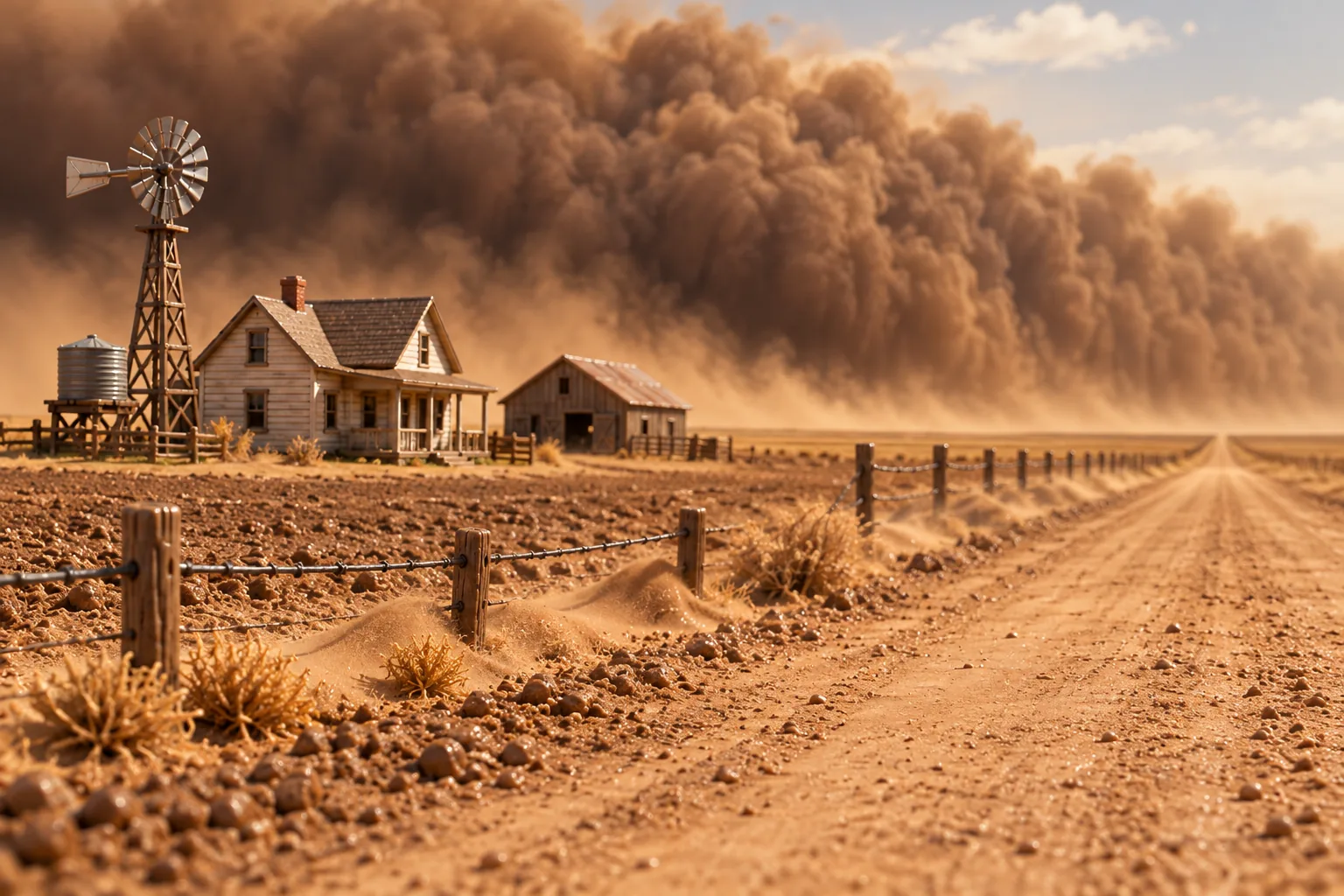
From 1862 the Homestead Act offered settlers free land on the Great Plains, and the railways brought them by the thousand. With new gasoline tractors and combine harvesters, farmers ploughed up vast areas of dry grassland that got as little as ten inches of rain a year. They tore out the deep-rooted native grasses that had held the soil and moisture in place, and did not use dryland farming methods to stop the wind.
Then the rain failed. Drought came in three waves, in 1934, 1936 and 1939–1940, and the bare fields turned to dust. Huge storms called 'black blizzards' rolled across the plains, cutting visibility to a metre or less and reaching as far as New York City and Washington. On 14 April 1935, 'Black Sunday', a cold front whipped up a wall of dust over the southern plains; the Associated Press reporter Robert E. Geiger saw it in Boise City, Oklahoma, and a rewrite of his story gave the disaster its name, the Dust Bowl.
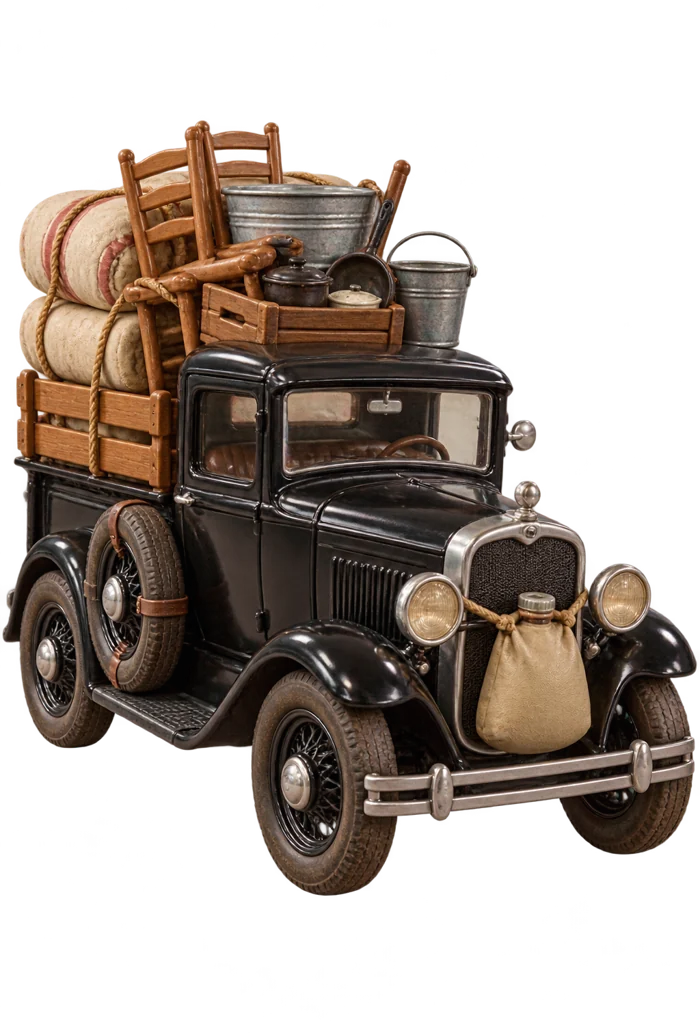
Farm families who could not pay their mortgages abandoned their land. About 3.5 million people left the Plains states during the 1930s, many of them, called 'Okies', for California. President Franklin D. Roosevelt's government set up the Soil Conservation Service, taught farmers to protect the soil, and had the Civilian Conservation Corps plant the Great Plains Shelterbelt of more than 200 million trees.
Read more on Wikipedia
Sources: en.wikipedia.org/wiki/Dust Bowl


