
Early modern · nature
Dodo
Less than a century after sailors first wrote about it, the dodo was gone, and for a while people in Europe doubted it had ever existed.
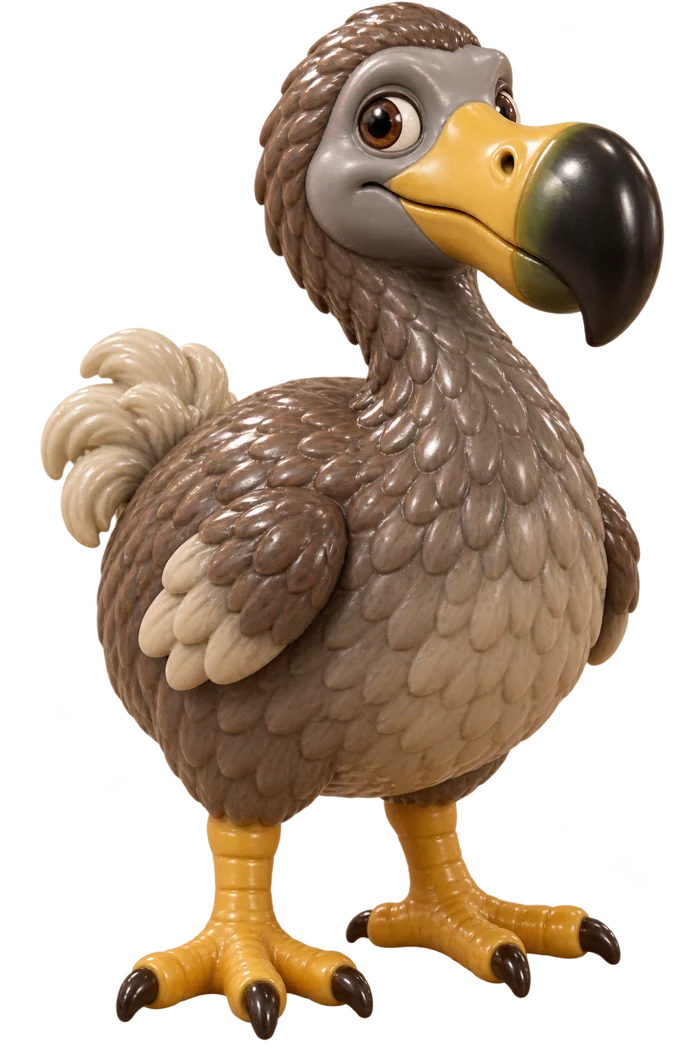
The dodo was a large flightless bird that lived only on Mauritius, an island east of Madagascar in the Indian Ocean. It belonged to the pigeon family, and its closest living relative is the Nicobar pigeon. Pictures from the 17th century show it with brownish-grey feathers, yellow feet, a tuft of tail feathers, a bare grey head and a heavy black, yellow and green beak. With plenty of food and almost no predators on the island, it had no need to fly. It was not the fat, clumsy creature of legend but well suited to its home.
Dutch sailors first recorded the dodo in 1598, and in the years that followed ships' crews hunted it. Fewer than 50 people lived on Mauritius at any one time in the 17th century, but they brought dogs, pigs, cats, rats and crab-eating macaques, which raided the dodos' nests and competed for food. Today the pigs and macaques are thought to have done more harm than the hunters. A few birds were shipped to Europe; one was seen alive in London in 1638.
The last widely accepted sighting came in 1662, from Volkert Evertsz, a sailor shipwrecked from the Dutch ship Arnhem, who described birds caught on a small islet off Mauritius. Nobody noticed the dodo had gone. Its loss so soon after its discovery made people see for the first time that humans could wipe out a whole species.
Read more on Wikipedia
Sources: en.wikipedia.org/wiki/Dodo


