Antiquity · politics
Diadochi
Alexander left an empire from Greece to India and no grown heir, and the men who had shared his tents spent fifty years tearing it apart.
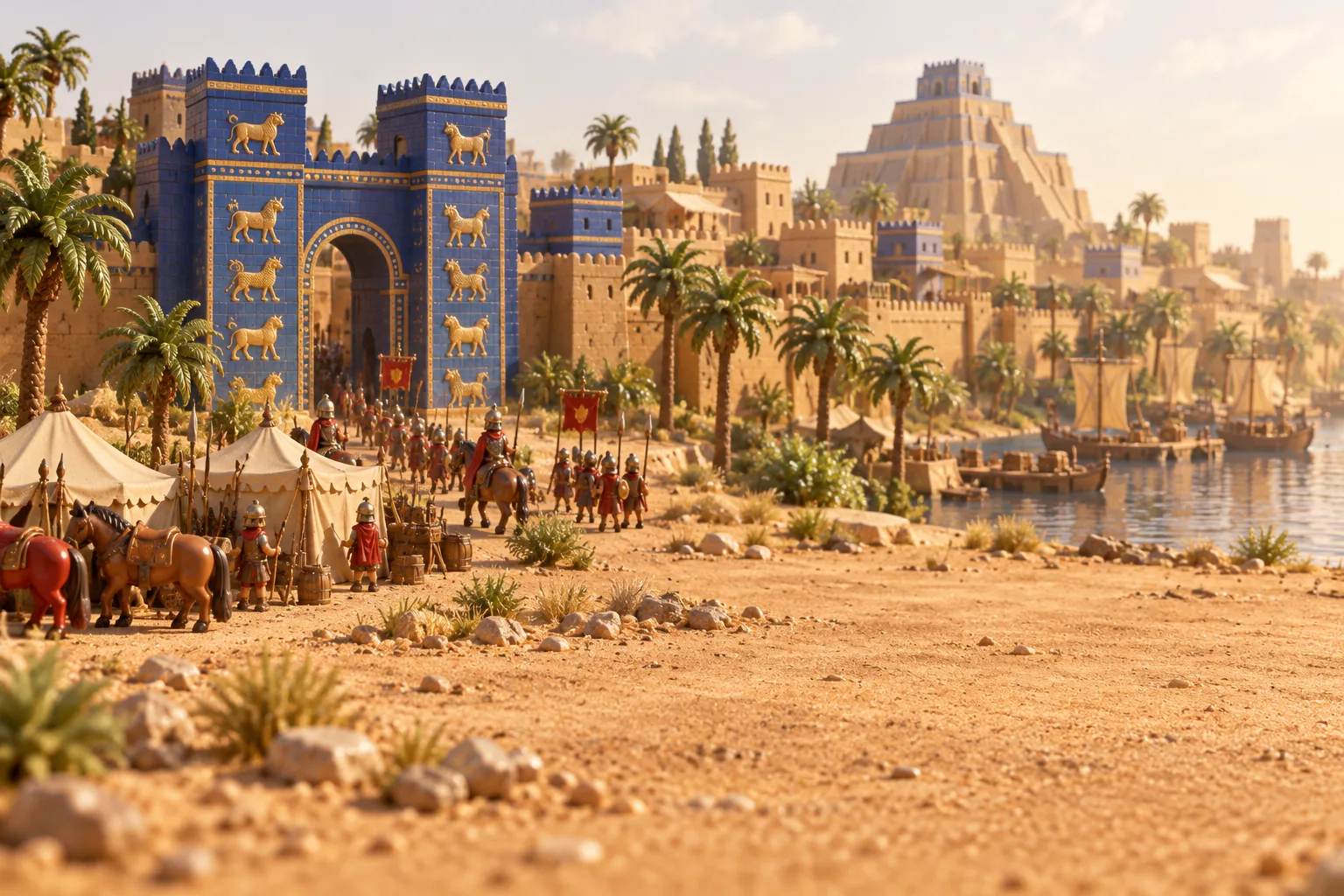
Alexander the Great died in Babylon on 10 June 323 BC without a clear successor. His generals split at once. The infantry backed his half-brother Arrhidaeus, the cavalry wanted to wait for the child his wife Roxana was expecting. In the compromise called the Partition of Babylon, Arrhidaeus was crowned Philip III, to rule with Roxana's son Alexander IV once he was born, and the general Perdiccas became regent, sharing out the provinces among the others. The Greeks called these rivals the diadochi, the successors.
Peace did not last. Perdiccas married Alexander's sister Cleopatra, and Antipater, Craterus, Antigonus and Ptolemy rose against him. War broke out when Ptolemy, governor of Egypt, took Alexander's body and carried it to Egypt. Perdiccas was murdered by his own generals, and alliances shifted again and again. In 310 BC Cassander secretly had young Alexander IV and Roxana killed, ending Alexander's line.
At Ipsus in 301 BC Antigonus the One-Eyed and his son Demetrius fought Cassander, Lysimachus and Seleucus; Antigonus was killed, and the dream of one empire died with him. By about 272 BC three great dynasties remained: the Ptolemies in Egypt, the Seleucids in Asia and the Antigonids in Macedon. Their Greek-speaking kingdoms spread Hellenistic culture from the Mediterranean to the Indus until Rome swallowed them, ending with Egypt in 30 BC.
Read more on Wikipedia
Sources: en.wikipedia.org/wiki/Diadochi


