Our time · politics
Derg
A committee of about a hundred privates, sergeants and junior officers toppled one of the oldest monarchies in the world.
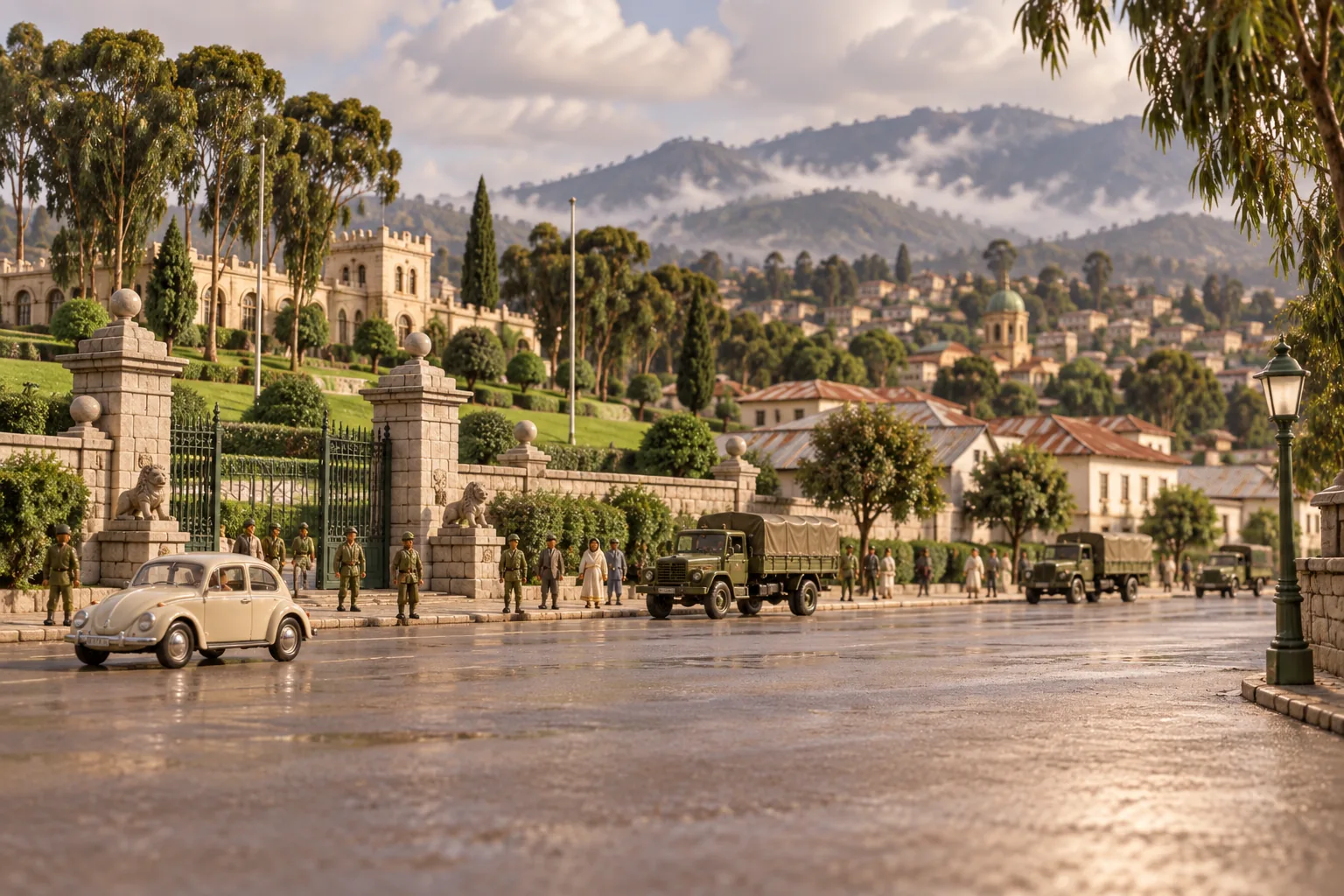
In early 1974 Ethiopia was in turmoil. Soldiers mutinied over food and water, students and trade unions marched, and Emperor Haile Selassie's government lost its grip. In June junior and mid-level officers formed a committee, the Derg, Amharic for "council". Each army unit sent three men, no higher than major, and the Derg probably had about 109 members. It chose Major Mengistu Haile Mariam to chair its meetings and began arresting ministers, governors and courtiers.
On 12 September 1974 the Derg deposed and imprisoned the emperor, and three days later it took the name Provisional Military Administrative Council. On 23 November it killed General Aman Andom, the head of state it had chosen, along with 60 officials of the old regime, an event remembered as the Massacre of the Sixty. The monarchy was abolished in March 1975, socialism became the state ideology, and land was nationalised. Haile Selassie died in custody under mysterious circumstances on 27 August 1975.
Mengistu rose to the top after a shootout in February 1977 and launched the Red Terror against rival leftists and other opponents. Ethiopia became the Soviet bloc's closest ally in Africa. Wars in Eritrea and the Ogaden, drought and the 1983–1985 famine, which the Derg itself said killed more than a million people, wore the country down. In 1987 the Derg was formally dissolved into a one-party People's Democratic Republic, but its members stayed in charge. When Soviet aid ended and rebels closed in, Mengistu fled on 21 May 1991 and found asylum in Zimbabwe.
Read more on Wikipedia
Sources: en.wikipedia.org/wiki/Derg