Our time · person
Deng Xiaoping
A veteran of the Long March who spent the Cultural Revolution working in a tractor factory came back to open the world's most populous country to the market.
Deng Xiaoping was born on 22 August 1904 in Guang'an in Sichuan, the son of a landowner. At sixteen he sailed to France on a work-study programme and spent most of his time there working, at a Renault factory and as a fitter in a steel plant near Paris. There he became a communist. In 1926 he studied in Moscow, where Chiang Kai-shek's son Chiang Ching-kuo was a classmate, and back in China he joined the Red Army, served as a political commissar on the Long March and took part in the capture of Nanjing in 1949.
Under Mao he became vice premier and the party's general secretary. During the Cultural Revolution he was denounced as China's "number two capitalist roader" and purged twice, and from 1969 he worked in a tractor factory. After Mao's death in 1976 he outmanoeuvred his rivals, and by the end of 1978 he was China's paramount leader. His "reform and opening up" let peasants sell their surplus on the open market, and from 1980 Special Economic Zones such as Shenzhen drew in foreign companies. He negotiated the handover of Hong Kong under the principle "one country, two systems".
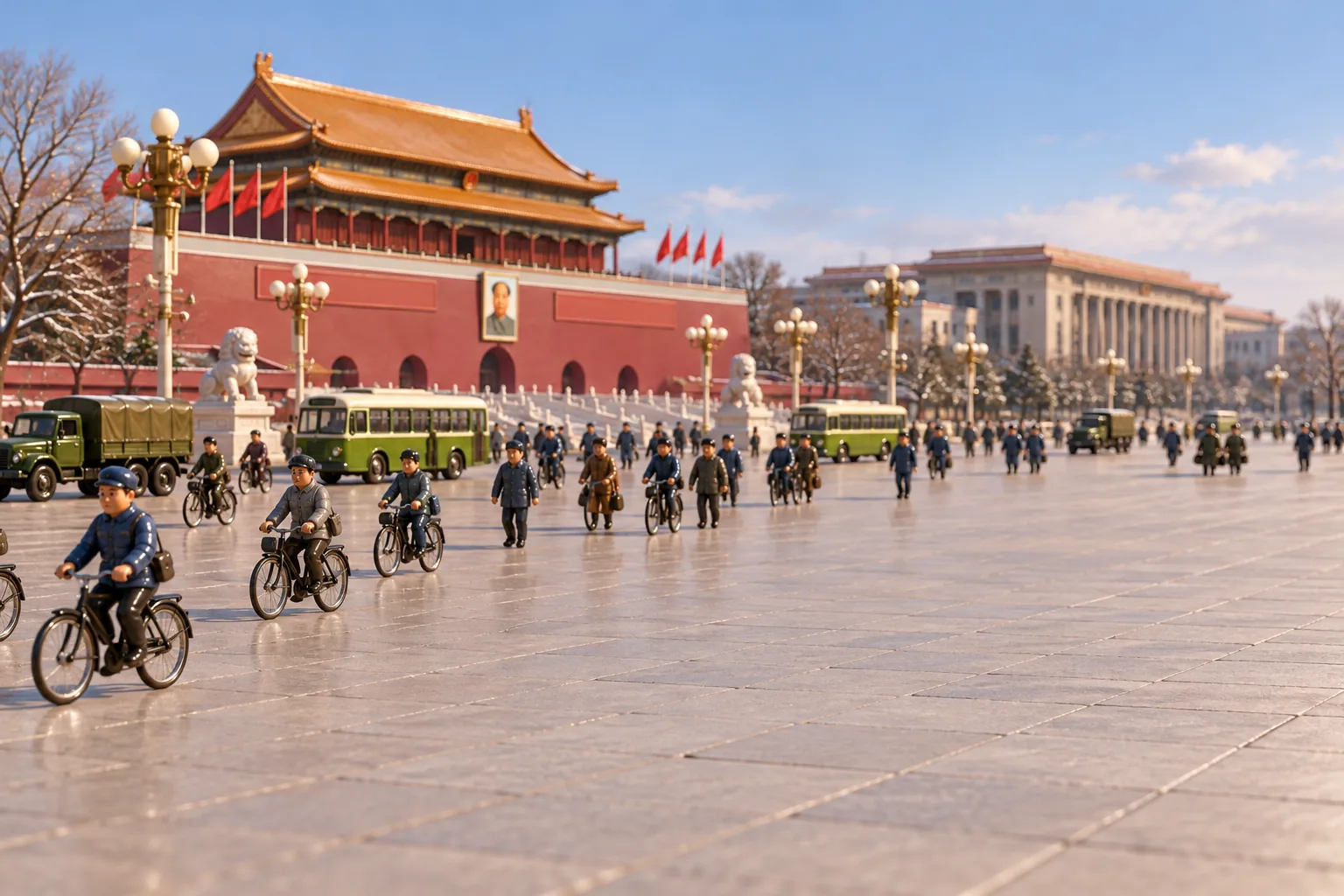
In June 1989 he ordered the crackdown on the protests in Tiananmen Square, which ended his political reforms and is still condemned around the world. He retired from his posts, but his southern tour of 1992 relaunched economic reform. He died in Beijing on 19 February 1997.
Read more on Wikipedia
Sources: en.wikipedia.org/wiki/Deng Xiaoping, en.wikipedia.org/wiki/Reform and opening up