Middle Ages · state
Dál Riata
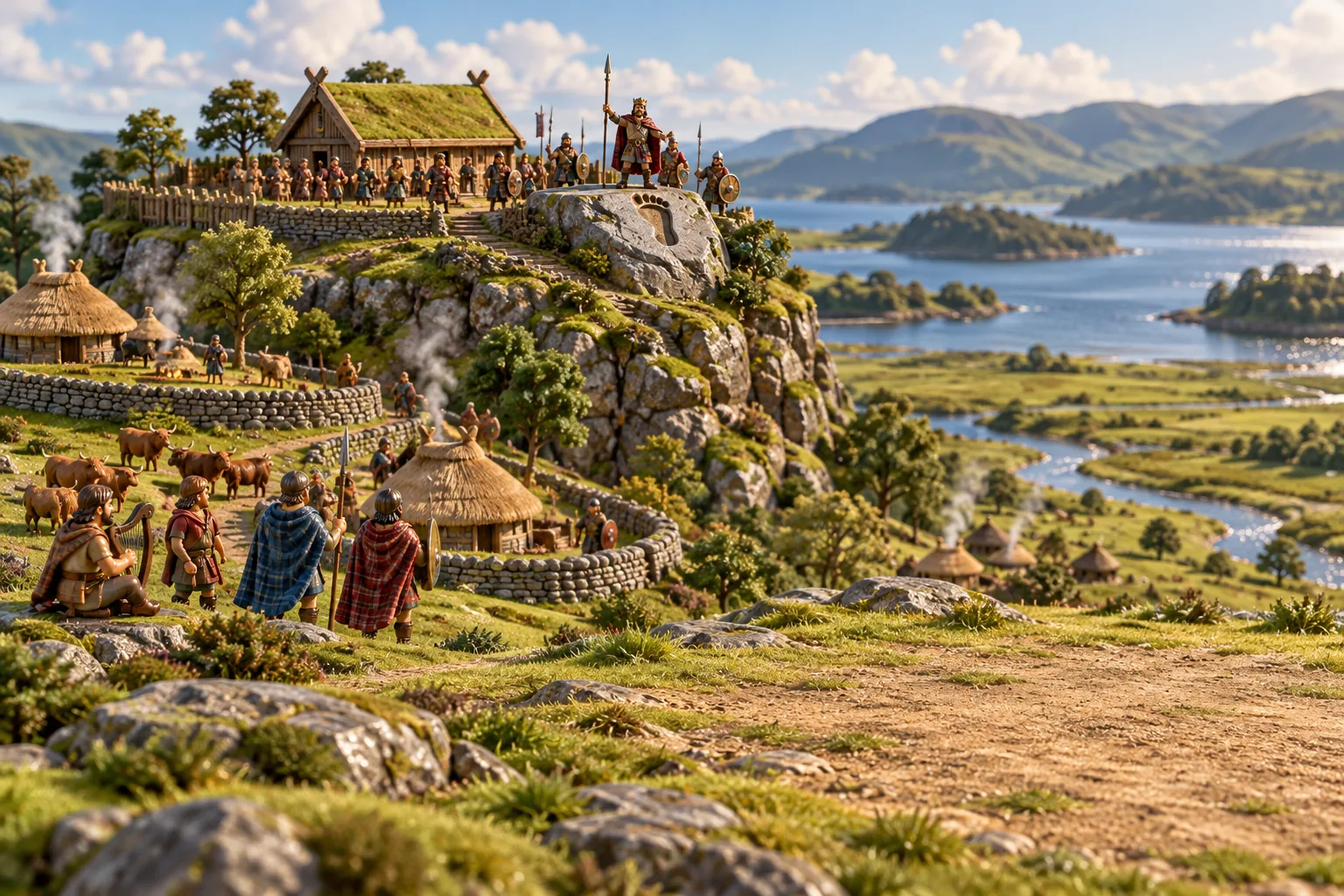
Its kings were probably made at a rock-top fort in Argyll by setting a foot in a footprint carved in the stone, and their kingdom straddled the sea between Ireland and Scotland.
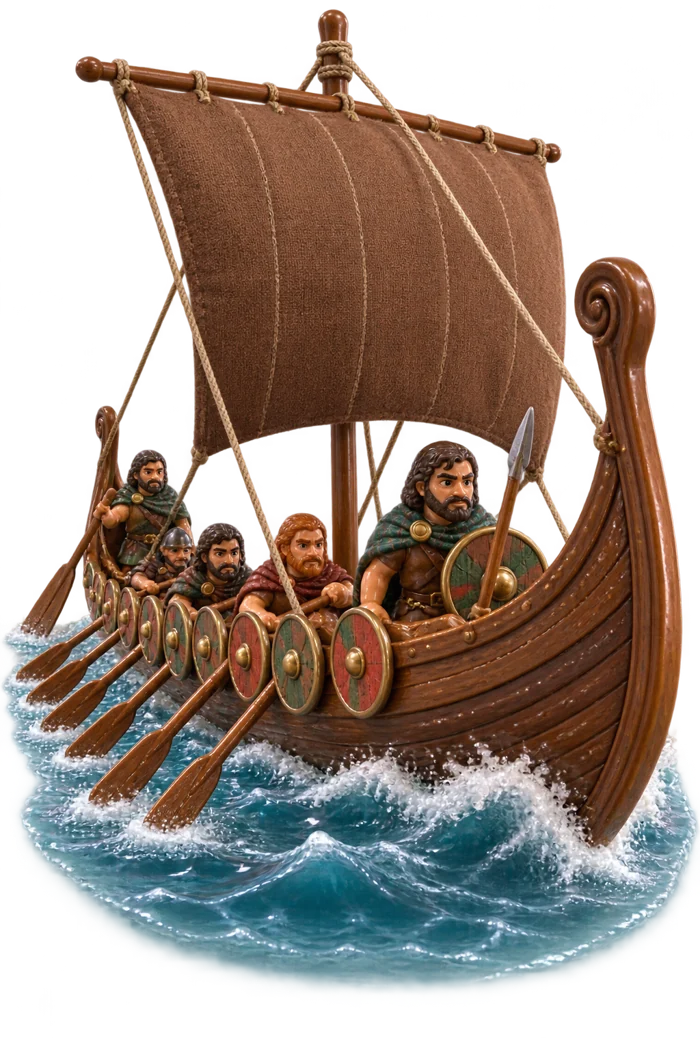
Dál Riata was a Gaelic kingdom on both shores of the North Channel. At its height in the 6th and 7th centuries it held what is now Argyll, the Coast of the Gaels, and part of County Antrim in Ireland, united by the sea and cut off from the rest of Scotland by mountains. Legend made its founder Fergus Mór, one of the three sons of Erc, who were said to have come over from Ireland around 500. In Argyll it was split among four kindreds, based in Kintyre, Islay, Lorn and Cowal, who could put long timber ships to sea.
In 563 the Irish monk Columba founded a monastery on Iona, within Dál Riata, and from there Christianity spread to the Picts and to Northumbria. The kingdom peaked under Áedán mac Gabráin, who reigned from 574 to 608, until Æthelfrith of Bernicia beat him at Degsastan in 603. Under Domnall Brecc, who died in 642, defeats in Ireland and Scotland ended its golden age.
In the 730s the Pictish king Óengus I invaded, and by 741 Dál Riata was under Pictish overlordship. From 794 Vikings raided Iona again and again, and in 849 the relics of Columba were divided between Scotland and Ireland. Some sources say Kenneth MacAlpin was king of Dál Riata before he became king of the Picts in 843.
Read more on Wikipedia
Sources: en.wikipedia.org/wiki/Dál Riata, en.wikipedia.org/wiki/Dunadd, en.wikipedia.org/wiki/Iona