Industrial age · war
Crimean War
It was one of the first wars the public could follow almost as it happened, through newspaper reports that reached London in two days by telegraph, and through photographs.
As the Ottoman Empire weakened, Russia pushed south, and Britain and France wanted to stop it. The spark was a demand by Tsar Nicholas I to protect the Ottoman Empire's Orthodox Christians. When the sultan's government refused, Russian troops occupied the Danubian Principalities in July 1853, and in October the Ottomans declared war. On 30 November a Russian fleet annihilated an Ottoman squadron at Sinop, and public outrage helped push Britain and France into the war in March 1854.
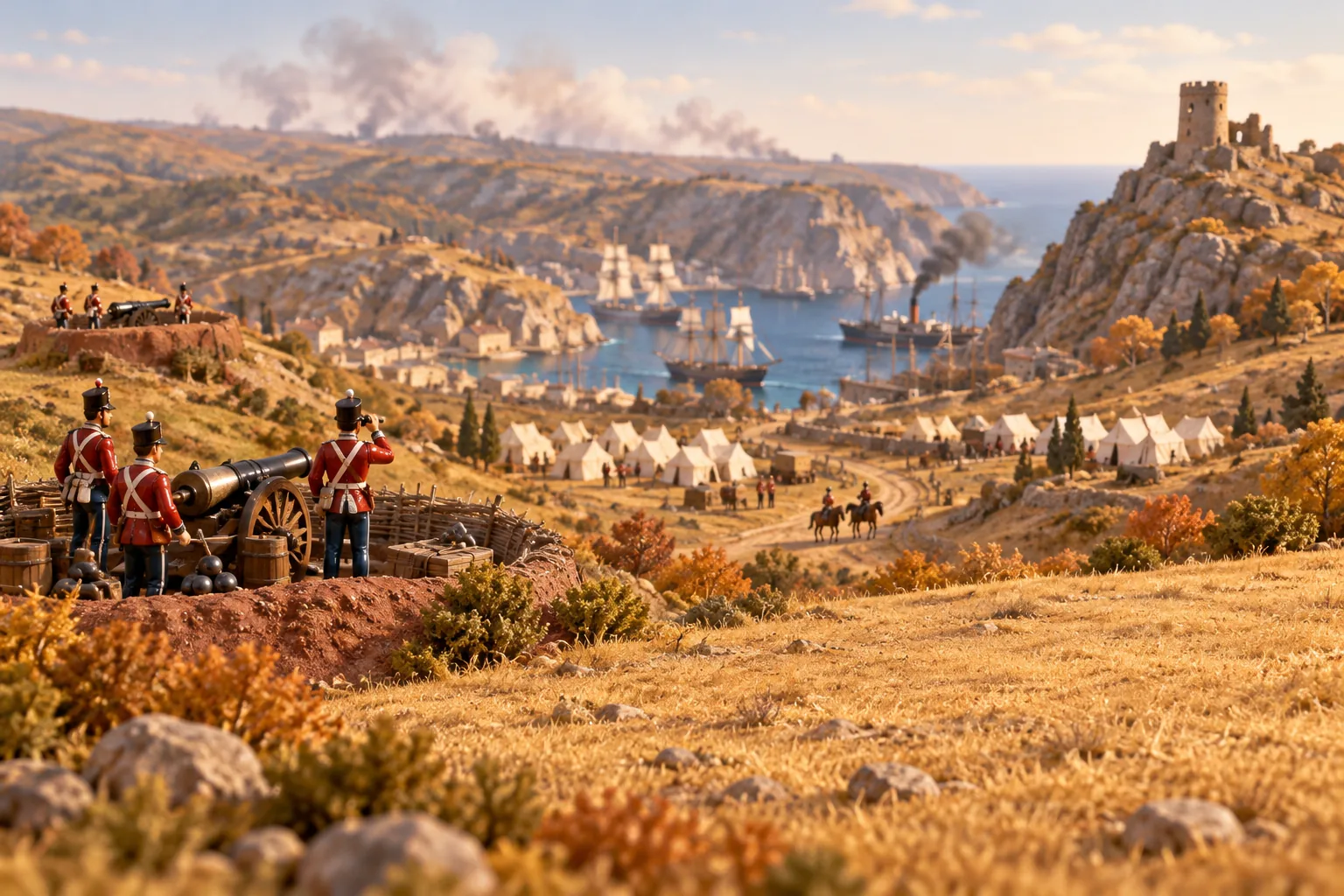
In September 1854 the allies landed in Crimea to take Sevastopol, Russia's main naval base on the Black Sea. They won at the Alma on 20 September. On 25 October the Russians struck at Balaclava, where a confusing order sent the British Light Brigade charging down a valley; it lost 278 of its 700 men. After another Russian defeat at Inkerman, the war became an 11-month siege of Sevastopol, with cholera and terrible conditions on both sides. Sardinia joined the allies in 1855, and in September a French assault on the Malakoff redoubt finally broke the city's defences.
The Treaty of Paris of 30 March 1856 barred Russia from keeping warships on the Black Sea. The war's medical failures made Florence Nightingale famous for pioneering modern nursing, and the defeat pushed Russia towards reforms, including the abolition of serfdom in 1861.
Read more on Wikipedia
Sources: en.wikipedia.org/wiki/Crimean War