Antiquity · culture
Council of Chalcedon
An argument about whether Christ had one nature or two split Christianity in a way that still divides its churches today.
By the 440s Christians agreed that Jesus was God, but not on how God and man were joined in him. An aged monk of Constantinople, Eutyches, taught that after the incarnation Christ's two natures had merged into one. Condemned by Flavian, the bishop of Constantinople, he won the support of Dioscorus of Alexandria. At a council in Ephesus in 449, with Dioscorus presiding, Eutyches was restored and Flavian deposed; Flavian died days later. Pope Leo I called that meeting the "Robber Council".
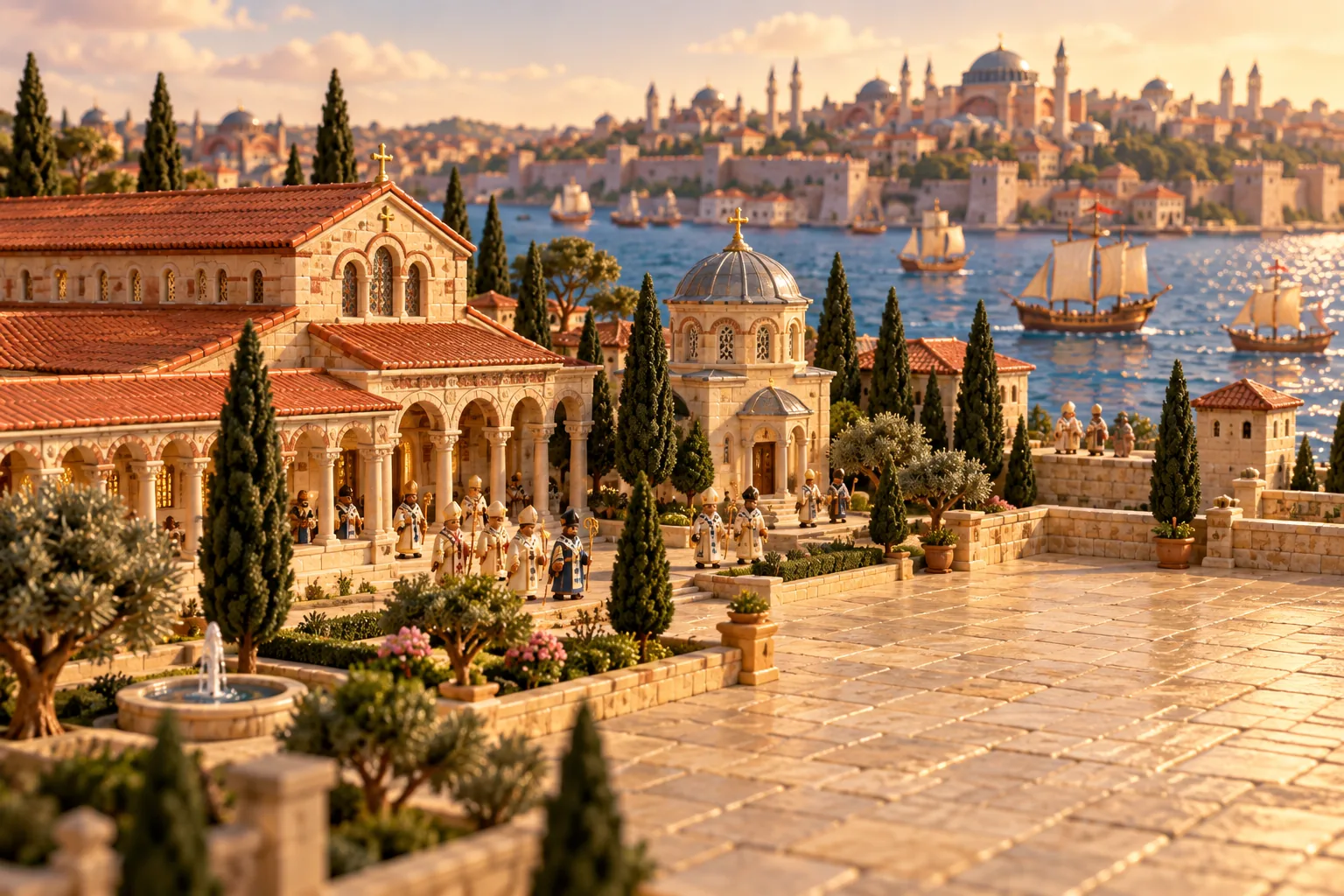
When the emperor Theodosius II died, his successor Marcian, married to Theodosius's sister Pulcheria, called a new council. Leo wanted it in Italy, but Marcian chose Chalcedon, just across the Bosporus from Constantinople, so he could respond quickly to the Huns of Attila raiding along the Danube. It met from 8 October to 1 November 451 in the church of St. Euphemia, with over 520 bishops or their representatives, the largest of the first seven ecumenical councils. When Leo's letter, the Tome, was read out, the bishops cried: "Peter has spoken thus through Leo."
The council condemned Dioscorus and declared Christ "truly God and truly man", known "in two natures without confusion, without change, without division, without separation". Its Canon 28 gave the see of Constantinople privileges equal to Rome's. Much of Egypt and Syria rejected the definition, and the churches now called Oriental Orthodox, among them the Coptic, Armenian and Syriac churches, broke away.
Read more on Wikipedia


