Early modern · war
Cortés and the Aztecs
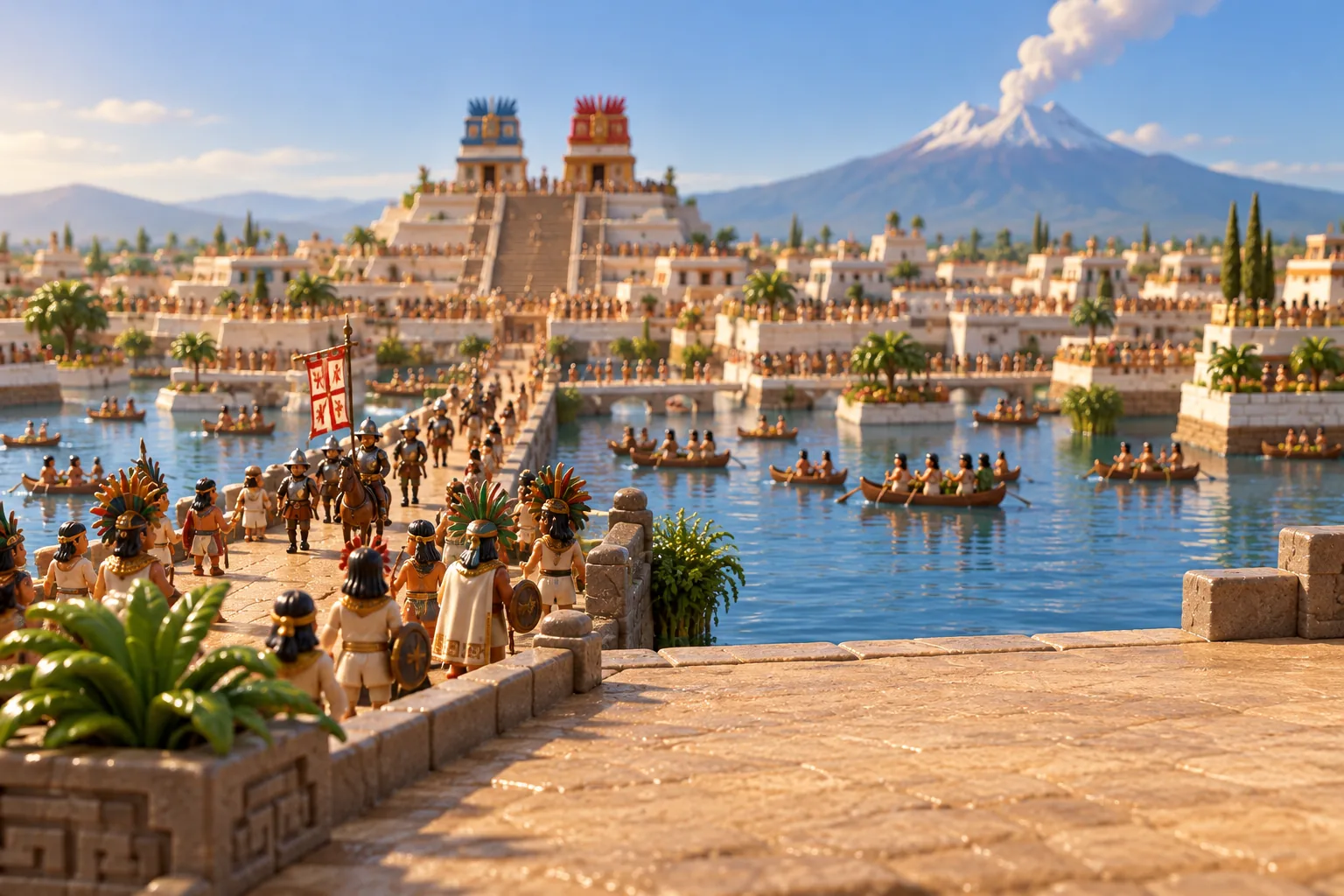
On 8 November 1519 a few hundred Spaniards marched into Tenochtitlan, one of the largest cities in the world; less than two years later it lay in ruins.
Hernán Cortés sailed from Cuba in 1519 with 11 ships and about 630 men. On the coast of Mexico he sank his own ships so that no one could desert, and marched inland. Two interpreters made the expedition possible: Gerónimo de Aguilar, a shipwrecked Spaniard who had learned Maya, and an enslaved Nahua woman the Spaniards called Marina, later La Malinche, who spoke Maya and Nahuatl. The Tlaxcalans, long-time enemies of the Aztecs, fought the newcomers and then joined them.
On 8 November 1519 Cortés entered Tenochtitlan, an island city in Lake Texcoco whose population is estimated at anywhere from 60,000 to over 300,000, and met the emperor Moctezuma II. Months later, while Cortés was away, his deputy Pedro de Alvarado massacred an unarmed crowd at a religious festival and the city rose up. Moctezuma was killed, and on the Noche Triste, the sorrowful night of 30 June 1520, the Spaniards fought their way out across the causeways; some drowned weighed down by gold.
Then smallpox swept the region and killed the new emperor, Cuitláhuac. Cortés returned with an army of up to 100,000 warriors, most of them Indigenous allies, and 13 small brigantines that gave him control of the lake. On 13 August 1521 the last emperor, Cuauhtémoc, was captured. Mexico City, capital of New Spain, was built on the ruins.
Read more on Wikipedia
Sources: en.wikipedia.org/wiki/Aztec Empire, en.wikipedia.org/wiki/Spanish conquest of the Aztec Empire


